
 E-Paper



Gyanvapi issue: Waqf Board brings on record Gazette notification
Advocate Punit Kumar Gupta appearing for the Waqf board argued that it was itself admitted in the plaint of the suit that on the 15th day of 1947, a mosque existed, therefore, in view of the provisions of Section 4 of the Places of Worship (Special Provisions) Act, 1991, the present suit was barred by law.

 Prefer HTon Google


PRAYAGRAJ: The UP Sunni Central Waqf Board on Wednesday filed supplementary affidavit bringing on record the Gazette notification dated December 26, 1944 by which the Gyanvapi mosque was registered in the Official Gazette as Waqf property.
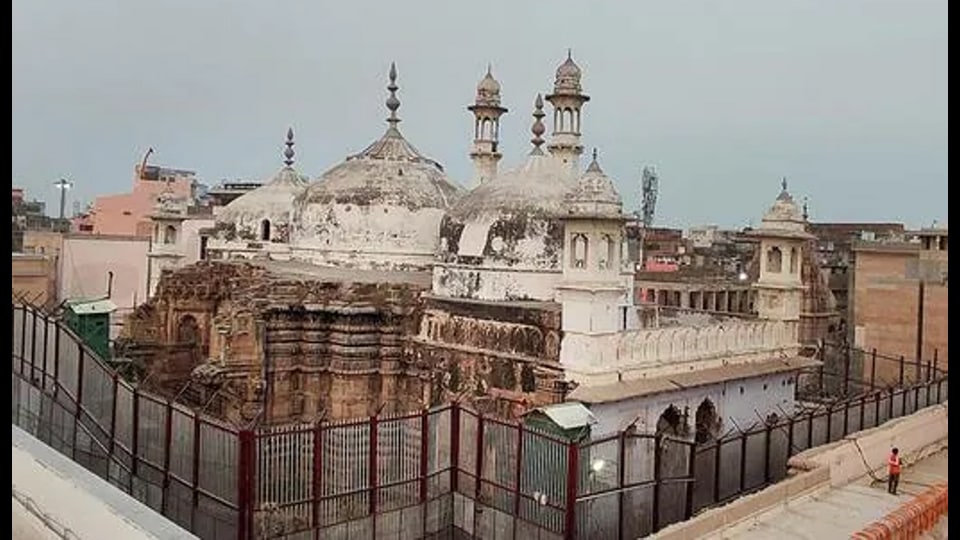
The temple side sought ten days’ time to file a counter affidavit to the supplementary affidavit.
Justice Prakash Padia, after hearing the parties concerned, adjourned till August 17, hearing of the case filed by the Anjuman Intazamia Masjid of Varanasi challenging the maintainability of the original suit filed in 1991 in the Varanasi district court, seeking restoration of the ancient temple at the site where the Gyanvapi mosque currently stands.
In the suit, the plea was taken that the said mosque was a part of the temple.
Advocate Punit Kumar Gupta appearing for the Waqf board argued that it was itself admitted in the plaint of the suit that on the 15th day of 1947, a mosque existed, therefore, in view of the provisions of Section 4 of the Places of Worship (Special Provisions) Act, 1991, the present suit was barred by law.
On the other hand, advocate Ajay Kumar Singh, appearing for the temple side, argued, “The property in dispute is to be seen as a whole and for the said purpose, it is to be determined that what is the religious character on the 15th day of 1947 for which the evidence is required. Therefore, the provisions of Section 4 of the Places of Worship (Special Provisions) Act, 1991 would not be applicable.”
“Insofar as Order VII Rule 11 C.P.C. is concerned, it is argued that in the present dispute, the issue of fact and law both are involved which can only be determined after leading the evidence.” argued advocate Singh.
After hearing both the parties, the court adjourned the hearing while observing, “Due to paucity of time, arguments could not be concluded.”
Order VII Rule 11 CPC states that plaint shall be rejected if the relief claimed is barred by law.
Senior counsel SFA Naqvi appearing for Anjuman Intazamia Masjid of Varanasi (committee managing the mosque) said that as per Gazette notification, the property was registered as a Waqf property in the nature of mosque in 1944. Therefore, it could be used only for the purposes as provided in Waqf and no one (Muslim or non-Muslim) could change nature/character of the property.
According to the temple side, after commencement of the Act, 1995, properties which were un-registered or were registered previously, were all required to be registered again. In the present case, the property in dispute has admittedly never been re-registered as required after commencement of Act, 1995 and, therefore, the property in dispute cannot be termed as a Waqf property, according to them.


