
 E-Paper



HAT set to resume 183-year-old ‘iftaar’ tradition after Covid break
Hussainabad and Allied Trust (HAT) officials said as a part of the tradition, it used to distribute ‘iftaar’ among 1,350 ‘rozedaars’ in 13 mosques of the city during the holy month of Ramzan


After a break of two years due to the Covid pandemic, the Hussainabad and Allied Trust (HAT) is all set to resume its 183-year-old tradition of distributing ‘iftaar’ among 1,350 ‘rozedaars’ during the holy month of Ramzan.
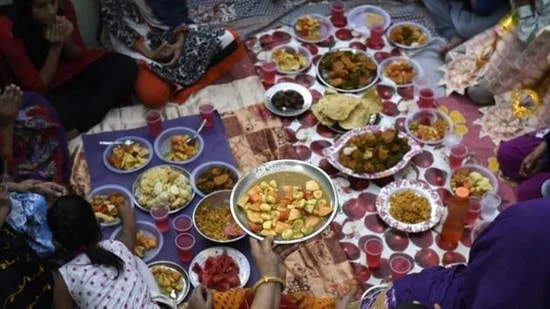
‘Iftaar’ is the meal taken by Muslims at sundown to break the daily fast during Ramzan and ‘rozedaars’ are the people who fast.
“We are ready to resume the ‘iftaar’,” said KP Singh, additional district magistrate (ADM-East) and secretary of HAT while confirming the development.
HAT officials said as a part of the tradition, which is as old as the trust (the trust was formed in 1839), HAT used to distribute ‘iftaar’ among 1,350 ‘rozedaars’ in 13 mosques of the city.
Officials said that Muhammad Ali Shah, the third king of Awadh, formed the trust in 1839 at the cost of ₹12 lakh to carry out religious practices on the occasions like Muharram and Ramzan.
“Since then, the trust has never failed to do things for which it was formed -- be it distribution of ‘tabarrukh’(sacred offering) among the royal families during Muharram or distribution of ‘iftaar’ among rozedaars,” said Habibul Hasan, a senior official of HAT.
The officials said the tradition was not followed in 2020 and 2021 due to the Covid pandemic. “It was for the first time that ‘iftaar’ was not distributed in mosques,” an official said. “This never happened earlier, not even during the upheaval following Independence or during the massive Gomti floods of 1960 that engulfed almost the entire Old City area,” the officials added. They said in the ‘iftaar’, nine different types of food items will be served.


