E-Paper



Immediately notify UP civic polls without OBC quota, orders Allahabad high court
The high court ruled that the government could not notify OBC reservations till three conditions laid down by the Supreme Court’s constitution bench in 2010 were fulfilled.

 Prefer HTon Google


LUCKNOW: The Lucknow bench of the Allahabad high court on Tuesday quashed a December 5 Uttar Pradesh government order proposing reservations for other backward classes (OBC) in civic elections and ordered the state to “immediately” notify elections to the urban local bodies without OBC quotas.
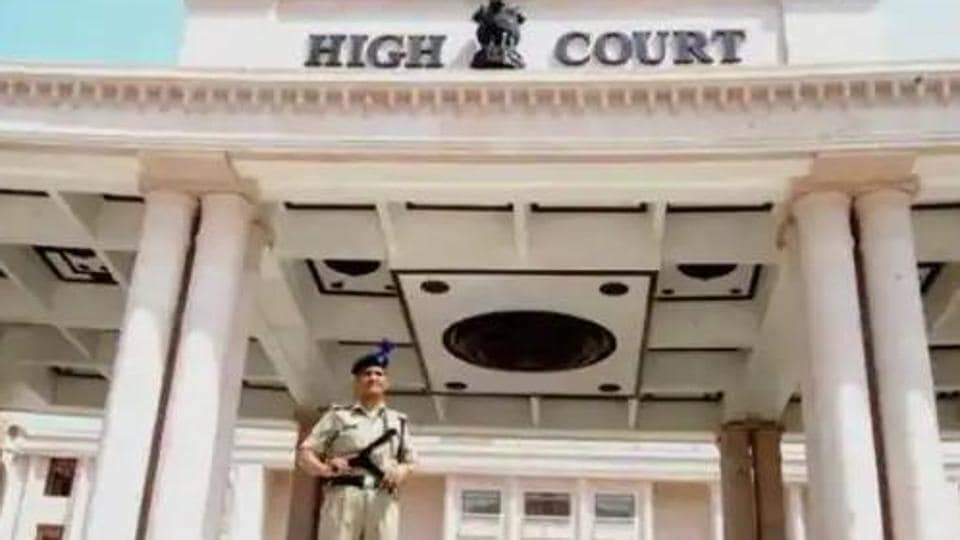
The bench of justices DK Uphadhyaya and Saurabh Lavania told the state government to set up a commission to conduct an empirical study on the nature and backwardness to be able to have OBC quotas in the next election to urban local bodies but stressed that it could not pause the election process till this “humongous and time taking task” was completed.
“We have issued the direction to immediately notify the elections being guided by the provisions of Article 243-U of the Constitution of India which mandates that election to constitute a municipality shall be completed before expiry of its duration. We understand that collection and collation of materials by the dedicated Commission is a humongous and time taking task, however, formation of elected municipal bodies by (an) election cannot be delayed for the reason of constitutional mandate contained in Article 243-U of the Constitution of India. Thus to fortify the democratic character of governance of society, it is essential that the elections are held at the earliest which cannot wait,” the bench said.
UP deputy chief minister Keshav Prasad Maurya said in a post on Twitter that the government will take a final decision on urban local body polls after consulting legal experts on “all aspects of the court order”.
“Under no circumstances will we compromise on the issue of OBC rights,” added Maurya, the most prominent OBC face of UP’s ruling Bharatiya Janata Party (BJP).
Chief minister Yogi Adityanath said the government will set up a commission to decide the issue of OBC reservation and if required, will approach the Supreme Court against the high court.
The opposition Samajwadi Party rushed to attack the BJP. “It is a conspiracy by the BJP government to deprive the backward classes of reservation,” said SP spokesperson Sunil Singh Sajan. “We won’t tolerate this injustice,” said SP chief Akhilesh Yadav.
The high court bench ruled that the government could not notify OBC reservations for civic elections till the three conditions laid down by the Supreme Court’s constitution bench in 2010 were fulfilled.
The 2010 constitution bench verdict laid down a triple test for reserving seats in local body polls: Setting up a dedicated commission to conduct a contemporaneous rigorous empirical inquiry into the nature and implications of the backwardness with respect to local bodies, specifying the proportion of reservation in light of the commission’s proposals, and not exceeding the 50% quota cap as laid down by the top court in a landmark 1992 judgment.
The high court rejected the UP government’s argument that the state did collect the empirical data required by the SC, a reference to the rapid survey conducted by district magistrates this year under a mechanism notified in 2017.
The bench ruled that this exercise “misses a very crucial factor for determination of backwardness or disadvantageous situation” of a class or group of citizens since it does not provide for inquiry into the political representation of backward class of citizens in the municipal bodies.
“The kind of inquiry into the nature and implications of backwardness vis-a-vis local bodies as is mandated by Hon’ble Supreme Court in K.Krishna Murthy (supra) and Vikas Kishanrao Gawali (supra) cannot, in our opinion, be equated with the kind of inquiry, which is confined to counting of heads alone, as is contemplated in the Government Order dated 7.04.2017,” the high court said.
The high court also cancelled the government’s December 12 order that provided for operation of bank accounts of municipalities under joint signatures of the executive officer and the senior-most officer in Uttar Pradesh Palika Centralized Service (Accounts Cadre).
Instead, the high court ordered the state government to set up a three-member committee headed by the district magistrate concerned.
“It is a complete judgment covering all aspects that were argued by me in court,” said lawyer LP Mishra, who along with advocate Sharad Pathak, represented Vaibhav Pandey of Rae Bareli, the first of the 64 petitioners to challenge the government order.
According to the December 5 draft, four mayoral seats -– Aligarh, Mathura-Vrindavan, Meerut and Prayagraj -- were reserved for OBC candidates. Of these, the mayor’s posts in Aligarh and Mathura-Vrindavan were reserved for OBC women.
Additionally, 54 chairpersons’ seats in the 200 municipal councils were reserved for OBCs, including 18 for OBC women. For the chairpersons’ seats in 545 nagar panchayats, 147 seats were reserved for OBC candidates, including 49 for OBC women.