
 E-Paper



Implementation of plastic ban in Lucknow a mixed bag
Though most of the markets in Lucknow appear to be steadily accepting the prohibition, the ban seems to have taken a back seat in some vegetable and meat markets. Vendors lament high cost of cloth bags while citizens say strict vigil is necessary for effective implementation of ban


LUCKNOW Almost two weeks after the central government imposed a ban on single-use plastic, markets in Lucknow are partially supporting the administration in enforcing the prohibition. While some traders are sending back customers who are not carrying their own shopping bag, a majority of vendors and citizens are not aware of the ban. Besides, quite a few roadside vendors are seen using polybags.
Single-use plastics are disposable plastic items commonly used for packaging and include items intended to be used only once before they are discarded or recycled.
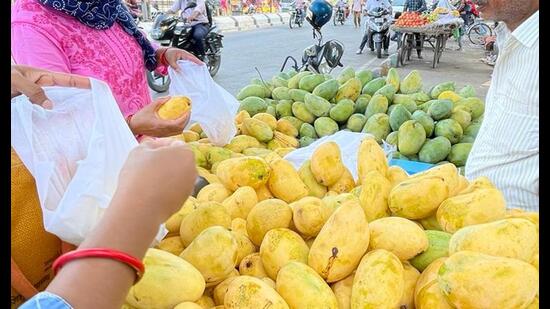
Though cloth bags are in circulation in many of the markets, the ban on single-use plastic appears to have taken a back seat in Lucknow’s biggest grocery market in Dubagga. Several vegetable wholesalers can be seen using plastic carry bags of various sizes while a few hawkers are even selling plastic bags to vegetable vendors in the morning market.
“It’s good that plastic has been prohibited. Instead of focusing on vegetable vendors, one should focus on companies that manufacture it,” said Dhananjay Shukla, a vegetable wholesaler at Dubagga mandi.
“After the ban was imposed, plastic bags are being sold illegally at a higher price than before. This can easily be seen in the morning market,” he added.
“We ask customers to bring their bags; if they don’t, we have to give them polythene bags which are in our stock,” stated a group of women selling veggies.
Similar is the scene in the other two vegetable wholesale mandis in Vikas Nagar and Behata at Kursi Road. Several fruit and vegetable sellers are openly using plastic bags to sell vegetables. One of them said, “We are using it for now as we can’t throw away the leftover stocks.”
MEAT MKTS IN DILEMMA
Several meat shops in Lucknow continue to circulate plastic bags. They have kept cloth bags, but apparently these are merely for display. Several vendors in Tedhi Pulia, Ring Road market, were spotted packing meat and fish in plastic bags, with only a few using cloth bags. “Cloth bags are too porous to carry chicken/mutton. As a result, these bags cannot serve as an alternative to plastic. We favour the prohibition, but there must first be a viable alternative to plastic,” said Munna Qureshi, a vendor.
MALLS USING COMPOSTABLE BAGS
Though plastic cutlery continues to be on the shelves of shopping malls and departmental stores, compostable paper bags have replaced plastic carry bags at these outlets. “Plastic ban was not challenging for us to implement as we were already using compostable paper bags. These plastic-like bags are lab tested and decomposable. These get converted into compost manure when dumped and even help improve the soil. We are using these in all our outlets,” said a manager at a retain chain.
CLOTH BAGS A COSTLY AFFAIR
Though quite a few vegetable and fruit vendors can be seen using cloth bags, they complain that it is a costly proposition. Some even agree to charge customers who fail to bring their own bags. “People pay for it in the malls, but don’t want to shell out extra while shopping here. Cloth bags costs us more than double of what we pay for polybags,” said Mohd Saif, a fruit seller in Jankipuram market.
An old lady vegetable seller in Dubagga mandi said she picks up the plastics when the markets are over for the day and reuses them after a wash. “I can’t afford to buy cloth bags as these are more expensive,” lamented the vendor.
The central government has banned manufacture, import, stocking, distribution, sale and use of identified single-use plastic items, which have low utility and high littering potential, across the country from July 1, 2022.
The banned single-use plastic items include earbuds with plastic sticks, plastic sticks for balloons, plastic flags, candy sticks, ice-cream sticks, polystyrene (thermocol) for decoration, plastic plates, cups, glasses, cutlery such as forks, spoons, knives, trays, wrapping or packing films around sweet boxes, invitation cards, cigarette packets, plastic or PVC banners less than 100 micron.


