
 E-Paper



KGMU Lucknow gets bone marrow transplant unit
It’s a major step towards accessible, affordable treatment for blood cancers and genetic blood disorders

 Prefer HTon Google


In a major boost to health infrastructure in Uttar Pradesh, a new state-of-the-art bone marrow transplant (BMT) unit was inaugurated at the haematology department of the King George’s Medical University (KGMU) here on Thursday.
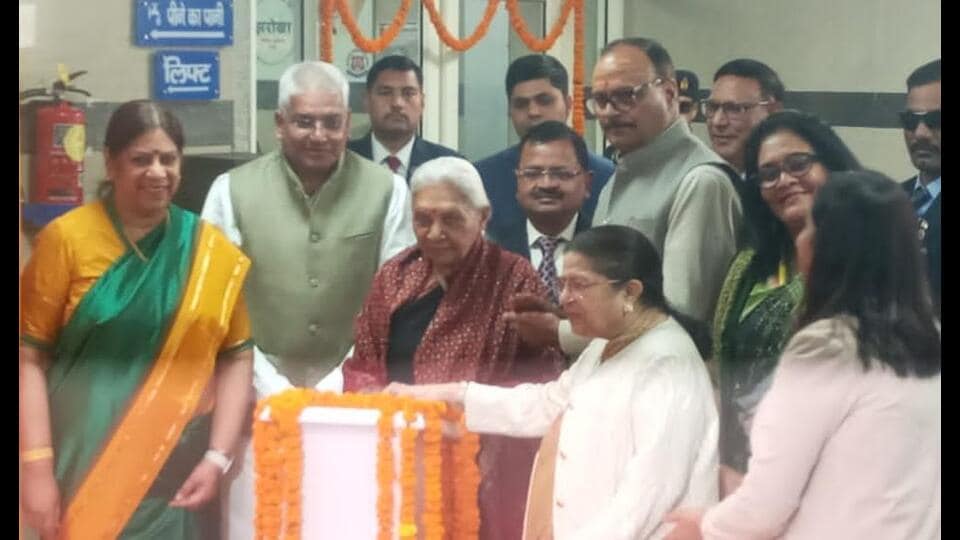
Speaking on the occasion after inaugurating the unit, governor Anandiben Patel emphasised the importance of supporting poor patients and strengthening training for staff nurses involved in specialised care units like BMT. She highlighted the commitment to ensuring affordable, no-profit treatment models, with seamless coordination between the university and government bodies to ensure smooth functioning and sustained funding, said a press release shared with the media.
Deputy CM Brajesh Pathak said providing quality health facilities to patients is the government’s top priority. “The state is working very fast in that direction. Extensive work has been done in the field of health infrastructure in Uttar Pradesh and a revolutionary transformation is being witnessed. Very soon, we will be number one in the country,” he said.
Underscoring the importance of the new unit, KGMU vice chancellor Prof Soniya Nityanand said it will significantly improve access to life-saving treatments, especially for women and children, who often face financial barriers. She said all eligible patients under government health schemes will receive treatment free of cost, ensuring equitable access to advanced care, the press release added.
The facility has been established with a generous corporate social responsibility (CSR) grant of ₹3.15 crore from Aditya Birla Capital, marking a major step toward accessible and affordable treatment for blood cancers and genetic blood disorders, stated a press release shared with the media.
Uttar Pradesh minister of state Mayankeshwar Sharan Singh commended KGMU’s extensive outreach, noting its remarkable annual patient load of 45 crore OPD visits, 15 crore IPD admissions, 45 lakh minor surgeries, and 8 lakh major surgeries, serving patients not only from Uttar Pradesh but also from neighbouring regions, including Madhya Pradesh, Nepal, and Delhi.
Poonam Bagai, colon cancer survivor, philanthropist, and founder of Cankids Kidscan, which works for childhood cancer care, shared insights on collaborative efforts between NGOs, hospitals, and state governments to enhance childhood cancer care across India. She reiterated the mission of achieving 100% financial support for childhood cancer by 2030, it stated.
Vishakha Mulye, director, Aditya Birla Capital Foundation, said, “A nation’s strength lies in the health of its people, and every hospital built, every doctor trained, and every life saved is a step toward progress. I am confident this state-of-the-art facility will set new benchmarks in making life-saving bone marrow transplants accessible and affordable in the state and neighbouring regions”.
Moreover, the KGMU administration also announced its next steps, which include commencement of operations in the new BMT unit, establishment of streamlined procedures to help patients avail free treatment under Ayushman Bharat and other government schemes.
During the event, KGMU signed an MoU for a ₹3.03 crore expansion project to construct seven additional HEPA-filtered rooms, further strengthening the institution’s capacity to treat patients with conditions such as leukaemia, lymphoma, multiple myeloma, thalassemia, and aplastic anaemia.
A special acknowledgement was extended to philanthropists, especially Rajashree Birla, chairperson, Aditya Birla Centre, for her unwavering support. She said the initiative will particularly benefit underserved women and children who struggle due to the high cost of treatment.


