
 E-Paper



Maha Kumbh: 40% attendees women, more young groups visiting independently: Study
Researchers also noted that a secure environment encourages more women to travel freely and participate in religious activities.


The ongoing Mahakumbh-2025 is witnessing a growing presence of women, reflecting their increasing engagement in religious and social spheres. A research team from the Govind Ballabh Pant Social Science Institute (GBPSSI) is studying this evolving trend and has made preliminary observations on changing participation patterns.
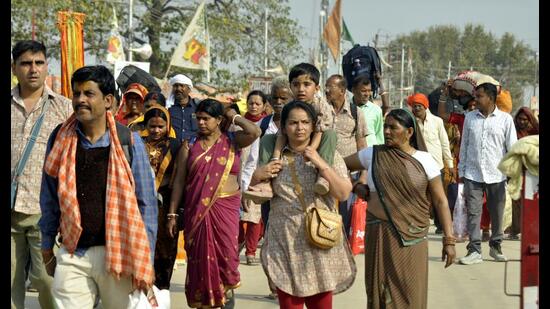
Led by institute director professor Badri Narayan and associate professor Archana Singh, the 17-member team is stationed at various entry points and bathing ghats, interacting with attendees to understand their perspectives. Their initial findings suggest that women comprise over 40% of the attendees, with a notable presence of those aged 18-35, particularly from urban areas.
A key trend observed is the rise of women-only groups visiting the Mahakumbh independently. According to Archana Singh, this shift points to greater access to education, increased confidence, and evolving societal norms. Unlike past, women now take a more active role in religious exploration beyond traditional household rituals.
Researchers have also noted that a secure environment encourages more women to travel freely and participate in religious activities.
Neha Rai, a senior fellow in the research team, shared that religious institutions and spiritual leaders are showing a more inclusive approach, leading to a welcoming space for female devotees.
“The way women are engaging in religious discourse and spiritual practices shows a shift in participation patterns. More women are actively seeking knowledge and interacting with saints and religious leaders,” said researcher Preeti Yadav.


