E-Paper



Mango poll issue or not? Malihabad’s conundrum
Twin challenges of depleting groundwater and counterfeit pesticides afflict the largest mango belt in Uttar Pradesh

 Prefer HTon Google


The largest mango belt in Uttar Pradesh and a geographical indication (GI) tag are some of the titles it wears proudly. It is also the home to numerous families who have been farming mangoes for over two centuries.
Malihabad, located some 25 kms away from the state capital, is known in many corners of the world for the dussehri, langda and chausa varieties it produces.
Until a few years ago many growers were content with yields from their orchards. The situation has somewhat changed now as the mango belt is afflicted with the twin challenges of depleting groundwater and counterfeit pesticides, farmers said. At a time when an election (Mohanlalganj Lok Sabha seat) is around the corner, they confessed that mangoes or their growers from the region had never been a point of poll focus.
“Duplicate pesticides don’t kill pests which damage the crops every year. Environmental factors such as sudden rain and hailstorm also haunt mango growers resulting in loss or no profit for us,” said Insram Ali, the president of All India Mango Growers’ Association.
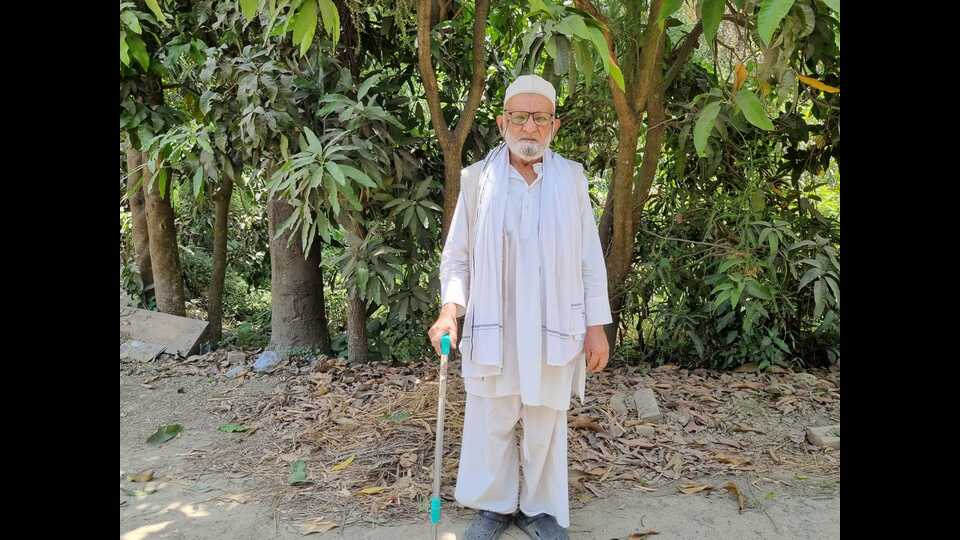
“Depleting groundwater is one of the biggest challenges that Malihabad mango growers are facing today,” said Haji Kaleemullah Khan, 83, a Padma Shri recipient and who is popularly called ‘The Mango Man of India’.
“Groundwater is so low that we’ve to pump it out with machines in order to water the plant,” added Khan, who grows nearly 1,600 mango varieties in his eigh-acre orchard in the town.
“While every government talks about farmers, no one talks about mango growers as they don’t consider us farmers,” said Insram, adding over the years the farmers had raised their issues at several platforms, but nothing changed.
‘Youth want LDA to take over’
Malihabad is the largest of UP’s 14 designated mango belts. While the northern belt accounts for 40% (21 MT) of the total mango production in India, around 4.8 MT of the yield is supplied by UP alone. According to Agriculture and Processed Food Products Export Development Authority (APEDA), Uttar Pradesh contributes 23.58% of the total yield from the northern belt.
Despite these facts, the youth of Malihabad don’t want to carry their legacy forward. “Due to recurring losses and reducing benefits the youth today are not attracted to this traditional business,” said Hasnain Ali, a farmer. “Our children want these farms to be converted into plots so that they can get better profits. They want LDA (Lucknow Development Authority) to take over these lands,” felt Firoz Khan.
“Our traditional mango orchards are facing many challenges. But our present MP Kaushal Kishore never meets us to talk about our problem as mango has never been a poll issue. No politicians ever come to campaign here. It’s as if we don’t matter to them at all,” rued Kamar Khan, also a farmer.
What ‘aam aadmi’ wants
“Over 500 ponds should be dug up as an alternative to the depleting groundwater table,” said Haji Kaleemullah. “An insurance policy to mango farmers to cover their losses in case of damage,” said Khan.
Check sheet
Population-17,818, in 3,032 households (2011 census)
Area- 6 square km
Lok Sabha seat-Mohalalganj
Largest of 14 designated mango belts in the UP and accounts for 12.5% of all mango production in the state in 2013
Largest producer of dussehari mangoes.
Other varieties-Chausa, Langda, Safeda
The northern belt accounts for 40% of the total mango production in India. Of 21 metric tons, 4.8 MT comes from UP alone