E-Paper



Meeting UP electricity regulator’s deadline for meters on power staff’s premises may be a tall order in poll year
The Uttar Pradesh Electricity Regulatory Commission has set a deadline for the Uttar Pradesh Power Corporation Ltd to complete the task by the end of the current financial year

 Prefer HTon Google


Taking a serious view of non-implementation of its earlier directions on installation of energy meters on the premises of power personnel till date, the UP Electricity Regulatory Commission (UPERC) has set a deadline for UP Power Corporation Ltd (UPPCL) to complete the task by the end of the current financial year.
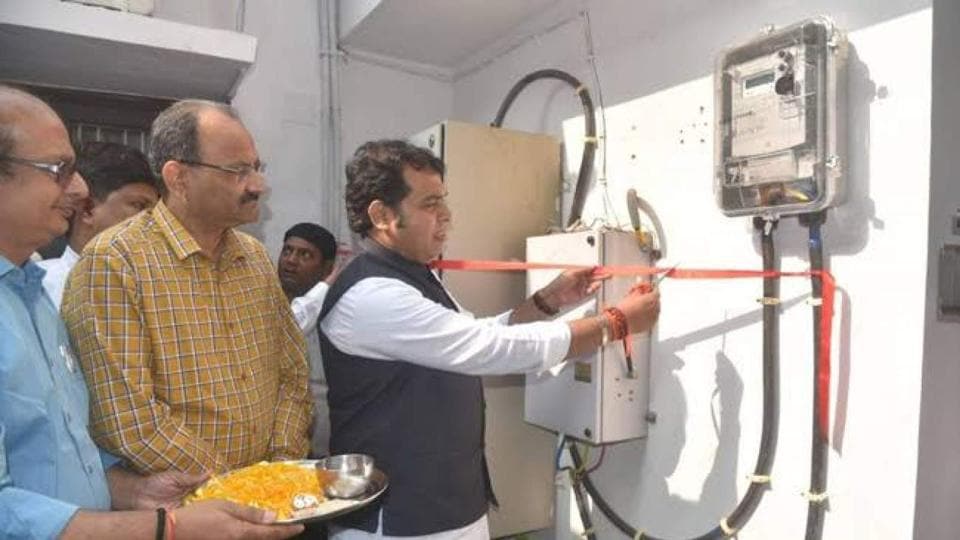
“The commission directs that metering of LMV-10 connections should be completed by end of FY 2021-2022,” the commission said in its tariff order issued on July 29. The LMV-10 category refers to the unmetered power staff.
A senior energy department official, however, said: “Considering the fact that there are assembly polls early next year, it is impossible for the state government to give a go-ahead to the UPPCL to install meters on the powermen’s premises and invite their wrath.”
The powermen in UP are very sensitive to the issue of metering of their residences and have strongly and successfully opposed attempts in this regard in the past despite the fact that UP is believed to be the only state where power employees and pensioners enjoy the luxury of using unmetered and unaccounted electricity.
UPERC, in November 2017, abolished LMV-10 category, putting consumers in this category at par with any other domestic consumer categorised as LMV-1 for the purpose of billing. The move implied that the UPPCL was supposed to charge the same tariff from unmetered power personnel as applicable to unmetered domestic consumers.
This step, however, did not achieve the purpose and the UPPCL/discoms failed to provide any information to UPERC on the number of meters installed on the power staff’s residences whenever it sought details on the subject.
“Despite repeated directions of the commission, the same (installation of meters) has not been done by the licensees,” the commission observed in the July 29 tariff order and fixed a higher tariff for them so that it would act as a disincentive to using unmetered power.
“Hence, the commission is forced to re-compute the revenue for LMV-10 consumers (power staff) considering the average consumption per consumer per month to be 700 units and at ₹7.00 / kWh (the rate of LMV-1, other metered category – highest slab),” the regulator ordered and clarified that the revenue deemed to have been realised from would be added to UPPCL’s final revenue realisation and same would be taken into view while revising the tariff in future.
For the power staff, based on the balance sheet data and past trend, the commission has computed deemed revenue of Rs. 61.05 crore, ₹70.18 crore, ₹55.28 crore and ₹140.68 crore of the state discoms namely DVVNL (Dakshinanchal Vidyut Vitaran Nigam Ltd), MVVNL (Madhyanchal Vidyut Vitaran Nigam Ltd), PVVNL (Paschimanchal Vidyut Vitaran Nigam Ltd) and PuVVNL (Purvanchal Vidyut Vitaran Nigam Ltd) respectively.
As per the data provided by UPPCL to the regulator, there are 98,218 power men consuming unmetered electricity at their residences with their total electricity load having been estimated to be 4,15,912.88 KW. The power personnel together consumed 577.52 million units of electricity in 2020-21, according to the data.