
 E-Paper



Mercury mayhem due to tree felling, disappearance of ponds: Greens
Lucknow lost 70% of its water bodies in the past 40 years and several patches of forests were also erased to pave way for new settlements, says environmentalist


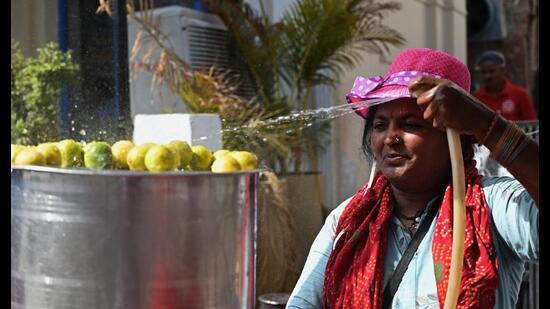
LUCKNOW Most cities in UP marked all-time high temperatures this year, breaking previous records for the month of May. Environmentalists attribute this unprecedented heatwave to large-scale deforestation, tree felling in the name of creating new settlements, widening of roads and fast disappearance of ponds/water bodies.
They said if corrective measures are not taken now, then time is not far away when mercury in UP cities will breach the 50-degree Celsius mark.
HT spoke to greens to know how concentrated and collective efforts from people can help prevent the situation from getting worse.
“Lucknow lost 70% of its water bodies in the past 40 years and several patches of forests were also erased to pave way for new settlements. The cumulative impact would be seen with urban heat islands and shortage of water in future. It is a frightening scenario,” warned environmentalist Venkatesh Dutta, professor at Babasaheb Bhimrao Ambedkar University (BBAU).
He said, “A city should be known by its forest cover and water bodies. If you are living in an area where a lake/river is present, you might want to think about planting some local species of plants near the water. Trees maintain the microclimate and regulate the water cycle. A good forest cover in an urban area gives respite from heat.”
“The rise in temperature is due to lack of water conservation, along with a general disregard by authorities towards the hydrosphere as well as the biosphere, where the cycles were disrupted due to anthropogenic causes,” said RS Sinha, a retired groundwater policy expert.
“Surface and water temperatures are increasing due to ever-increasing concentration of greenhouse gases in the environment. The Albedo Effect phenomenon depicts how more sunlight is being absorbed. Heatwaves are intensifying due to rapid climate change and urbanisation, resulting in lasting heat pockets,” said another expert, Umashankar Singh.
“Action plans should be formulated in every state to increase plantation and countries should think about employing a plan for carbon capture and storage (CCS). As the heat index is increasing, wet bulb temperatures are increasing, along with humidity. Heatwaves pose an increased risk for people with immunodeficiency issues resulting from issues like Covid. Heatwaves may also act as a precursor for triggering other diseases, resulting in death,” he added.
“Plans like the Kukrail night safari have resulted in over 3,000 trees being felled, while construction of Kanpur road elevated highway has also resulted in thousands of trees being felled,” said Kaushlendra Singh, ex-member of Wildlife Board of Uttarakhand.
“Stubble burning in fields, garbage burning on streets ideally have a provision of fine against them, but no action is taken. Implementation of plastic ban has never been seen through completely, worsening the state of the soil with each passing day. Commercialisation of areas that were once water bodies or green covers has also impacted the environment,” he said.
MERCURY’S ONSLAUGHT
MAY 28 Varanasi (BHU) broke the 140-year-old record when mercury rose to 47.2 degrees equalling the figure of 1884.
MAY 28 Jhansi’s day temperature rose to 49 degrees, a record in 132 years.
MAY 30 Lucknow experienced its warmest night at 32.4 degrees, the highest minimum temperature in 42 years.
MAY 31 Lucknow recorded a maximum of 45.8 degrees, setting a 29-year record.
MAY 29 Prayagraj sizzled at 48.8 degrees
MAY 18 Kanpur (IAF) was hottest at 46.9 degrees


