
 E-Paper



Multi-cornered contest in weavers’ belt of east UP
Weavers’ association has urged government to provide raw material at subsidised rates, interest-free loans to purchase modern machines and fix electricity rates for the revival of textile industry

 Prefer HTon Google


The weavers’ belt of eastern Uttar Pradesh is witnessing a multi-cornered contest with the Bharatiya Janata Party (BJP), the Samajwadi Party (SP), the Bahujan Samaj Party (BSP), the Congress, the Aam Admi Party (AAP) and the Peace Party pulling out all stops to outdo each other.
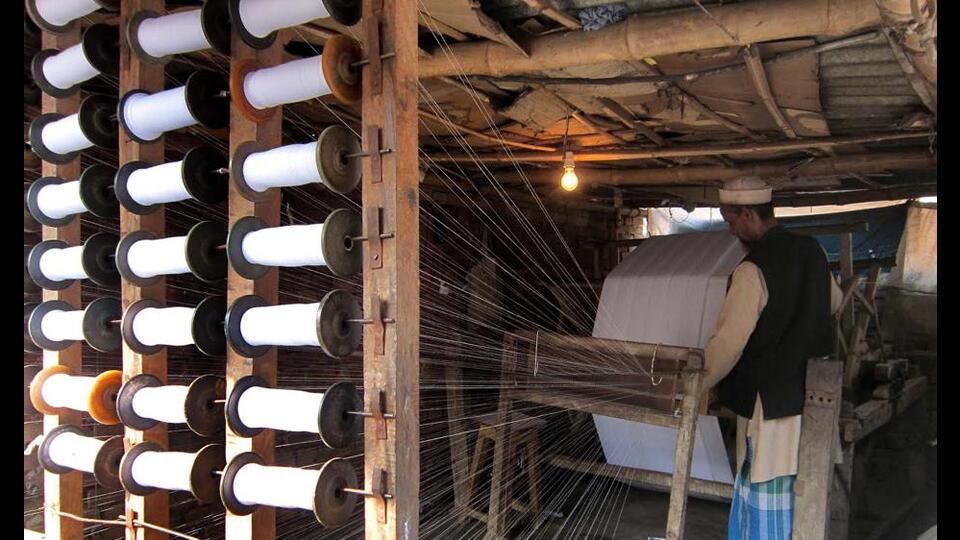
Located on the Lucknow-Gorakhpur highway, the headquarter of Sant Kabir Nagar district – Khalilabad (famous for its textile products) – has turned into a poltical battlefield in the 2022 UP assembly election. Top leaders from across the political spectrum - Union home Minister Amit Shah, BJP national president JP Nadda, chief minister Yogi Adityanath, SP chief Akhilesh Yadav, BSP chief Mayawati, Delhi chief minister Arvind Kejriwal, Congress UP in- charge Priyanka Gandhi Vadra and AIMIM chief Asaduddin Owaisi have addressed a series of meetings in the constituency in support of their candidates.
The BJP has fielded Ankur Raj Tiwari, the SP has given ticket to BJP rebel and sitting MLA Digvijay Narayan alias Jai Chaubey, the BSP has fielded Aftab Alam and the Congress has fielded Amresh Pandey. AAP has given ticket to Subodh Chandra Yadav, son of former MP Bhalchandra Yadav. Peace Party chief Mohammad Ayub, who secured victory in the 2012 assembly election, is in fray with the support of Bhagidari Parivartan Morcha led by AIMIM and Samajik Parivartan Morcha led by Bhim Army chief Chandrashekhar Azad.
In the 2017 election, riding on the saffron wave, the BJP bagged all three seats in Sant Kabir Nagar district, including Khalilabad, which has a large settlement of Muslim community. In the 2012 election, the SP had bagged Mehdawal and Dhangata seats while Peace Party chief Mohammad Ayub won from the Khalilabad seat. In the 2007 election, the BSP bagged Khalilabad seat but arch rival SP secured victory on Mehdawal and Hainserbazar seats.
As the three assembly seats (Mehdawal, Dhangata and Khalilabad) go to polls on March 3 in the sixth phase of UP elections, political parties launched intensive campaigns in support of party candidates. They are playing the caste, religion and emotional cards to secure victory of their candidates. Addressing a public meeting in support of the BJP candidate on Monday, home minister Amit Shah said the party is winning the UP election and people should not support losers.
Delhi chief minister Arvind Kejriwal played the Delhi governance model card while addressing a public meeting. He said: “The AAP government had developed industrial zone in Delhi whereas the BJP government had ruined Khalilabad.”
SP chief Akhilesh Yadav reminded the weavers’ community of the schemes launched by his government to promote the textile industry while Congress leader Priyanka Gandhi said the BJP, SP and BSP government made UP backward. AIMIM chief Asaduddin Owaisi batted for Peace Party chief Mohammad Ayub, saying he fought for the welfare and rights of the weavers’ community. “The SP, the BSP and the Congress are only concerned with vote of Muslims,” he added.
Mohammad Azam, a native of Maghar (famous for 15th century mystic poet Sant Kabir), said: “BJP, SP and BSP leaders raise the issue of revival of textile industry and development of Kabir’s memorial only during elections. Once the polls are over, they dump the issue. We are left to fight for survival.”
“Once, Khalilabad was known as the ‘Manchester of East UP’. Textile products were supplied to northern and southern states, but due to negligence of successive governments, a large number of handloom and powerloom units were shut down and weavers migrated to other states in search of jobs. Till 1998, the textile industry provided jobs to 50,000 people and now merely 5,000 people are managing handloom and powerloom units,” said Ashraf Ansari, a weaver.
Mumtaz Ahmed Ansari, another weaver, said Maghar Spinning Mill was closed since 1997. “During elections, all political parties promised to start the mill, but no action has been taken yet. The weavers’ association has urged the government to provide raw material at subsidised rates, fix electricity rates, marketing of the products and interest-free loans to purchase modern machines for the revival of textile industry and survival of weavers’ community,” he said.


