E-Paper



National Highways account for 36% road accident deaths in Uttar Pradesh
Two-wheeler riders constitute nearly one-third of the total deaths on highways, according to transport department’s latest road accident data presented in a meeting of the Supreme Court Committee on Road Safety

 Prefer HTon Google


Uttar Pradesh continues to witness a staggering toll of road fatalities, with highways proving to be the deadliest zones, particularly for two-wheeler riders, who account for nearly one-third of the total deaths.
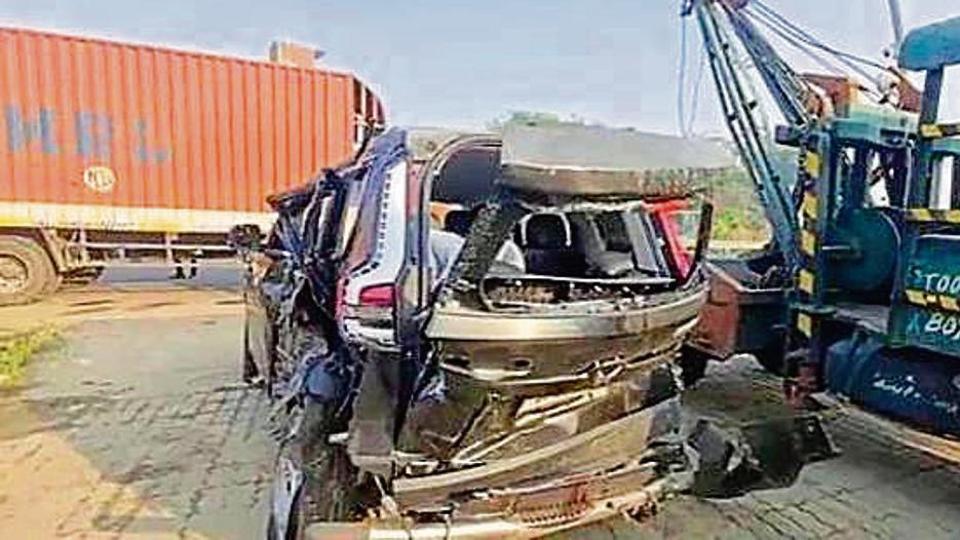
According to the transport department’s latest road accident data presented in a meeting of the Supreme Court Committee on Road Safety here on February 5, close to 24,000 people died in road accidents in 2023.
National highways alone accounted for 36% of these fatalities, while state highways contributed 28%, together accounting for 64% of the total deaths.
Speeding remains the leading cause of deaths, responsible for nearly half of all fatal crashes, followed by wrong-side driving and mobile phone use. Drunken driving, another major contributor, saw an alarming rise, particularly in urban areas.
Two-wheeler riders emerged as the most vulnerable category, accounting for 31% of the fatalities.
The report indicated that despite helmet enforcement drives, non-compliance remains rampant, with over 4.78 lakh violations recorded in the year. Pedestrians and cyclists also faced a high risk, contributing to 14% of total deaths, often due to inadequate road infrastructure and lack of designated crossings.
The data further reveals that most accidents occur between 12 pm and 9 pm, with peak fatality hours between 3 pm and 6 pm. Night-time accidents, though fewer in number, tend to be more severe due to reduced visibility and driver fatigue. Over 70% of fatalities involved adults between 18 and 45 years, indicating a severe socio-economic impact on families losing their primary breadwinners.
In 2024, a total 46,052 road accidents were recorded leading to 24,118 deaths and leaving thousands injured. The department is now analysing the data like that of 2023 and other previous years.
As many as 42% of the total road accidents deaths in 2024 were reported from 20 districts only. Hardoi, Mathura and Agra were the three top districts. Other districts in this category included Lucknow, Bulandshahr, Kanpur Nagar, Prayagraj, Sitapur, Unnao, Barabanki, Lakhimpur Kheri, Bareilly, Aligarh and Gautam Buddha Nagar.
To curb this crisis, authorities have ramped up electronic enforcement, deploying over 72 interceptor vehicles and expanding ITMS-based e-challans across 16 major cities.
“Plans are underway to integrate weigh-in-motion sensors at toll plazas to check overloaded vehicles, which significantly contribute to road wear and accident risks,” additional transport commissioner, road safety, P Satyarthi said.
“Also measures such as “No Helmet, No Fuel” campaigns and black spot rectification projects are being intensified,” he added.
Despite these efforts, the rising vehicular population—now nearing 4.83 crore (up to December 2024)—poses a persistent challenge. With road deaths showing only a marginal decline on national and state highways, experts emphasize the need for stricter enforcement, better road engineering, and enhanced trauma care facilities to ensure timely medical intervention.
“Our focus is now on minimising fatalities in the state which records the highest number of deaths in the country despite having fewer accidents than many other states. And for this we are making efforts strengthen the emergency medical and trauma care,” Satyarthi said.