
 E-Paper



RO/ARO exam on July 27 a litmus test for UPPSC
Preparations are in full swing for the exam which is scheduled to be held at around 2,382 centres tentatively in all 75 districts of the state on July 27. The Uttar Pradesh Public Service Commission on Tuesday held a meeting with nodal officers from every district to brief them on exam-related guidelines.


In a bid to emerge from the shadow of paper leak controversies, the Uttar Pradesh Public Service Commission (UPPSC) is leaving no stone unturned to ensure the smooth and transparent conduct of the Review Officer (RO)/Assistant Review Officer (ARO) (Preliminary) Examination-2023. The paper leak in 2024 and subsequent cancellation had also dealt a blow to the Bharatiya Janata Party-led government which saw a massive drop in the number of seats in the state in the Lok Sabha elections.
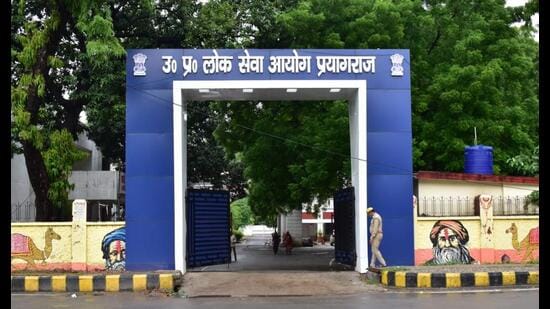
Preparations are in full swing for the exam which is scheduled to be held at around 2,382 centres tentatively in all 75 districts of the state on July 27.
The Commission on Tuesday held a meeting with nodal officers from every district to brief them on exam-related guidelines.
“The number of centres can, however, vary depending upon the feedback from district magistrates, police and intelligence inputs as well as weather constraints, etc,” UPPSC secretary Ashok Kumar said. As many as 10,76,004 candidates who have applied for 411 posts are eligible to appear for the exam. Admit cards will be issued 8-10 days prior to the examination, the UPPSC secretary added.
Tighter security, monitoring:
To ensure fair and transparent conduct of the exam, several modern technologies have been adopted this time. Biometric verification and iris scanning have been made mandatory for all candidates to confirm their identity accurately, officials said while choosing to be tight-lipped about their strategies.
In the recent meeting, nodal officers were informed that the monitoring system had been significantly strengthened compared to previous years, keeping in mind the convenience of candidates and the need for transparency. In case of any technical glitch or breach at an exam centre, the monitoring agency responsible would be penalised, officials said.
To maintain the integrity of the examination, a sector magistrate will be deployed at each exam centre. Additionally, CCTV surveillance, flying squads, and an online monitoring cell will also be in place, officials said.
More districts, fewer centres:
The RO/ARO (Preliminary) Examination-2023 was previously held across 2,387 centres in 58 districts of the state on February 11. However, it was cancelled due to the paper leak. The exam is being reconducted now after a delay of one and a half years. This time, it will take place in 75 districts at 2,382 tentative centres -- 17 more districts but five less centres.
It may be mentioned that on February 11, 2024, RO/ARO (Preliminary) Examination-2023 was cancelled due to a paper leak. Thereafter, the examination was proposed for December 2024, but the aspirants opposed the decision to conduct the examination in three shifts in two days. In November 2024, the aspirants staged an agitation against the Commission, demanding that the examination be completed in a single day as earlier.
The Commission then postponed the examination and constituted a committee. Later, in March 2025, the Commission announced the date and time of the exam, making it clear that it would be conducted in a single day and single shift across the state from 9:30am to 12:30pm.
Political ramifications:
Paper leaks in the Hindi heartland had become one of the top poll issues in 2024. The opposition parties, led by Samajwadi Party, had attacked the ruling BJP, alleging that it was “deliberately” trying to leak question papers to deny youngsters the benefit of reservation in government jobs.
After the BJP registered its biggest setback in terms of the Lok Sabha seat tally from Uttar Pradesh since 2014, the state government’s machinery swung into action to take remedial measures.
The ruling BJP-led National Democratic Alliance (NDA) managed to win only 36 seats from Uttar Pradesh, with the BJP winning 33, while its allies Rashtriya Lok Dal (RLD) winning two seats and the Apna Dal (Sonelal) securing one. The BJP’s own seat share was down by 29 seats as compared to 2019, when it won 62 seats from the state.


