
 E-Paper



Traffic diversions making Lko’s air worse?
Experts warn longer routes and increased engine-on time may be offsetting congestion gains, adding to the city’s pollution burden with rise of PM2.5 value


The air quality in Lucknow continues to remain under stress, with fine particulate matter (PM2.5) emerging as one of the most serious public health threats in the city. Experts claimed that while traffic diversions introduced by the Lucknow Police and Lucknow Municipal Corporation aim to reduce congestion at busy intersections, they may be increasing pollution levels instead of curbing them.
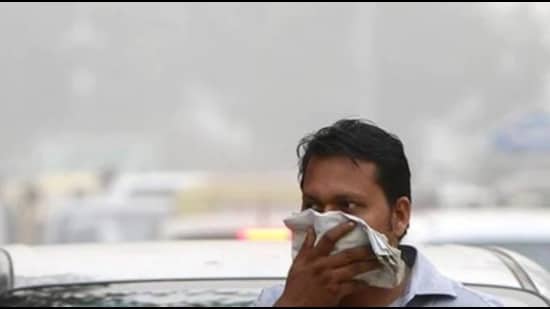
“Urban mobility assessments indicate that diversion routes introduced to ease bottlenecks often extend travel distances and time. On average, such routes add more than a kilometre and over four minutes per trip. While they may reduce congestion at specific signals, they can increase overall “engine-on time”, leading to more idling, acceleration and braking, all of which raise PM2.5 emissions,” said Shailendra Kumar Yadav, assistant professor, department of environmental science, Babasaheb Bhimrao Ambedkar Central University, Lucknow.
In the last one year, Lucknow police has introduced diversions for free flow of traffic at several intersections, including Hazratganj crossing, IT crossing, Near Engineer chuarha, Paper Mill Tiraha, Mahanagar, among others.
Yadav said that a team of students from the university are planning to take up a detailed study on these traffic junctions where such diversions have been placed.
PM2.5 microscopic particles, capable of penetrating deep into the lungs and bloodstream, have been linked to respiratory illnesses, cardiovascular diseases and premature deaths. Vehicular emissions are among the largest contributors to these particles in rapidly urbanising cities like Lucknow, where rising vehicle ownership and fuel consumption have compounded the problem.
“Idling alone can account for over 10% of traffic-related PM2.5 emissions in Indian cities. The impact is particularly significant among older diesel vehicles and poorly maintained two- and three-wheelers. Additionally, congestions on smaller roads result in frequent stop-start cycles, increasing non-exhaust emissions from brake and tyre wear. Congestion management must focus on reducing total vehicle kilometres travelled and improving flow efficiency, not just shifting traffic from one road to another,” said the BBAU assistant professor.
“Traffic flow and air quality are deeply interconnected. If we only move vehicles around without reducing their overall impact, we are not solving the problem,” said Yadav.
What other cities are doing
Citing the example of Indore, experts said signal synchronisation under its “Green Corridors” initiative reduced average travel time by 28% and lowered PM2.5 levels by nearly 19% along key transit routes.
In Pune, mandatory driver awareness modules led to a 12% reduction in fuel consumption among commercial fleets. Similar initiatives in Lucknow, officials say, could produce measurable improvements.
WHAT CAN BE DONE IN LKO
Regulating e-Rickshaws and Parking: Lucknow’s high number of two-wheelers and e-rickshaws, many operating without designated stands or charging infrastructure, adds to roadside congestion and emissions. Measures such as dynamic parking pricing and off-street consolidation could reduce the time vehicles spend circling for parking, cutting emissions in the process.
Beyond Symbolism: ‘No Car Day’:Expanding “No Car Day” initiatives into regular, data-backed campaigns. Monthly participation by officials and citizens, coupled with public dashboards tracking real-time PM2.5 reductions, could encourage long-term behavioural shifts.


