E-Paper



UP Board initiative: Sanskrit chapters in Class 9,10 shortened to rekindle students’ interest in subject
The board has got Sanskrit books prepared afresh this year with the help of its subject experts in accordance with the new National Education Policy (NEP)-2020

 Prefer HTon Google


With the aim of rekindling interest of students towards Sanskrit, Uttar Pradesh Madhyamik Shiksha Parishad (UPMSP) aka UP Board has made changes in the subject’s textbooks of Class 9 and 10 making many chapters and topics shorter to make their learning easier for students.
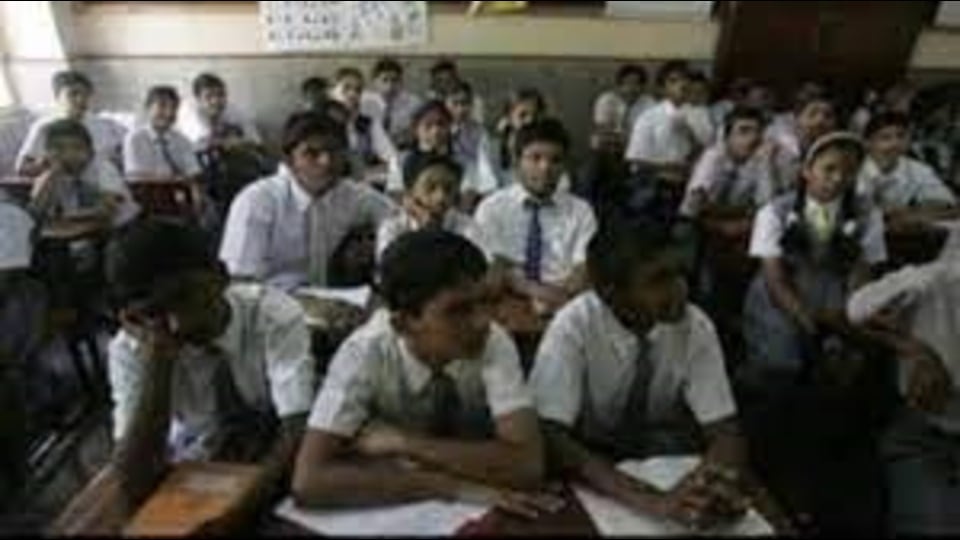
The board has got Sanskrit books prepared afresh this year with the help of its subject experts in accordance with the new National Education Policy (NEP)-2020 norms. “These books have now become available in the market,” said district inspector of schools (DIoS), Prayagraj, PN Singh.
The importance of the move can be gauged from the fact that this year, 3.33 lakh students had opted for Sanskrit in their high school. Confirming the development, a senior UP Board official said that high school Sanskrit has four parts: prose, poetry, drama and grammar out of which portions of cumbersome and large texts of prose and verse have been reduced.
“To name just a few changes in Class 9 textbook ‘Padma Piyusham’, the first lesson ‘Ramasya Pitrubhakti’ earlier had 26 verses that has now been reduced to 14. The second chapter ‘Subhashitani’ earlier had 15 verses which have now been cut down to 10. In the third lesson ‘Sukti Sudha’, the earlier nine verses have been reduced to seven,” said Vijayraj Yadav, Sanskrit lecturer at Agrasen Inter College, Prayagraj.
“Similarly, there were earlier 21 verses in the first lesson ‘Lakshya Vedha Pariksha’ of Class 10 textbook ‘Padma Piyusham’ but of which now just 14 are left. A lot of parts have been reduced in other texts and prose as well,” he added. In the past, due to long Sanskrit lessons, students often used to shy away from studying it or even opting for it in their high school exams.
Under the supervision of UP Board secretary Dibyakant Shukla, now parts of the lessons have been removed for the purpose of making the book student-friendly so that more and more children opt to study Sanskrit language. Significantly, out of the total 31,06,157 candidates who had registered for the 2023 high school examination, 3,33,348 had opted for Sanskrit.
Sanskrit teachers shared that even the questions of the lessons given in the book have been now asked in simpler Sanskrit. Earlier, questions were asked by mixing Hindi and Sanskrit which ended up confusing students. Now photographs too have been used in various lessons as per the requirement so that the book remains interactive, they add.
It is the first time that UP Board has self-published books of Hindi, Sanskrit and Urdu. Until last year, the board used to set the syllabus of these three subjects but there was no control of it over the publication of books and any publisher could print them. The biggest disadvantage of this was that many times, private publishers used to print wrong facts as well in books.