
 E-Paper



U.P. busts Indo-Nepal bus permit racket, seeks STF investigation
Transport commissioner Brajesh Narain Singh has written to the director general of police (DGP), seeking a coordinated investigation, while also alerting the Union ministry of road transport and highways (MoRTH) and requesting urgent technical reforms to prevent further misuse of the permit system.

 Prefer HTon Google


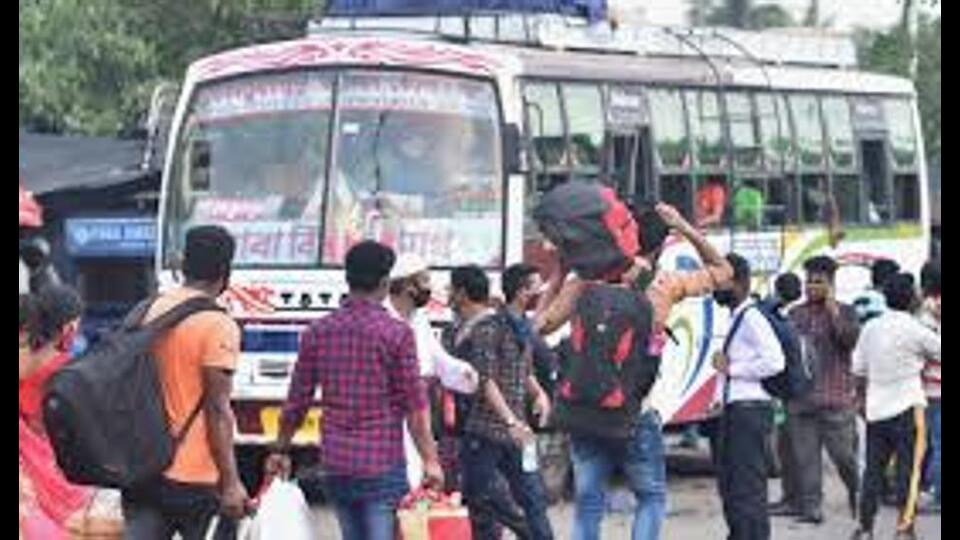
In a crackdown on forged cross-border permits being used by private buses operating between India and Nepal, the Uttar Pradesh transport department has unearthed a racket involving fake documents allegedly issued by regional transport authorities, officials said.
The state government has initiated criminal action in at least three districts and requested a high-level probe by the Special Task Force (STF).
Transport commissioner Brajesh Narain Singh has written to the director general of police (DGP), seeking a coordinated investigation, while also alerting the Union ministry of road transport and highways (MoRTH) and requesting urgent technical reforms to prevent further misuse of the permit system.
The forgery first came to light following alerts from the Foreigners Registration Office in Lucknow and Sashastra Seema Bal (SSB), that flagged suspicious permits being used by buses at the Indo-Nepal border. On verification, the documents, meant to be “special permits” issued under the India-Nepal Passenger Traffic Agreement, were found to be either entirely forged or issued without legal authority, according to officials.
“FIRs have been filed or are in the process of being registered in Aligarh, Baghpat and Maharajganj, where ARTOs have confirmed in writing that no such permits were ever issued. Similar violations have surfaced in Gorakhpur, Etawah and Auraiya, prompting departmental disciplinary proceedings in at least one case,” Singh said.
Officials noted a technical loophole in the VAHAN 4.0 portal, where the system’s auto-approval feature allowed applicants to manually enter international destinations like “Nepal” -- a violation of permit protocols. Though the department had earlier asked NIC to restrict this field to Indian locations, the implementation remained incomplete. The issue has now been escalated through MoRTH, with a demand for urgent system corrections.
Under the India-Nepal Passenger Traffic Agreement, 2014, only Form C permits issued by the embassy or consulate of the destination country are legally valid for cross-border travel. Permits generated by Indian RTOs using Form SR-30 or SR-31 for Nepal-bound trips are considered ultra vires and invalid under both Indian law and the bilateral agreement.
In letters to the Government of India, the state transport commissioner has recommended real-time sharing of embassy-issued Form C permits with enforcement agencies, a central verification portal for permit authentication at the border, and a formal clarification by MoRTH reaffirming that only Form C permits are valid for Indo-Nepal travel.
Terming the matter a serious threat to national security and administrative integrity, Singh said no leniency would be shown to those found involved. The department, he added, is committed to strict legal action and systemic reforms to uphold international obligations.


