
 E-Paper



Air quality in city takes a hit as festivities begin
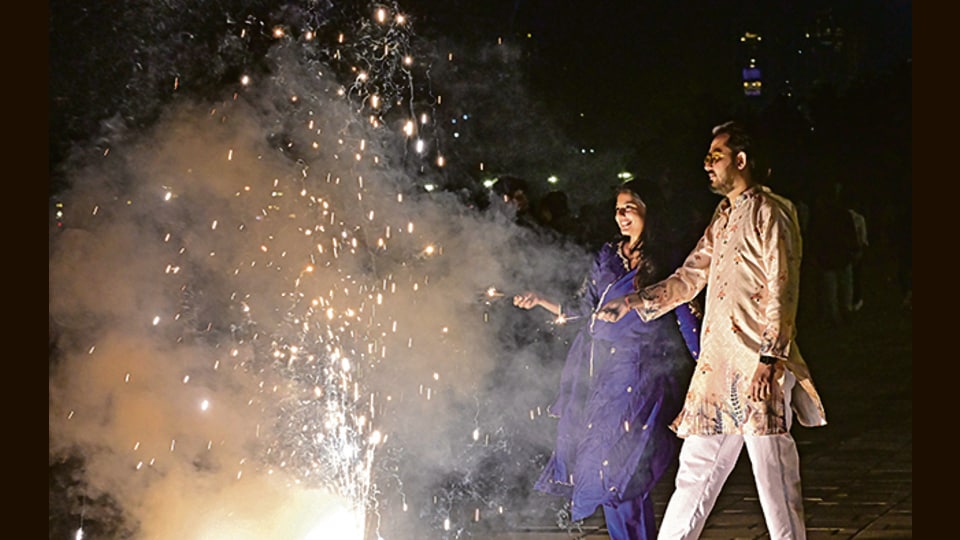
The air quality was expected to drop during this time as winter is setting in, and the firecrackers lit throughout the city over the weekend were a contributing factor

 Prefer HTon Google


MUMBAI: The air quality in the city this Diwali has plummeted to its lowest since the monsoon withdrawal (October 10). The air quality index (AQI) stood at 188 on Monday, with primary pollutants being particulate matter (PM) 2.5, PM10 and Ozone.
AQI readings between 0-50 are regarded as good, 51-100 are satisfactory, 101-200 are moderate, 201-300 are poor, 301-400 are very poor, and it is considered severe beyond 400.
Even though the overall AQI in the city was in the ‘moderate’ category, according to data from the Central Pollution Control Board (CPCB), isolated spots recorded poor numbers. Bandra Kurla Complex recorded an AQI of 335 (very poor). As many as 10 stations logged poor AQI; the four with the highest numbers were Navy Nagar-Colaba (282), Deonar (271), Chakala, Andheri East (263) and Mazagaon (254).
The air quality in the Mumbai Metropolitan Region was also moderate, with Thane recording 138, Virar, 185; Navi Mumbai, 189; and Mira Bhayandar at 192.
The air quality was expected to drop during this time as winter is setting in, and the firecrackers lit throughout the city over the weekend were a contributing factor. This condition may get worse since the wind speed is likely to slow down in November, said Gulfran Beig, chair professor of the National Institute of Advanced Studies, Bengaluru. “La-Niña is expected to hit the city. It slows down the wind speed, which leads to a dip in the air quality. This is similar to what Mumbai experienced in 2021-2022, worsening the air quality in the city.”
In addition to poor air quality, the city’s weather was made more unpleasant by high temperatures. On Monday, the Santacruz observatory recorded a maximum temperature of 35.9°C and a minimum of 25.1°C. The Colaba observatory logged daytime temperatures of 35°C and nighttime temperatures of 26.5°C. Over the period of one week, the temperature is forecasted to range between 34°C and 36°C.
Stay updated with all the Breaking News and Latest News from Mumbai. Click here for comprehensive coverage of top Cities including Bengaluru, Delhi, Hyderabad, and more across India along with Stay informed on the latest happenings in World News.


