
 E-Paper



At 23.5° C, Mumbai records highest minimum temp in January since 2011
A minimum temperature of 23.5 degrees Celsius, 4.1 degrees above normal, was recorded at Colaba weather station, representative of south Mumbai. At Santacruz weather station, representative of Mumbai and suburbs, the minimum temperature was 23 degrees Celsius, 5.7 degrees above normal.


Following a spell of cloudy weather, the city recorded its hottest January day in a decade on Monday as minimum temperature rose to a record high.
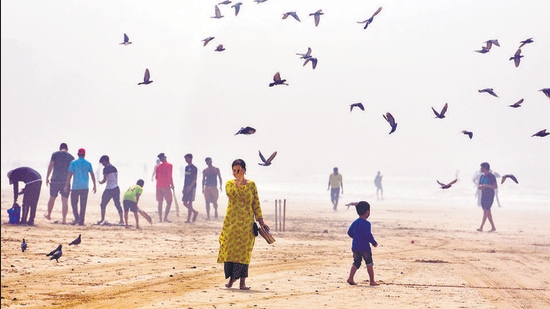
A minimum temperature of 23.5 degrees Celsius, 4.1 degrees above normal, was recorded at Colaba weather station, representative of south Mumbai. At Santacruz weather station, representative of Mumbai and suburbs, the minimum temperature was 23 degrees Celsius, 5.7 degrees above normal.
This is the highest minimum temperature recorded in the month of January since 2011 and has surpassed the earlier highest minimum temperature of 22.3 degrees Celsius recorded on January 28, 2014.
The maximum temperature at Santacruz was recorded at 34.5 degrees Celsius, 3.6 degrees above normal. This is at par with last year’s highest maximum temperature for the month of January recorded for two consecutive days (25 and 26). At Colaba, the maximum temperature was 31.4 degrees Celsius, which was 1.3 degrees above normal.
“After a spell of cloudy days, temperatures in Mumbai soared on Monday. This is because of the clear skies and warm easterly winds,” said KS Hosalikar, deputy director general of western region, India Meteorological Department (IMD).
Meanwhile, increased temperatures provided respite from pollution as air quality improved slightly. Though an overall air quality index (AQI)—a pollutant measuring indicator— of 256, which falls in the poor category, was measured on Monday, it improved from Sunday’s 301 (very poor).
The AQI was calculated by the System of Air Quality Weather Forecasting and Research (SAFAR) as the average of indices recorded at 10 locations in the city and suburbs. SAFAR categorises AQI levels for PM2.5 in the 0-50 range as good; 51-100 as satisfactory; 101-200 as moderate; 201-300 as poor; 301-400 as very poor and above 400 as severe.
At Colaba, the air quality was the worst with an AQI of 337 (very poor), followed by Bandra-Kurla Complex at 332.
“Although AQI has improved slightly, colder temperature and low ventilation is still prevailing and will keep Mumbai’s AQI in the brink of poor to very poor for next two days,” said a spokesperson of SAFAR.
Stay updated with all the Breaking News and Latest News from Mumbai. Click here for comprehensive coverage of top Cities including Bengaluru, Delhi, Hyderabad, and more across India along with Stay informed on the latest happenings in World News.


