
 E-Paper



‘Curricula reform key in changing edu landscape’
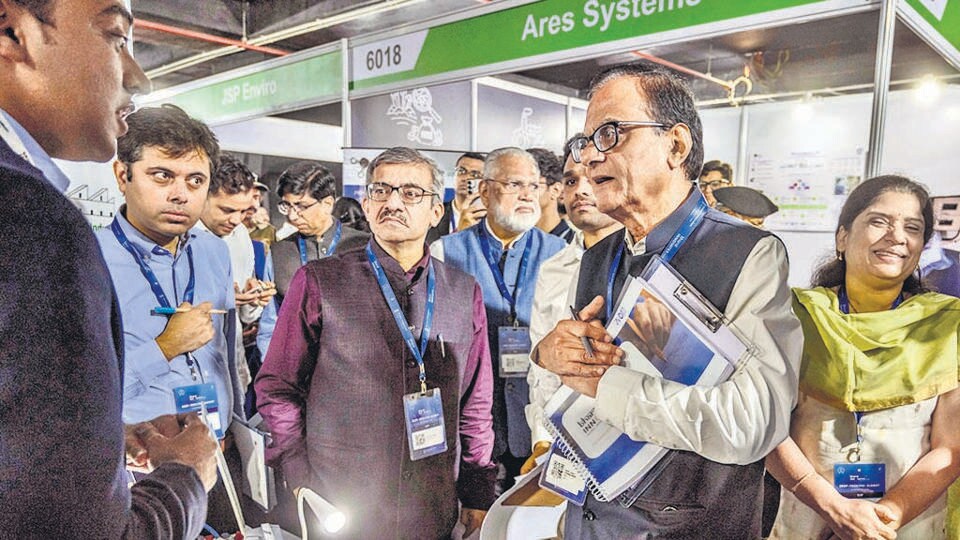
The two-day Bharat Innovates Deep-Tech Pre-Summit began at the IIT Bombay Research Park, bringing together startups, investors, industry leaders, policymakers and representatives from IITs and IISc


MUMBAI: Vineet Joshi, secretary of the department of higher education, union ministry emphasised on updating academic curricula to stay in step with technological changes globally for institutions imparting higher education under National Education Policy (NEP) 2020, while speaking at the Bharat Innovates Deep-Tech Pre-Summit held at IIT Bombay, on Saturday.
“While earlier, the education system focused mainly on rote learning, exams and securing jobs, the new (NEP) policy aims to make education more meaningful and aligned with real-world needs,” said Joshi. He stressed that going forward institutions must work towards producing job creators instead of job seekers. Joshi also indicated that in future, the way universities are evaluated will change, with greater focus not only on infrastructure and spending but also on the impact its students create in society. “Factors such as curriculum updates, teacher training, teaching methods and extracurricular activities will be considered in future assessments,” he added.
The two-day Bharat Innovates Deep-Tech Pre-Summit began at the IIT Bombay Research Park, bringing together startups, investors, industry leaders, policymakers and representatives from IITs and IISc.
The event was inaugurated by principal scientific adviser to the government of India, Ajay Kumar Sood, in the presence of senior officials including Joshi, Abhay Karandikar, secretary of department of science and technology, Dr K Radhakrishnan, chairman of IIT Bombay’s board of governors, and Shireesh Kedare, director of IIT Bombay.
The summit serves as a precursor to Bharat Innovates 2026, an international event scheduled to be held in France in June as part of the India-France Year of Innovation.
The aim is to showcase India’s leading deep-tech startups on a global platform and connect them with international investors and partners.
More than 3,000 startups from across the country had applied to participate in the event, of which 137 promising deep-tech startups were selected, who will present their innovations at the summit. On the first day, over 70 startups showcased their ideas during pitch sessions, while investors also shared their areas of interest through reverse pitching.
Speaking at the event, Sood highlighted the importance of deep-tech innovation in strengthening India’s position as a global technology leader. He said collaboration between academic institutions, research bodies and startups is essential for driving innovation. Karandikar spoke about the government’s efforts to support the startup ecosystem, mentioning that significant funding has been allocated for research, development and innovation.
K Radhakrishnan encouraged startups “to represent India with pride on global platforms and contribute to building a strong and innovative nation”. He described entrepreneurs as key contributors to the country’s future growth.

Stay updated with all the Breaking News and Latest News from Mumbai. Click here for comprehensive coverage of top Cities including Bengaluru, Delhi, Hyderabad, and more across India along with Stay informed on the latest happenings in World News.


