
 E-Paper



Environmental activists allege violation of clearance conditions by JNPA
NGO Vanashakti accuses port authority of breaching environmental norms in Uran, Raigad district.

 Prefer HTon Google


Mumbai: The NGO Vanashakti has filed a complaint with the Central Pollution Control Board (CPCB), accusing the Jawaharlal Nehru Port Authority (JNPA) of breaching environmental clearance conditions in Uran, Raigad district.
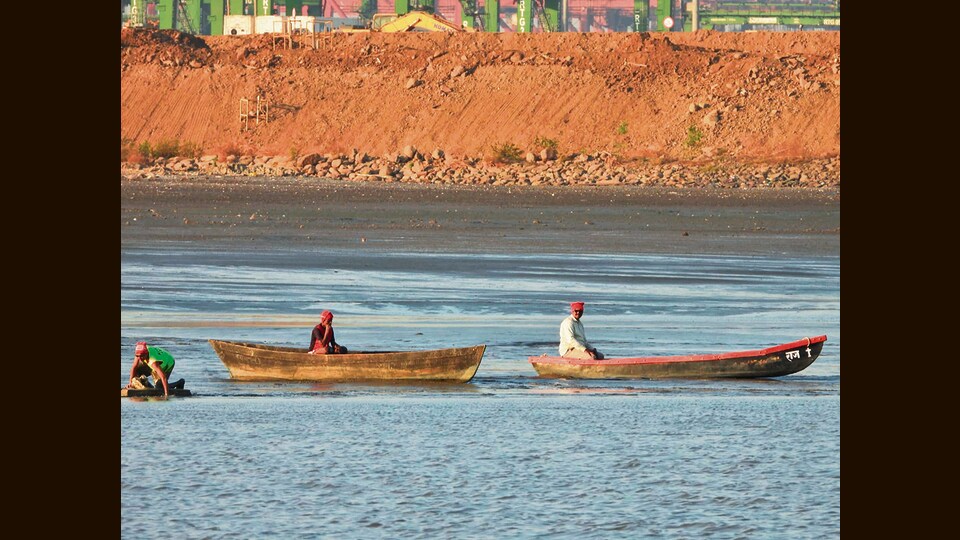
Vanashakti alleges that while constructing a container terminal, JNPA has violated two key conditions set by the Ministry of Environment, Forest and Climate Change (MoEFCC).“As per condition six, all reclamation must be done using marine dredged material,” said Stalin D, director of Vanashakti. “But what we’ve found out and is clearly visible is that what’s being used in the intertidal areas within the port area is murum soil, excavated from quarries and mountains in Raigad.”
Photographic evidence submitted by Vanashakti depicts towering mounds of soil and rock along the shore, contrasting with the backdrop of flamingos and fishing boats.
The NGO found out through an RTI that JNPA conducted no dredging to obtain the material needed for reclamation, which it would need to do if it were using it for reclamation. “If marine soil is used, it won’t break up and contaminate the waters. But murum soil, alien to the area, is terrestrial soil. The fine dust from this soil is dispersing into the nearby navigation channels, causing pollution and siltation. This is making the channels shallow, affecting the fishing areas used by the fishermen and biodiversity,” said Stalin.
This harm to intertidal mudflats, which are CRZ 1, and fishing grounds, leads to the violation of another condition, which states that no mangroves, fishing grounds, or ecologically sensitive areas will be destroyed. “With the reckless reclamation being done, the thousands of flamingoes and waterfowl that frequent the area will disappear. There are also no boundaries demarcated for the reclamation, so the fishermen are also at a loss to the contours of their fishing areas,” added Stalin.
Demanding accountability, Vanashakti calls for GPS markings of reclamation boundaries, mitigation measures for displaced wildlife, site inspections, and the removal of dumped murum soil, to be replaced with marine dredged material.
Stalin emphasised the importance of sustainable development, urging adherence to clearance conditions. In response, the CPCB has directed the Maharashtra Pollution Control Board (MPCB) to investigate and take appropriate action.
Unmesh Vagh, chairman of JNPA, acknowledges the use of murum soil but asserts compliance with clearance conditions. He explains that IIT Mumbai identified the soil as marine clay unfit for reclamation, prompting its disposal at designated offshore dumping grounds.
Chairman Vagh further stated that murum soil was used for reclamation as permitted by the environmental clearance, with dredged material disposed of at designated dumping grounds, in accordance with EC conditions.


