
 E-Paper



From Tilak’s patriotism to Dawood’s crimes, these cop stations have seen it all
The Mumbai police force celebrated a milestone in its history last week, marking the transformation of the force from an unorganised local militia to a battle-ready force. The police force dates back to 1669 when the East India Company moved its headquarters to Mumbai. The first police stations were established in 1909 after a riot led to the restructuring of the force. The Dongri police station, which has a long history of bringing criminals to book, also has a dargah on its premises where officers offer prayers when they are unable to arrest an accused.


MUMBAI: When Mumbai police commissioner Vivek Phansalkar presided over a special event at Dongri police station last week, it was no ordinary police function. It marked a milestone in the glorious history of Mumbai’s police stations and the city some of them had watched over for more than a century.
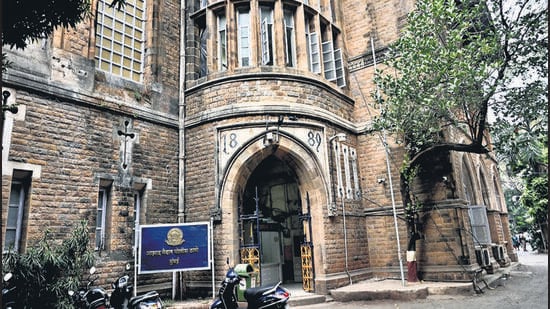
From being a Bhandari Militia, an unorganised force of local communities such as the Kolis, Malis, Muslims, Shenvis and Bhandaris who maintained law and order on the erstwhile seven islands, to a post-26/11 battle-ready force, the Mumbai police force has undergone a significant transformation over the years.
The history of the Mumbai police dates back to 1669 when the East India Company moved its headquarters from Surat to Mumbai, and Gerald Aungier was appointed the governor of the island. “The East India Company was then headquartered in Surat, but it faced repeated hostility from Muslim raiders and was in search of a secure base,” said Dr Rohidas Narayan Dusar, a retired assistant commissioner of police and vice-principal of the Police Training Centre, Khandala. “The King of England gave it the city of Mumbai on a rent of 10 pounds. On August 6, 1672, the Bhandari Militia was formed made up of Mumbai’s original inhabitants who patrolled the streets and kept trouble off them.”
Seventy-one-year-old Dusar has a PhD in the history of the Maharashtra police. He lectures on police history at police training colleges across the state and is the author of 18 books. “The words ‘Bombay City Police’ came into local parlance only around 1779 when the residents of a rapidly expanding Mumbai demanded a uniformed police force,” he said. “It took another 129 years for the first police stations to be created in Mumbai.”
It was an intelligence failure that prompted the change. “Before 1908, Mumbai was being policed through different sections and divisions,” said Dusar. “On July 23, 1908, Lokmanya Tilak, who had already undergone an 18-month jail sentence for sedition, was convicted of the same offence again and sentenced to six years in jail,” said Dusar. “This sparked off a huge protest by over one lakh textile mill workers on Mumbai’s streets, and led to a riot that lasted for six days, shutting Mumbai down. The Mumbai police could not handle the violence, and the army had to be called in.”
The British authorities then appointed a three-member committee headed by Sindh province commissioner Morison, which included ICS officer S M Edwardes, to probe the riots and their causes. “The committee concluded that the intelligence-gathering mechanism had failed to anticipate the huge scale of the riots and suggested a restructuring of the police force,” said Dusar. “After the report was submitted, Edwardes had returned to England but the British administration recalled him to Mumbai. They told him to study the Scotland Yard model and return to Mumbai to implement it. That’s how the reference to Mumbai being second to Scotland Yard is often made.”
According to Dusar, Edwardes, who also wrote The Bombay City Police—A Historical Sketch, 1672-1916 and The Gazetteer of Bombay City and Island, returned to Mumbai and took charge as the commissioner of police on April 14, 1909. The first police stations—Colaba, Agripada and Nagpada—were set up that year.
“He was the first ICS officer to be the CP,” said Dusar. “Even today, if you go to the Kalachowki, Matunga and Byculla police stations, the senior inspector’s room is directly in the line of vision of the “charge room”. The idea was that the senior PI should be able to see who is being brought and charged with offences. We also borrowed the concept of police lines from Scotland Yard, and even the senior inspector’s quarters would be above the same police station.”
Between 1909 and 1921, the police stations were further expanded to Prince Street (now LT Marg), Esplanade (now Azad Maidan), Government Dockyard (Yellow Gate), Gamdevi, Pydhonie, Maharbari (now VP Road) and Dadar. Dongri police station was set up in 1921 during the tenure of police commissioner Patrick A Kelley. The police station was then in a small shed in the Noor Baug area before it moved to the present premises on December 16, 1923.
Between 1980 and 1995, Dongri’s crime register has records of offences by gangsters Dawood Ibrahim, Karim Lala, Haji Bidar Patel, Feroze Konkani, Chhota Rajan and Chota Shakeel. The police station also has a long history of bringing dreaded criminals to book: in 1968, for instance, sub-inspector Alex Fialho nabbed serial killer Raman Raghav, wanted for 40 murders, at Bhendi Bazar after a dramatic shadowing.
Other stories abound of the valour of the Dongri police. For instance, senior inspector Kashinath Wagle drove a jeep himself, arrested underworld don Karim Lala single-handedly and brought him handcuffed to the police station. Assistant commissioner of police Madhukar Zende, who eventually arrested Charles Sobhraj, served in the area during the 1992-1993 communal riots, after which JJ Marg police station was carved out of Dongri police station.
The police station is also the only one in the city with a dargah on its premises, which has a legendary tale attached to it. Haji Pir Sayyed Abdul Rehman Shah Baba would sit at the spot where the dargah stands today. Some British-era officers initially took him for a crazy fakir and threw him into the lock-up. But, after some time, Baba was seen seated at the spot outside. The stunned officers put him back in the lock-up, but after a few minutes he reappeared at the spot outside. The officers realised then that Baba was no ordinary fakir.
Baba’s feats gave rise to a tradition at Dongri police station. To date, if investigating teams are unable to arrest an accused despite sincere efforts, they offer prayers at the dargah. The officers say the accused are nabbed shortly after this—the lasting miracle of Haji Pir Sayyed Abdul Rehman Shah.
Stay updated with all the Breaking News and Latest News from Mumbai. Click here for comprehensive coverage of top Cities including Bengaluru, Delhi, Hyderabad, and more across India along with Stay informed on the latest happenings in World News.


