
 E-Paper



Grant Medical College and JJ Hospital to get a museum
Fifteen years ago, when some alumni of the 1957 batch of Grant Medical College (GMC) went to retrieve their student ID cards from their alma mater, they were dismayed to find the archives and buildings in terrible shape. It was then that the idea of sponsoring a museum to archive the documents and history of the illustrious institution came up, and a trust was formed in 2007 to carry out the project

 Prefer HTon Google


Mumbai: Fifteen years ago, when some alumni of the 1957 batch of Grant Medical College (GMC) went to retrieve their student ID cards from their alma mater, they were dismayed to find the archives and buildings in terrible shape. It was then that the idea of sponsoring a museum to archive the documents and history of the illustrious institution came up, and a trust was formed in 2007 to carry out the project. Last July, the eight-member trust, ‘Friends of GMC’ met the dean to get the ball rolling.
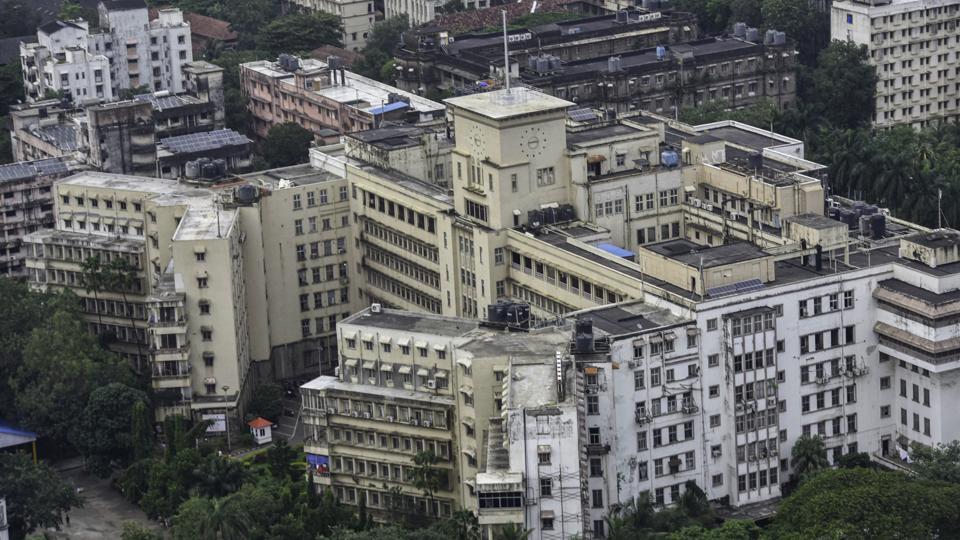
GMC and the JJ group of hospitals have now begun work on the museum with a state government grant of ₹5 crore to boot. “The museum will be in the original medical college building, a ground-plus-two structure which also houses the JJ Marg police station,” said Dr Pallavi Saple, dean of GMC and JJ Group of Hospitals. Dr Saple said there were plans to have multiple wings and galleries, where visitors would be introduced to the world of medicine.
“The first floor has two wings and the second floor has one,” elaborated Dr Saple. “One wing can be dedicated to the history of medicine in India, including allopathy and traditional Indian medicine, another to medicine in western countries, and yet another to the history of GMC and Sir JJ Hospitals. Once the building is renovated, the artefacts, busts and pictures, some of which are 100 to 150 years old, will be moved in.
Dr Saple said that the institution was getting in touch with its alumni and hoped that some of them would make important contributions to the museum. “For example, Dr Sunil Pandya has a wealth of history about this institution,” she said. Dr Sunil Pandya is an alumnus from the 1957 batch, who has written books on the heritage of GMC and Sir JJ Hospital and their contribution to Indian medicine.
Since the old medical building is part of a heritage structure, it will be renovated under the supervision of a conservation architect, for which names like Abha Narain Lamba and Vikas Dilawari are under consideration. Work is supposed to begin by the third week of March. “The state’s public works department (PWD) has promised to finish the renovation work in the next four to six months,” Dr Saple said.
‘Friends of GMC’ is helping build the museum in the boys’ common room (also a heritage structure) inside the hospital premises. The boys’ common room is said to be a 159-year-old building that once housed the hospital’s infectious diseases ward and later, in the 1960s, was the site of its bacteriology department. The eight-member trust includes Dr H B Chandalia, a well-known endocrinologist at Jaslok Hospital, Dr Shubhada Pandya, Dr Jehangir Sorabjee, Dr Rohini Kelkar, Dr Shrinivas Desai, Dr Jairam, Dr C A Tara Rao and Dr Asha Chakraborty. “We formed the trust in 2007, with Dr Noshir H Wadia as chairman,” said Dr Asha Chakraborty.
Dr Mohan Algotar, retired vice-dean and professor of surgery, GMC, and a graduate of the ’57 batch, said that while working for the museum, efforts would also be made to preserve old books through digitalisation. “It is good that the museum work is finally on the fast track and that too in the old medical college building,” he said. “We are happy this great institution’s history will now be safely kept for coming generations.”
BOX:
JJ Hospital opened on May 15, 1845, with 300 beds. The first patient was admitted on May 28, 1845, and the first batch of students was admitted to Grant Medical College on November 1, 1845.
GMC was the second medical college in India to allow women students in 1883. Dr Annie Walke, the first woman to graduate from here, later practised as a physician in Cama Hospital. The college at first only had three departments: general medicine, general surgery and materia medica, or what is understood as present-day pharmacology, to teach anatomy, physiology, and pathology. The college itself started out with three teachers.
The institution has been the epicentre of many other medical milestones. It was here that Russian Jewish epidemiologist Waldemar Mordechai Haffkine developed a vaccine in 1893 to counter the bubonic plague that hit Mumbai (then Bombay) towards the end of the 19th century. Dr Acacio Gabriel Veigas, the Goan doctor who was first to ring an alarm bell about the pandemic, was also a GMC graduate and ran a dispensary in Mandvi in the Port Trust Estate. Henry Vandyke Carter, the illustrator of Gray’s Anatomy (the Bible of every medical student) was also a GMC student from 1886 to1888.
The institution has several illustrious alumni, including Dr Rustam Cooper, after whom the BMC’s Dr R N Cooper Municipal General Hospital in Juhu is named.


