
 E-Paper



HC finds lapses in mangrove protection, orders strict compliance and public disclosure
The Bombay High Court has ordered the state forest department to tighten and reform how it monitors the cutting and replanting of mangroves for development projects

 Prefer HTon Google


Mumbai: The Bombay High Court has ordered the state forest department to tighten and reform how it monitors the cutting and replanting of mangroves for development projects. This comes after the bench found major lapses between the permissions granted by the court and the corresponding on-ground afforestation.
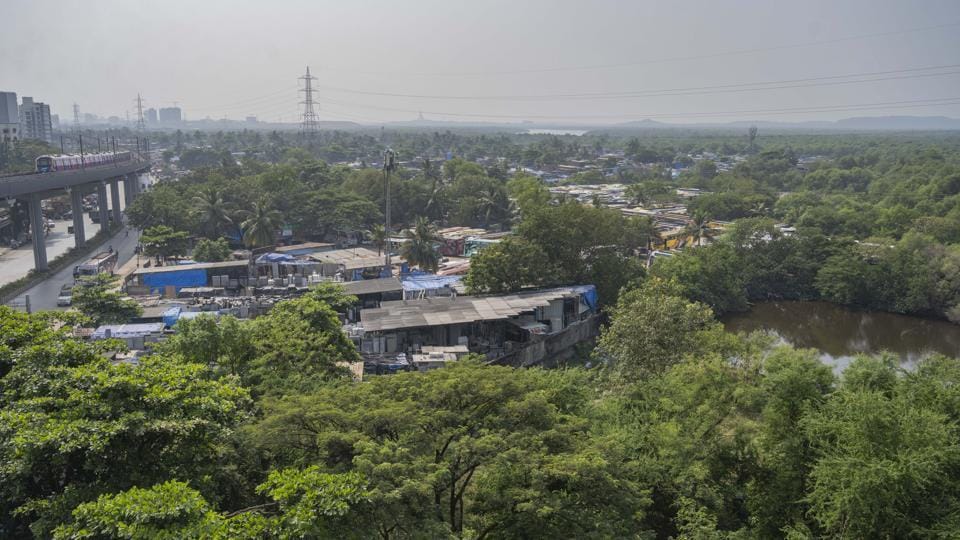
A division bench of justices Revati Mohite Dere and Neela Gokhale was hearing a plea filed by the Mumbai Metropolitan Region Development Authority (MMRDA) seeking permission to cut mangroves for installing Extra High Voltage (EHV) towers and transmission lines at the Kasheli Depot. Under a 2018 order to protect mangroves, such permissions must come from the court.
In response, the court laid down a detailed set of directions that will now apply to all projects involving the axing mangroves. The new orders say that mangroves must first be planted close to the affected site before any mangrove chopping is allowed. The court added that the funds allotted for compensatory afforestation must only be used for that specific project. The bench also asked authorities to identify and safeguard pieces of land which can be used for future mangrove plantations.
The bench said, “Sustainable development has been a matter of great concern for all, whether environmentalists or the courts. The apex court has consistently observed that development and environment must go hand in hand. In other words, there should not be development at the cost of the environment and that development can take place only after ensuring that as far as possible, the environment is safeguarded.”
The court also directed that mangrove plantations must follow the “land-for-land” and “tree-for-tree” principle, meaning mangroves cut in a coastal, brackish zone must be replaced with mangroves in a similar coastal environment, not in distant inland areas. The bench added that compensatory mangrove planting should be taken up on degraded mangrove land within the same district wherever possible, and that large-scale mangrove loss should be offset in degraded mangrove patches in the same region.
The court also said that environmental permissions should be sought for the entire project and not in a “piecemeal manner”. This way the court and the relevant authorities will be aware of the total number of trees likely to be affected by a project.
The bench ordered the state to create a public website within six weeks showing project-wise mangrove data for the past 10 years. The website must include the number of chopped mangroves, their species, the affected areas, the permissions given, the compensatory plantation sites, as well as geo-tagged photos, survival rates of replanted mangroves and compliance reports. The site must be updated every four months, the court added.
The bench observed that permissions for cutting mangroves were routinely sought at the “eleventh hour,” forcing the court to address urgent requests while the people in charge of the projects claimed that their costs would rise if there were any delays.
The bench also pointed to several recent projects, including a Malad sewage treatment plant, the Metro Line 4 works, a jetty at Borivali, the Mahim causeway bridge reconstruction and a Ghatkopar–Deonar pipeline, where mangroves were cut but compensatory afforestation remains incomplete or delayed.
In the case of the MMRDA seeking permissions to cut mangroves for the EHV towers, the authorities had allowed 70 mangroves to be cut, though the agency now plans to remove 26. As compensation, 370 mangrove saplings have been planted at Surai village where the forest department confirmed available land.
Environmental activist and director of Vanakshakti, an NGO committed to environmental conservation, said, “Agencies keep cutting mangroves in Mumbai and then claim they are compensating by planting ordinary trees in places like Dhule. Mangroves can only be replaced with mangroves, and only on coastal, brackish-water land.” He added that if one hectare of mangrove forest is taken, an equivalent hectare of suitable coastal land must be brought under afforestation, “not some random patch inland”.
The court will now list this matter every four months to review whether its orders are being followed.
Stay updated with all the Breaking News and Latest News from Mumbai. Click here for comprehensive coverage of top Cities including Bengaluru, Delhi, Hyderabad, and more across India along with Stay informed on the latest happenings in World News.


