
 E-Paper



HC: Political parties cannot put up illegal hoardings for personal gains
The bench was hearing a Public Interest Litigation (PIL) file by Suswarajya Foundation, Satara concerning illegal hoardings being put up by different individuals and organisations


Mumbai: The Bombay high court (HC) on Wednesday issued stringent directives concerning the proliferation of illegal hoardings by various entities across the city. The court’s division bench, comprising chief justice Devendra Upadhyaya and justice Arif Doctor, emphasised that no political party, religious organisation, or commercial entity can exploit public spaces for personal gains through advertising.
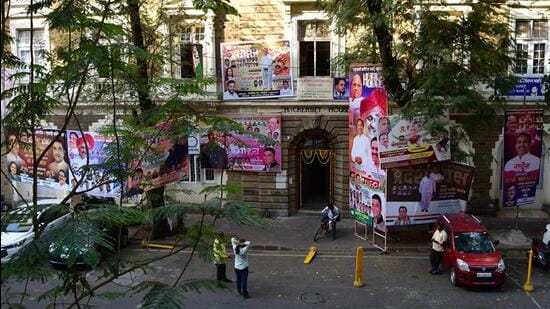
“No individual or group of individuals be it a political party or commercial or religious organisation can legally be permitted to utilise footpaths, street lights, roads for personal gains and advertisement, especially keeping in view the hazard caused to the pedestrian and other users of roads,” the court said.
The bench was hearing a Public Interest Litigation (PIL) file by Suswarajya Foundation, Satara concerning illegal hoardings being put up by different individuals and organisations.
In the plea brought before the court, the Brihanmumbai Municipal Corporation (BMC) informed that it had already removed a substantial number of illegal hoardings. The data presented revealed the dismantling of 10,839 political hoardings, 4,551 commercial hoardings, and 32,481 unauthorised hoardings. Notably, the BMC has taken proactive measures by reporting 410 instances of illegal hoardings to the police, leading to the registration of 22 FIRs, according to its counsel.
Further, in response to the prevailing issue, the civic body has informed that it has initiated steps at the ward level to regulate hoardings strictly, allowing only those sanctioned by proper permissions, which are tracked through QR codes.
Despite these efforts, instances of illegal hoardings obstructing public spaces and traffic lights persist, as evidenced by photographs presented to the court by intervenors.
Expressing concern over the continued violation of regulations, the high court stressed the necessity for collective action from both the government and the general public. The court issued a strong appeal to citizens, urging them to refrain from engaging in any activities that promote such illegality, which poses risks, including physical harm to pedestrians and other road users.
“It is beyond comprehension as to how any group of people can take liberty to put up banners on street lights. This falls upon us to appeal to the general population and every individual and group to come alive to the situation and not to indulge in any such activity that encourages such illegality having the potential of causing harm, even physical harm to pedestrians and other users,” the court stated in its order expressing its apprehension.
During the proceedings, the bench noted the absence of political parties in the hearing, despite their prior undertaking to refrain from displaying illegal hoardings. Consequently, the high court has directed these parties to appear in the next hearing to address the matter effectively.
Furthermore, the court has instructed other municipal corporations that have not submitted their affidavits to do so promptly before the next hearing, emphasising the importance of comprehensive action to curb the menace of illegal hoardings across the region.
The Suswarajya Foundation first brought attention to the issue of illegal hoardings by political parties in 2011, prompting a legal intervention by the Bombay High Court. In a comprehensive 97-page decision rendered in 2017, the court addressed the matter by issuing approximately 21 directives to Municipal Corporations across Maharashtra. These directives aimed at the strict implementation of municipal laws prohibiting illegal hoardings.
Among the directives, the court emphasised the provision of police protection for municipal officers responsible for removing illegal hoardings. In areas with a Commissioner of Police, senior officers were to be nominated as Nodal Officers to oversee the enforcement of these directives. Immediate action was mandated in response to complaints from municipal officers regarding police non-cooperation.
Additionally, the court instructed the establishment of toll-free numbers and SMS facilities for citizens to report illegal hoardings, reinforcing public engagement in combating this issue. Furthermore, a policy framework was to be developed to guide Municipal Councils and Corporations in granting permissions for sky signs and advertisements, with a focus on ensuring they do not distract drivers or pedestrians.
Despite these directives, many remained unfulfilled, leading to contempt proceedings in 2018. Subsequently, the government issued a resolution mandating the inclusion of QR codes on hoardings containing relevant details. Detailed guidelines for controlling the publication of sky signs and advertisements, including hoardings, were published on April 29, 2022, specifically targeting the Municipal Corporations of Greater Mumbai.
While these efforts were made, the HC acknowledged the challenges faced by municipal officers due to police non-cooperation. In response, the court instructed the police to provide necessary assistance whenever required, highlighting the importance of collaboration between government entities in addressing the issue of illegal hoardings. The court will further delve into the compliance of its 2017 direction in the upcoming hearing.

Stay updated with all the Breaking News and Latest News from Mumbai. Click here for comprehensive coverage of top Cities including Bengaluru, Delhi, Hyderabad, and more across India along with Stay informed on the latest happenings in World News.


