
 E-Paper



Film industry’s summer of discontent
There are no major lineups planned for the lucrative summer months, said Gautam Jain, partner at research and consulting firm Ormax Media. Traditionally, families stepped out to watch films during holidays but currently there isn’t much to see


MUMBAI: It’s been a bleak summer for the Indian film industry after the euphoria around Shah Rukh Khan’s ‘Pathaan’, which set the cash registers ringing in January, faded away. Now, the postponement of SRK’s ‘Jawan’ from June to September has been called a ‘big negative’ by brokerage firm Elara Capital. Since Salman Khan’s Eid release was a washout, Elara estimates the 16-19% theatre occupancies of April dipping to 12-14% in May and possibly improving to 23-25% in June on the back of ‘Maidan’ and ‘Adipurush’. But if these films fail, the industry’s first quarter of the new financial year would be dismal, the firm noted.
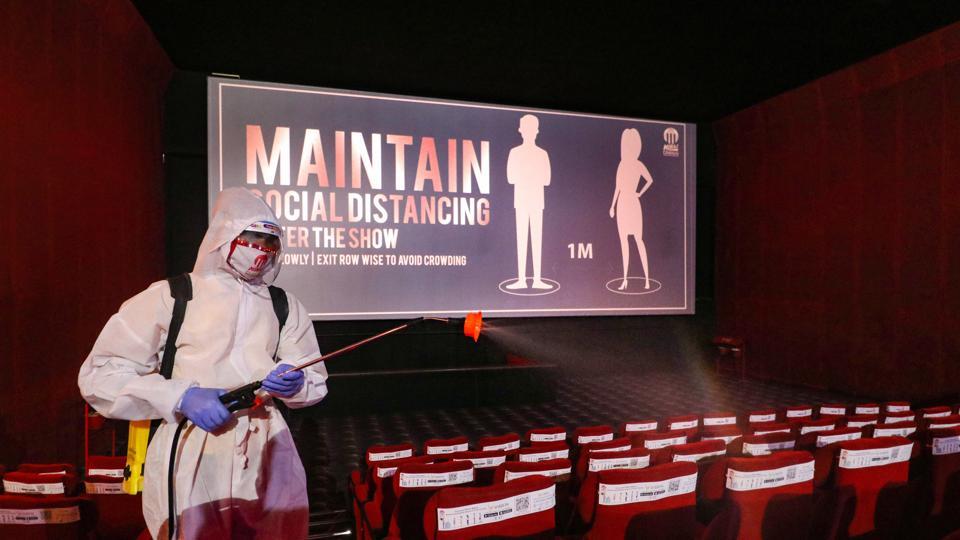
There are no major lineups planned for the lucrative summer months, said Gautam Jain, partner at research and consulting firm Ormax Media. Traditionally, families stepped out to watch films during holidays but currently there isn’t much to see.
The dull season puts the spotlight back on the struggles of the film industry ever since Covid-19 disrupted the business. With viewers discovering the joys of watching cutting-edge content on streaming services during pandemic lockdowns, developing new tastes and adopting new habits, the film industry’s ordeal is not yet over.
“Most content hitting theatres is underwhelming,” said Sraboni Bhaduri, a self-confessed film buff, consumer behaviour expert and psychologist. Not only is there plenty of good content available on streaming, there are other variables. Post-pandemic, the home has come to mean so much more with people setting up better infrastructure for a movie experience. “Earlier you wanted to get out of home as there was a better space outside. Now you have better content and you’ve improved your home space. So, it’s literally Netflix and chill,” Bhaduri said.
Home viewing offers deeper engagement with content and allows binging. Clearly, narratives focused on storytelling are suited to streaming platforms while visual spectacles work better in theatres. Jain said such demarcation had started to happen even before the pandemic, as small budget films without big stars were not getting good openings in theatres. Only the bigger films were working well in cinemas in 2019. “The pandemic became the catalyst to make the divide very clear,” Jain said.
As normal life resumed, a lot has changed among audiences. They prefer to wait for small-budget films to stream on a platform as they are not a must-watch in cinemas. Going to the cinemas on big holidays like August 15, Eid or Rakshabandhan is no longer sacrosanct. It is all about content and not the day. Even a big star may not draw crowds if the word-of-mouth is negative.
However, blaming the pandemic for the industry’s woes isn’t entirely fair. The film industry has not managed to expand the total universe of filmgoers in India. In a February report Ormax estimated the total theatrical audience base in the country at 12.2 crore. “This is not even 10% of our total population comprising people who have watched a film at least once in a year,” said Jain.
He cited the example of ‘Pathaan’ (2023) and ‘Baahubali: The Conclusion’ (2017) both of which made approximately ₹500 crore in box office collections for the Hindi version. “While the box office collections were similar, Baahubali’s footfall was approximately 5 crore and Pathaan’s would approximately be 3.5 crore. Clearly, the number of people watching the film hasn’t gone up. The industry needs to either expand the viewer base or get the same people to watch more films or do both together,” Jain said.
That brings us to the other reason for no shows – high ticket prices. At least a thousand single-screen theatres have shut down, especially in the Hindi belt leaving viewers at the mercy of pricey multiplex tickets. Constrained for money post-pandemic, consumers aren’t keen to shell out more for the same experience. Plus, they have other free entertainment options in YouTube channels, Instagram reels or online gaming.
Yet Jain is very confident that theatre experience is not going out of fashion any time soon. Filmmakers have always met changing audience expectations through the decades with films suited to their needs -- whether it was the social dramas of the 1950s, romance in the ’60s, action-centric angry young man films of the ’70s, family films of the ’90s and early 2000s keeping the NRI audiences in mind…and so on, he said.
The industry is readying a new slate more suited to current tastes. There is no reason why they cannot meet the challenge. But the onus lies both on theatre owners and filmmakers to make the most of this opportunity.

Stay updated with all the Breaking News and Latest News from Mumbai. Click here for comprehensive coverage of top Cities including Bengaluru, Delhi, Hyderabad, and more across India along with Stay informed on the latest happenings in World News.


