
 E-Paper



Maharashtra bandh: Ahead of BMC polls, Shiv Sena shows dominance over Mumbai
The Shiv Sena on Monday displayed its dominance and control over Mumbai by enforcing a near-complete bandh (strike) to protest the killings of the farmers in Uttar Pradesh’s Lakhimpur Kheri


The Shiv Sena on Monday displayed its dominance and control over Mumbai by enforcing a near-complete bandh (strike) to protest the killings of the farmers in Uttar Pradesh’s Lakhimpur Kheri. The response to Monday’s bandh showed that the party’s organisation’s strength is still intact and the party can bring Mumbai to a halt. This show of strength is particularly important for the party going into the crucial Brihanmumbai Municipal Corporation elections against Bharatiya Janata Party (BJP).
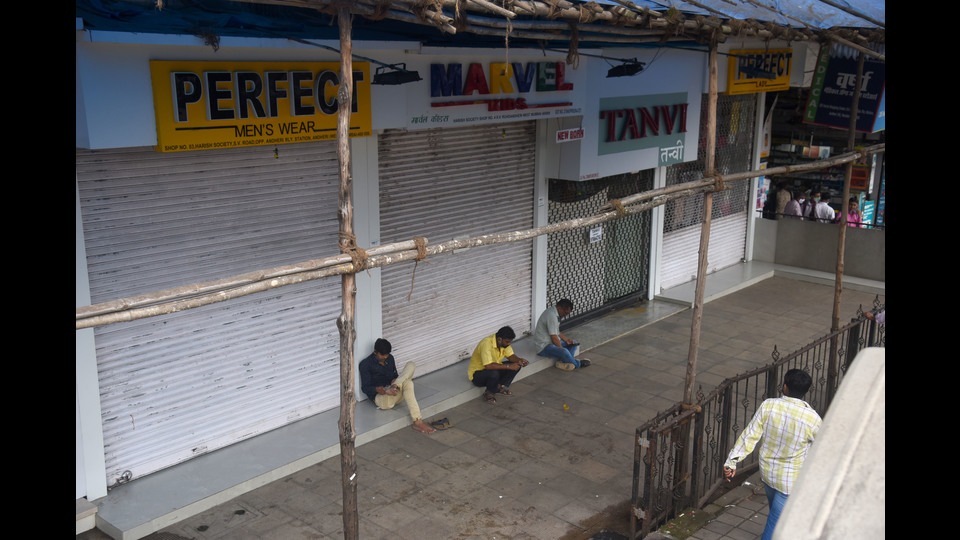
However, the BJP said that the bandh was forced on shop and establishment owners. Leader of opposition Devendra Fadnavis denied that the people have supported the bandh and alleged that administration, police and government machinery were used to enforce a bandh.
The party’s history with ‘bandhs’ dates back several decades when Sena patriarch Bal Thackeray used to bring Mumbai to a grinding halt with a single call. When Bal Thackeray called for a bandh, the city came to a standstill, partly due to fear as well, as the party was prone to violence. The concept of Mumbai bandh was borrowed by Bal Thackeray from his contemporary, the late George Fernandes, but the former used it effectively to show his dominance over Mumbai.
For the first time in nearly two decades (18 years), the Sena called or backed a bandh. Sena leaders said the party ceased to call a bandh after 2003 after the party was fined
Rs20 lakh by the apex court for calling a bandh against the state government. The Thackerays did not back the bandh called by BJP, Vishwa Hindu Parishad, in Mumbai.
In July 2006, when unidentified miscreants allegedly desecrated the statue of Meenatai Thackeray, the late wife of the Sena supremo, irate Shiv Sainiks blocked roads in Mumbai, Nashik and Thane, but officially the party said that there was no bandh. On November 17, 2012, when Thackeray senior passed away, the bandh in Mumbai was “spontaneous as a mark of respect” and the party officially denied calling a bandh on the next day.
On Monday, key leaders from the Sena focused on areas such as Dadar, Shivaji Park, Worli, Lal Baug, Parel, Chembur, to stage protests, rasta roko, etc. These areas are largely Marathi dominated localities in central Mumbai, which constitutes a major chunk of the party’s vote bank. Mumbai mayor Kishori Pednekar staged protests at Worli — Sena scion Aaditya Thackeray’s constituency — along with key leaders party’s vibhag pramukh Ashish Chemburkar, former MLA Sunil Shinde, and Sena deputy leader Sachin Ahir. Sena legislator from Dadar-Mahim, Sada Sarvankar held protests in the vicinity of Shiv Sena Bhavan in Dadar — the heart of Mumbai. Party workers took to the streets in the suburbs as well to stop vehicles on arterial roads, shut shops, etc.
Sena MP Arvind Sawant, who also heads the Sena’s labour wing, Bharatiya Kamgar Sena, said that the people supported the bandh. “It was a successful bandh as people supported it wholeheartedly. The appeal of the parties [to support farmers] was followed peacefully. We never forced anybody, one or two stray incidents are fine; they are bound to happen, but we never enforced it. The support from the people showed the anguish of the people over the Lakhimpur incident,” he said.
Fadnavis, however, dismissed the claim that the bandh had the people’s backing. “The Lakhimpur incident is serious and the state govt (UP) is looking into it. However, today’s bandh is not to show solidarity over the incident, but to get a political benefit. People are not supporting the bandh, but with the help of administration — police, sales tax, GST — people are being forced to do bandh,” Fadnavis said in a press conference.
In the last few months, the cadre of the Shiv Sena, which was brought up on the sustained diet of ‘rada’ politics, has been mobilised on the ground due to three instances. Political observers said that this has reignited the strength of the Sainiks on the ground. Sena workers hit the streets in Mumbai in August following union minister Narayan Rane’s ‘slap’ remark against the chief minister and Sena chief Uddhav Thackeray. Before that BJP and Sena workers clashed outside Sena Bhavan, the party headquarters, including once over BJP legislator Prasad Lad’s comment that ‘if needed they would demolish the Sena Bhavan”.
Political analyst Surendra Jondhale said that with Bal Thackeray’s demise, the party’s culture had changed to a moderate stance. With the alliance with the NCP and Congress, the connection between the Sena chief and workers had loosened as the leadership was busy helming the state. “Shiv Sena has proven that its organisational mettle and political presence is still intact in Mumbai. In the Rane incident as well Shiv Sainiks had hit the streets. Sainiks, which is the soul of Shiv Sena, are still active and strong. There was a feeling of discomfort in them after the new political alliance (MVA),” Jondhale said.
Though Sawant dismissed that the bandh was politically motivated, given the BMC elections next year, he, however, said that it shows the party’s dominance in the city. “We call bandhs to convey the anguish and resentment over issues. We don’t call bandhs to show our strength. The people know the strength of Shiv Sena. Today, there is strong resentment among the people. We never have political motives while doing these things. Balasaheb didn’t care for things like power. During his times, he would call bandhs for causes and justice for people. We have done the same in the past, and we are doing it now... Definitely, it shows our power and dominance because our party workers are strong,” he said. He added that the party was fined in 2003 and subsequently stopped calling for bandh, which he termed as a “Gandhian way to convey our resentment.”
Jondhale, former professor of political science at Mumbai University, said that there is a distinction between Bal Thackeray’s bandh which were spontaneous and the one called by the ruling coalition in Maharashtra. “Shiv Sena has positively responded to the initiative taken by NCP [on bandh]. Uddhav Thackeray will gain political benefits from this next year. One must not forget that when BJP got almost as many seats as Shiv Sena in BMC elections in 2017, it was their government and their CM. This time it will be difficult for BJP. Marathi people in Mumbai do not exercise their votes to BJP, the political demarcation is quite clear. For Shiv Sena, its organisation network, presence in the ward has come alive which is important. This will give political dividends soon,” he said.

Stay updated with all the Breaking News and Latest News from Mumbai. Click here for comprehensive coverage of top Cities including Bengaluru, Delhi, Hyderabad, and more across India along with Stay informed on the latest happenings in World News.


