E-Paper



Muslim girls participate in dahi handi, notch up a win for communal harmony
Three Muslim girls—Zara Manihar, 14, her 17-year-old sister Rani, and Shifa Sheikh (20) are set to be part of the dizzy multi-tier human pyramids

 Prefer HTon Google


MUMBAI: This Janmashtami, dahi handi events in Jogeshwari will witness something a trifle out of the ordinary. Three Muslim girls—Zara Manihar, 14, her 17-year-old sister Rani, and Shifa Sheikh (20) are set to be part of the dizzy multi-tier human pyramids formed to reach the traditional pot of curd strung up at a height.
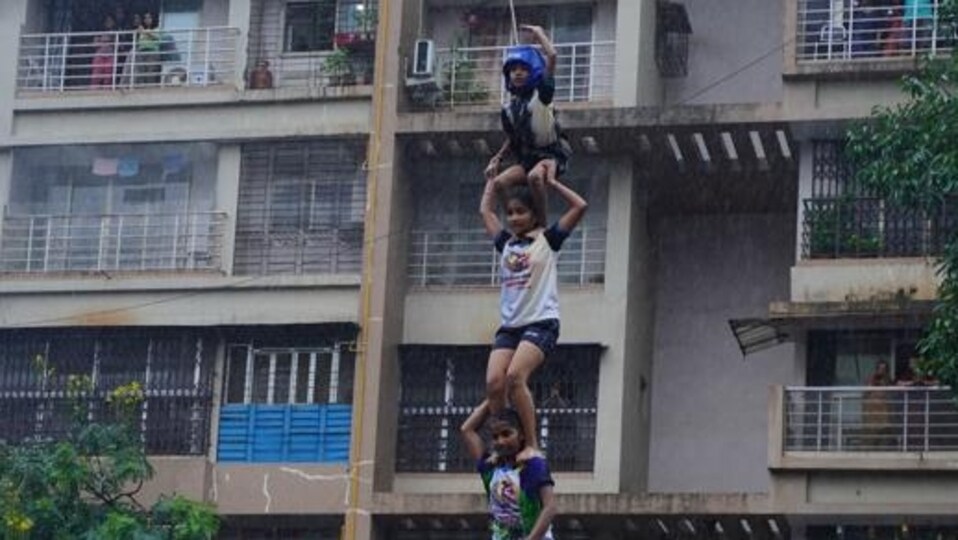
The city’s dahi handi mandals have this year taken a proactive stand to promote communal harmony and sisterhood. The lady coaches of the Muslim girls emphasise that dahi handi is a cultural sport that transcends religious boundaries, and add that their aim is to spread the festive spirit by including people from all faiths.
“The first thing we asked the Manihar siblings was if they had permission from their parents to participate,” said Harshali Rane, coach of the Jogeshwari Mata Mahila Govinda Pathak comprising 80 to 100 members with a support team. “They told us that they take great pride in observing our (Maharashtrian) culture. Also, dahi handi is a sport and there should be no religion involved in sports. They were in agreement with our core philosophy and hence joined our team. They are also allowed by their families to wear shorts, the most comfortable gear for climbing.”
Residents of Aarey Colony in Jogeshwari, the duo’s mother said this was the first year they were participating. “The children expressed an interest in participating,” she told HT. “We cannot stop them. Let them fulfil their wish. Their school friends are also participating so we allowed them. As parents we can’t dampen their enthusiasm.”
Rane said that during Eid, the entire team would be invited to the Manihar siblings’ home to partake of sheer korma. On Janmashtami, the team will go to Thane in the mornings to break handis, followed by a grand finale of breaking handis on their home turf at Anand Nagar in Jogeshwari East.
Shifa Sheikh (20) from Shastri Nagar in Vile Parle is another dahi handi player. “She has been playing kabbadi and is a powerlifter at the national level,” said Geeta Zhaghade, secretary of the Dahi Handi Samanvay Samiti and president of Parle Sports Club. “She has an important position in our team and plays a crucial role. She enjoys this more than other girls because she gets to dance and play here.” Zhaghade added that the team celebrated all festivals together, whether it was Bakri Eid or Diwali.
Shifa told HT that her mother encouraged her to participate in every sport. “Sport has no caste or religion,” she said. “I have been an athlete, played kabbadi and now dahi handi. There is unity and equality among us all—neither religion nor caste nor class divides us. That’s how a six-tier pyramid stands—on the foundation of unity. We are attempting a seven-tier pyramid this year.”
Shivaji Khairnar, social worker, dahi handi coordinating committee member and Pro Govinda championship referee, believes that dahi handi is a means to inculcate team spirit and unity. “Women participants have to face many challenges, juggle household chores and jobs and practise from 9 pm to 12 am,” he said. “But they have also been trained in self-defence by the mandals and go home safely in groups.”
Khairnar said that in these polarised times where a religious and ideological divide prevails on social media, his committee wanted to send out a strong message on unity in diversity through this cultural sport. “We want to use all festivals in Jogeshwari as a means to end religious chasms,” he said.