
 E-Paper



Physics, maths optional for engineering: No clarity over guidelines yet
With no clear guidelines from the regulator on how to conduct admissions to engineering courses for students, who haven’t studied physics and maths in Class 12, the CET cell has gone ahead with the entrance exam as usual. Exams were held between September 20 and October 1

 Prefer HTon Google


Almost six months after the All India Council for Technical Education (AICTE) said that physics and mathematics in Class 12 are optional for those seeking admission to engineering courses, the Maharashtra Common Entrance Test (MH-CET) for admission to engineering courses in the state are being conducted only for those who have studied the subjects.
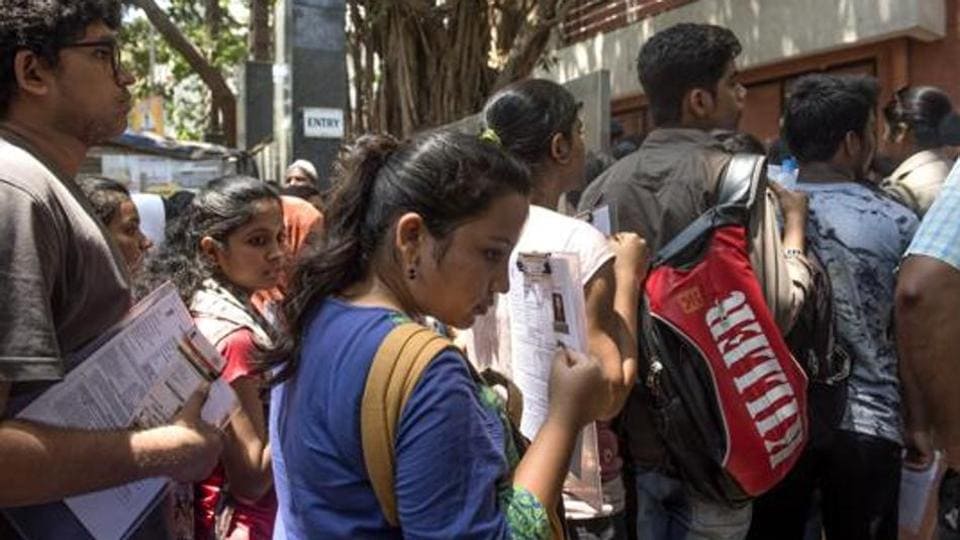
With no clear guidelines from the regulator on how to conduct admissions to engineering courses for students, who haven’t studied physics and maths in Class 12, the CET cell has gone ahead with the entrance exam as usual. Exams were held between September 20 and October 1.
“There has been no notification or guideline on whether and how to make any changes in the entrance exam process. So, for the admissions to the academic year 2021-22, maths and physics in Class 12 are mandatory for those taking the MH-CET. If we receive any guideline or notification from the state or the AICTE, we will modify the exam,” said CD Joshi, commissioner, CET cell.
Until last year, admissions to engineering courses were done for students who studied maths and physics, apart from one of chemistry, biotechnology, biology and/ or technical vocational subject.
However, in April, AICTE released its approval process handbook 2021-22— a legal document as per the All India Council for Technical Education Act, 1987. In it, the apex body regulating all technical courses and institutions made maths and physics in Class 12 optional for those seeking admissions to engineering courses. It said this was to bring in diversity in engineering courses. The regulator said that institutions should conduct ‘bridge’ courses to induct students, who did not study maths and physics in Class 12.
“After the handbook was released, there have been no guidelines from the state government or AICTE on what kind of bridge courses institutions have to come up with. Neither has there been any guideline on how to conduct entrance exams for such students,” said an official from a premier engineering institute in the city.
Anil Sahasrabudhe, chairperson, AICTE, said, “As of now, there’s no mandate that all institutes must admit students. In the handbook, we have opened the doors for students who may not have studied maths and physics. So, if any university or institute wants to do it they can. At the moment all engineering admissions are done based on state and central level entrance exams designed for physics, chemistry and maths students. What institutes can do this year, it to allow students without physics and maths to take the same entrance exams. If they clear the exam, they can get admissions.”
SS Mantha, chancellor of KL Deemed to be University in Hyderabad and a former chairperson of AICTE, said, “In my opinion physics and maths are building blocks of engineering courses that cannot be exempted. However, the approval process handbook released by AICTE is binding on state governments and the regulator expects that institutions follow the rules.”
Vaibhav Narwade, a professor and member of the Board of Studies of the department of computer engineering at the Ramrao Adik Institute of Technology Nerul, Navi Mumbai, said, “The state government runs a centralised admission process. They may consult with AICTE and decide the procedure. I don’t think colleges will face problems during admissions.”
However, in the absence of any clear guidelines on how to conduct bridge courses, institutions remain clueless.
“Institutions are expected to build bridge courses, but physics and maths are not courses that can be bridged. If the regulator has come up with a rule, then it is also the responsibility of the regulator, state government and institutions to formulate and issue operating guidelines on how to conduct such courses. Any such course will need to have a procedure, there’s a cost attached them, the curriculum has to be designed, proficient resources have to be brought on board to teach such courses,” said Mantha.
Sahasrabudhe said that a committee was working on details on how to admit students. “The committee is looking at nitty-gritty such as courses can be opened up for which students. For example, maybe mechanical engineering will require both physics and maths, but biotechnology may not require physics, but biology may be allowed. These broad guidelines will be issued after the committee has worked on these details,” he said, adding that the guidelines can be expected by the end of December.
The changes in the AICTE handbook 2021 were an attempt at reviving the dipping demand for engineering courses in the country. In Maharashtra, almost half of all engineering seats have been going vacant for want of takers for the past three years. In the academic year 2020, around 45% of seats remained vacant at the end of the admission process and 49% were vacant the year before.
Incidentally, in 2019, a report released by employability assessment company Aspiring Minds found that more than 80% of all Indian engineers were unemployable for any job in the knowledge industry. The report found that only 3.84% of engineers had the required technical, cognitive and linguistic skills to be in a software-related job in a startup.
In 2014, the Maharashtra government had commissioned an analysis of the drop in demand for engineering colleges in the state. GD Yadav, then the vice-chancellor of the Institute of Chemical Technology, Mumbai, had then presented a report suggesting “appropriate criteria to reduce the intake and closure of some of the programmes including mergers of branches with fancy nomenclature into the mainstream.”


