
 E-Paper



Political parties fight over credit for SC verdict on OBC quota
While the ruling alliance has claimed credit for the apex court verdict, Maharashtra Vikas Aghadi (MVA) leaders insisted that the ruling was based on the report by a commission set up under former census commissioner J k Banthia to compile the empirical data on OBCs.


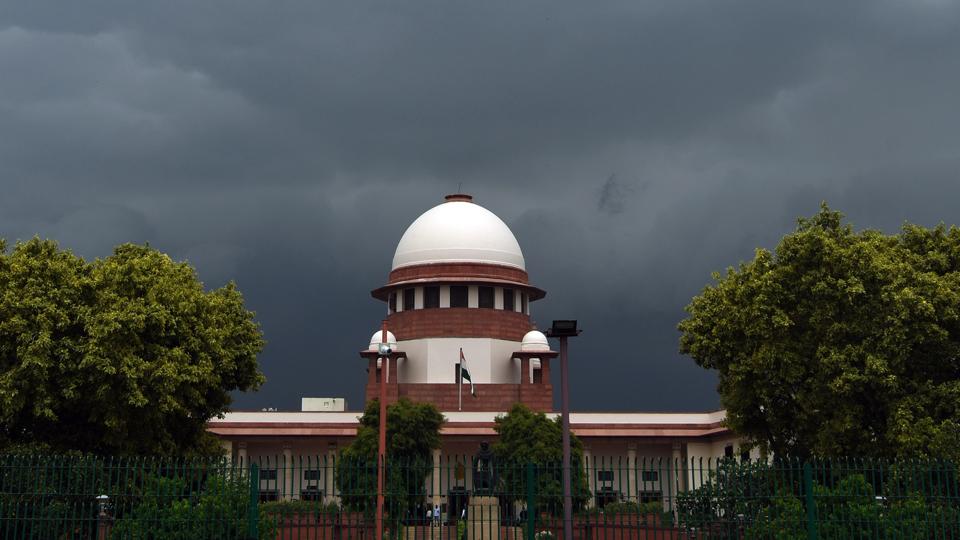
A 17-month struggle by OBC (Other Backward Class) outfits and political parties has finally borne fruit with the Supreme Court on Wednesday allowing 27% OBC reservation in the local bodies across Maharashtra.
While the ruling alliance has claimed credit for the apex court verdict, Maharashtra Vikas Aghadi (MVA) leaders insisted that the ruling was based on the report by a commission set up under former census commissioner J k Banthia to compile the empirical data on OBCs.
Chief minister Eknath Shinde on Wednesday took a jibe at the erstwhile Uddhav Thackeray government, saying they are “lucky” for the state. “I personally was in touch with the Banthia commission as I was holding the urban development department. I and deputy chief minister Devendra Fadnavis discussed issues with the commission and removed hitches as well. I had been to Delhi thrice in this regard and finally, we succeeded in convincing the Supreme Court for OBC reservation.”
Shinde, leader of the rebel Shiv Sena faction, however, said that they don’t want to take any credit and give it all to the opposition. “We give all the credit to them [MVA partners] if they want. We are happy with the fact that the OBC community gets back its quota.”
Ajit Pawar, a Nationalist Congress Party (NCP) leader and former deputy chief minister, said the SC order accepting the Banthia commission’s report and ordering elections in the local bodies is a victory for OBC brothers and the sincere efforts made by the MVA government.
“Under the leadership of then chief minister Uddhav Thackeray and senior leaders such as Chhagan Bhujbal, Dhananjay Munde, Vijay Wadettiwar and others, the fight for OBC reservation ended with a success,” he said.
OBC leader Bhujbal also gave credit to the MVA government. “It was our government that had collected the empirical data of the OBC community through the Banthia commission. We had several meetings with government lawyers and officials. It is due to the hard work we did when the MVA government was in power that the Supreme Court has granted reservation.”
Sena chief Thackeray said in a statement that it was their government’s duty to work for the weaker sections. “This is not a fight to take credit at all, because it is the duty of a government to work for the welfare of the common people, especially the weaker sections of society. Hence, all the parties in the MVA had been working for the OBC reservation from the very beginning.”
Fadnavis, however, blamed the MVA regime for the delay in the OBC reservation. “The decision could have come much earlier if the MVA government had not wasted two years. I have been saying repeatedly that the triple test mandated by the SC has to be followed for giving the reservation. But the previous government kept blaming the Centre for not sharing the empirical data.”
The Supreme Court’s verdict is based on the report by a five-member commission headed by J K Banthia, former census commissioner of India and former chief secretary of Maharashtra, who was appointed on March 11. The commission in its report submitted on July 8 recommended up to 27% reservation to the OBC community in the local bodies.
Political analysts believe that the decision will be beneficial for the Shinde-Fadnavis government. “Though the Banthia commission was set up by the MVA government, the decision came after the new government came to power. Thus, it will be beneficial for Shinde and Fadnavis,” Abhay Deshpande, political analyst, said.
OBC outfits are not fully satisfied with the SC verdict. They believe that the Banthia commission adopted a flawed method to collate empirical data which resulted in a drastic reduction of their population.
Chandrakant Bavkar, executive president, Jan OBC Morcha, said, “We are not 100% satisfied because we have raised objections to the Banthia commission’s report. During the survey, the OBC families were identified based on their surnames. But there are several surnames that are being used by different castes and communities,” Bavkar said.
For instance, the Bavkar surname is being used by Kunbis, Agris, Saraswat Brahmins, and Koshti community as well. Hence, it cannot be called empirical data, he said.
Stay updated with all the Breaking News and Latest News from Mumbai. Click here for comprehensive coverage of top Cities including Bengaluru, Delhi, Hyderabad, and more across India along with Stay informed on the latest happenings in World News.


