
 E-Paper



Reay Road Bridge: Waiting for the CM
MUMBAI: The new Reay Road bridge, a cable-stayed structure, set to ease traffic, awaits inauguration. It preserves historical elements while enhancing connectivity.

 Prefer HTon Google


MUMBAI: At first glance, it looks very familiar, its fan-like cables reminding you of another bridge that is now a Mumbai icon. Just like that other architectural marvel, the Bandra-Worli Sealink, the new Reay Road bridge is cable-stayed – it is, in fact, the only land-based cable-stayed bridge in the city, and the second to use this design after the sealink.
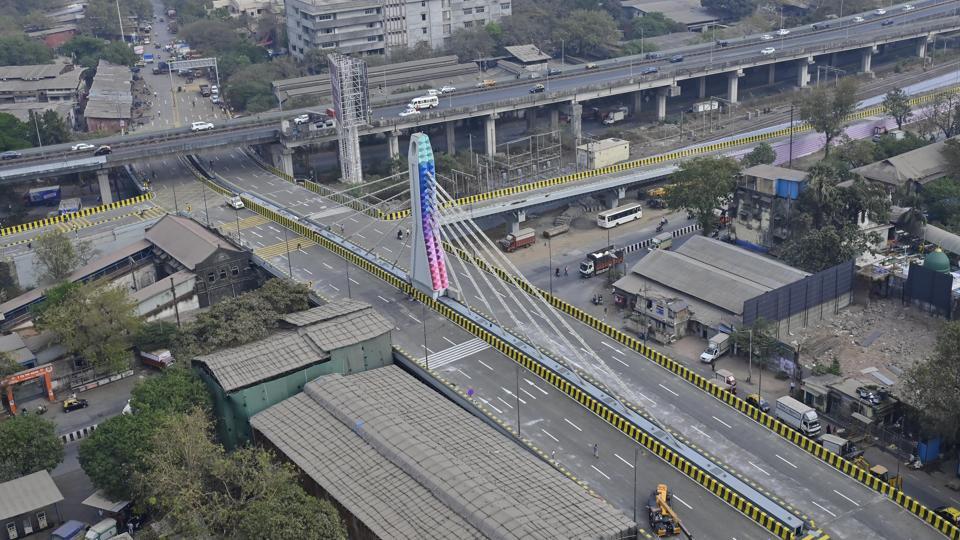
After its demolition in February 2022 and reconstruction, the bridge, spanning 385 metres, awaits inauguration by chief minister Devendra Fadnavis. It promises to change the dynamics of traffic flow in the area.
Built in 1910 and once riddled with slums, the Reay Road bridge is one of four British-era bridges whose reconstruction the civic administration entrusted to the Maharashtra Rail Infrastructure Development Corporation Ltd (MRIDC), also called MahaRail. An IIT-Bombay study of bridges in Mumbai had declared it dilapidated, setting the stage for its reinvention.
How it will help
The bridge passes over the Harbour Line railway tracks at Reay Road station. One side leads towards Byculla station, onto Sant Savata Mali Marg, and the other landing where the Britannia factory and Darukhana workshops are, said an MRIDC official.
“There are two additional exits, one on each arm of the road. On the side going towards Byculla, one road drops onto Mahul Road, also called BPT Road, which leads to the Atal Setu. Commuters going and coming from there will find the bridge very convenient,” he said.
All this traffic currently reroutes to the Cotton Green junction, adding to the congestion there. The workshops at Darukhana make for heavy vehicular traffic in the vicinity.
Quraysh Sadriwala, who commutes from Sewri to Fort in South Mumbai daily, is eagerly looking forward to using the new bridge. “The Cotton Green junction should take two minutes to clear, but because of the traffic moving towards the Darukhana workshops and those using the Atal Setu, it takes 15 to 20 minutes in the morning. As the day progresses, the traffic increases.”
The other exit on the arm of the bridge towards Darukhana leads to Barrister Nath Pai Marg, in the south-bound direction, said the MRIDC official. The bridge sails over the parallel P D’Mello Road and under the Eastern Freeway.
Why cable-stayed?
So why a cable-stayed design – where a central spine girder anchors the stay cables that hold the bridge’s arms – for this bridge? “A cable-stayed road-over-bridge requires less of a foundation. This means fewer pillars and better traffic movement for both the roads and trains passing beneath it. It also adds to the aesthetic look of the neighborhood. Besides, architectural themed lighting will be used to illuminate the bridge at night, with the option of showcasing various festivals or occasions on it,” said the MRIDC official.
There’s just one hitch – while the old bridge provides access to Reay Road station, the new bridge doesn’t. But there are plans to construct a foot overbridge linking the bridge to the railway station.
Extended timeline
Few major construction projects are without hiccups. Here, the design of the bridge further contributed to an extension in the project’s timeline. Originally scheduled to be opened in March 2024, then May 2024, and then November 2024, the bridge is finally complete.
“The overall scope of construction was found to be more than expected, and we encountered technical complications during the installation of the cables, taking more time to ensure safety. The clearance of right of way (ROW) and utilities encountered also caused delays,” said the official.
While the bridge itself was complete in November 2024, finishing touches had to be added. It is now set to be inaugurated by the chief minister, hopefully this month.
Starting with a tentative cost of ₹169 crore, the bridge’s final cost is now ₹266 core. This includes five years of maintenance and codal charges to the railways, paid for supervision. MahaRail attributed this escalation to the difference between the estimate prepared based on a basic design, revised after the detailed engineering was done.
Despite its reinvention, souvenirs of this vestige of colonial India have been thoughtfully preserved. A few blocks of the old bridge, made of basalt stone, now stand by the gates of the historic August Kranti Maidan. In its modern avatar, the Reay Road bridge brings a contemporary touch to the Reay Road skyline – while its two selfie points will ensure that it leaves a lasting impression on our collective memory.

Stay updated with all the Breaking News and Latest News from Mumbai. Click here for comprehensive coverage of top Cities including Bengaluru, Delhi, Hyderabad, and more across India along with Stay informed on the latest happenings in World News.


