
 E-Paper



Rush of orders from tier-2 towns hurt BEST’s dream of an upgraded fleet
Mumbai's BEST public utility faces delays in receiving ordered electric buses due to manufacturers' supply constraints

 Prefer HTon Google


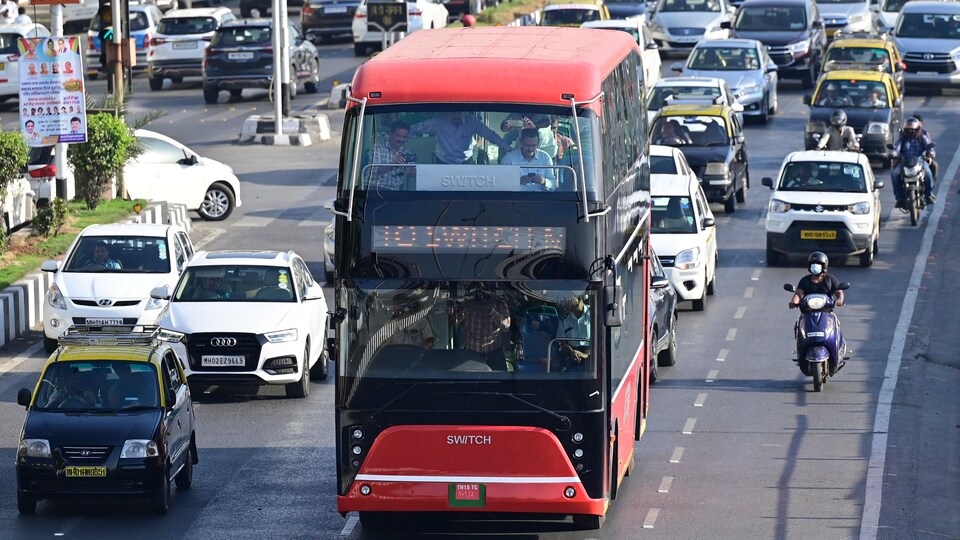
Mumbai: The BEST-laid plans of mice and its mandarins have gone awry. In the 2023-2024 budget, the public utility had envisioned a 10,662-strong fleet of shiny red AC electric buses plying on Mumbai’s roads. Instead, we are left with an undertaking stretched to capacity with a severely depleted fleet of only 3,050 serving its thirty-two lakh patrons.
What went wrong?
In the last two years BEST placed an order of 3200 buses from various manufacturers like Ashok Leyland, Olectra and Switch Mobility. However, these manufacturers are dealing with a sudden spurt of orders from several tier-2 towns as well leading to their supply pipeline clogging up. For instance, BEST placed an order of 200 CNG buses with Ashok Leyland which were supposed have come by March this year. However, only 127 buses have been delivered so far because they are also manufacturing buses for several other states. Ashok Leyland’s subsidiary, Switch Mobility which manufacturers only electric buses was contracted by BEST to deliver 200 air-conditioned double decker buses by this February, but so far only 50 of them have been delivered and similarly, Hyderabad-based Olectra Greentech was to have delivered 2100 buses by July this year of which they have delivered only 174 so far.
Anil Diggikar, the third general manager to head BEST Undertaking in three years, said, “The number of buses that should ideally come month on month is not happening. I have called the bus manufacturers for a meeting next month.”
But experts say Mumbai is paying the price for an massive shift to clean transport happening in tier-2 towns.
Influx of public buses in tier-II cities
The Faster Adoption and Manufacturing of Hybrid & Electric Vehicles (FAME) initiative of the government is an integral part of the National Electric Mobility Mission Plan (NEMMP) which is pushing for improved public transportation. According to transport experts, a quiet revolution has been steadily making an impact on the streets of some of the tier-I & II cities. In fact, cities like Bhopal, Bhubaneswar, Nashik, Navi Mumbai, Panaji, Kochi, Indore, Surat, Rajkot, Leh and Shimla are working as part of an initiative to transform public mobility by introducing a mix of CNG and e-buses.
The bus manufacturers welcome the growing demand for e-buses and the proactive approach of STUs in calling tenders for large-scale procurement. Ashok Leyland, for instance, expects a strong demand from STUs for conventional fuels to continue for next five years considering factors like ageing fleet and mandatory scrappage policy, continued investments in public transportation infrastructure by central and state governments and increasing thrust by STUs in intercity and mofussil routes. They currently supply CNG single decker buses to BEST and claim to have a strong order book for 2024-25 of more than 4000 conventional fuel buses for STUs across Tamil Nadu, Karnataka, Gujarat, Telangana and Andhra Pradesh apart from an order of 10 fuel-cell electric vehicle or hydrogen-based buses.
“The growing demand for e-buses is a step in the right direction, considering the importance of clean transportation solutions for achieving our sustainability goals,” said Sanjeev Kumar, President, MHCV, Ashok Leyland. “With increasing thrust on infrastructure developments in tier-2 and rural sectors, mobility of people within states is becoming a major area of focus for State governments and private players. We see this trend to further expand and strengthen aided by government policies. We are actively working on strategies to expand our footprint in tier-2 and rural areas accompanied by after sales, service and spare parts support.”
None of which, of course, helps the flailing BEST. The 150-year-old undertaking is is dealing with delayed supply of new orders for buses, frequent threats of protests from staff of wet lease bus operators and cumulative losses of ₹6000 crore. Frustrated by the slow delivery, BEST has not only issued show cause notice to Olectra Greentech for reneging on its promised delivery timeline, but it also went to the extent of cancelling its contract with NOIDA-based Causis E-Mobility which was supposed to supply 700 AC double decker e-buses.
“The BEST administration has poorly planned and executed the procurement process of these buses on wet lease. A detailed study should have been done on the manufacturers know-how and their plant capacity before placing such bulk orders. The delays are only an indication of the intention of the bus manufacturers” said former BEST committee member and BJP leader Sunil Ganacharya.
“With no elected representatives on-board, the BEST is directionless. There seems to be a complete policy-paralysis. The administration has been giving orders for buses which are not being delivered on time, adding to immense pressure on the existing fleet and exacerbating passenger woes,” said Ravi Raja, Congress leader and former BEST committee member.
Another public utility that could be in similar trouble next is the Maharashtra State Road Transport Corporation (MSRTC) which is looking to replace its 5,000 diesel buses with LNG and it has placed an order for another 5150 e-buses. Similarly, the Uttar Pradesh State Transport Corporation has also called tenders for 5000 e-buses. Anand S, Vice President & Head – Passenger Business, Tata Motors Commercial Vehicles, said they are witnessing a growing interest among various STUs across the country to replace their aging fleet of buses. “The move to establish organized e-bus based public transportation in tier-2 and tier-3 cities will ensure greater access for safe, sustainable and comfortable commutes for its citizens. We are confident in our ability to meet the deadlines and timely production commitments for these large-scale e-bus orders. However, to realize this vision, pre-requisites like continuous supply of electricity for charging of buses, sustainable model for establishing the required infrastructure with Government’s support will accelerate the pace of this transition,” he said.
According to BEST officials, one of the reasons behind the delays is also the lack of smooth supply in components. Olectra Greentech that is to supply 2,100 buses to BEST, has an order book of 10,000 buses for MSRTC, BEST, Pune, Nagpur, Surat, Silvassa, Goa, Hyderabad, Dehradun, Ahmedabad, Thane, Tirupati, Kerala and Bangalore. Sources in Olectra said that BEST could get 100 buses in next two months. The bus manufacturers claim they are augmenting their production facilities but can it match the speed of the incoming orders is a big question. Tata Motors has bus manufacturing facilities in Dharwad and Lucknow for commercial vehicles including electric, CNG and other alternate fuel variants. They will be scaling up the production capacities in the coming months. Ashok Leyland too has stated that they will be establishing a new plant in Uttar Pradesh to expand the capacity. They have plants in Ennore and Alwar and also have subsidiaries.
The bus manufacturers agreed that things are not all smooth when it comes to supplying e-buses, leading to the backlog. Industry experts said there is heavy dependency in imports of significant portion of e-bus components that comes from international sources. “For instance, lithium-ion batteries, which account for approximately 50% of the electric bus cost, are imported and not manufactured within India. The global supply chain disruptions, especially during the pandemic, have impacted the timely delivery of e-buses,” said an automobile expert who requested anonymity.


