
 E-Paper



State can’t detain life convicts beyond sentence fixed for their categories: HC
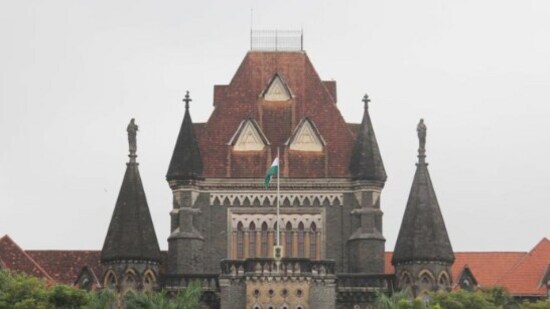
Bombay High Court orders immediate release of life convict who raped his minor daughter, stating state cannot deny release after fixed imprisonment.


MUMBAI: The Bombay high court has held that the state government cannot refuse to release a life convict even after serving imprisonment fixed for his category, and ordered the immediate release of a Nalasopara resident whose plea for premature release was rejected because he had been convicted of a heinous crime -- raping his own minor daughter and impregnating her.
The convict, a Nalasopara resident, was arrested in August 2006 for allegedly raping and impregnating his minor daughter, who was barely 13 years old at the time. He was prosecuted and on December 11, 2009, an additional sessions judge at Vasai sentenced him to life imprisonment for the offence. His conviction and the prison term handed down to him was upheld by the high court in September 2013.
In June 2022, he approached high court again, after the prison authorities rejected his plea for premature release, although he had already undergone almost 20 years of imprisonment. His counsel, Dr Yug Mohit Chaudhry, submitted that the convict fell within category 8(b) under the 2010 policy of the state government and thus was required to undergo 20 years of total imprisonment, including remission and set off.
He pointed out that the Additional Sessions Judge, Vasai as also the advisory board and the jail superintendent classified him in category 8(b), but the Special IG Prisons and Reformation, while forwarding his report to the Home Department, opined that in view of Supreme Court’s decision in Dalbir Singh’s case -- in which it has been held that life imprisonment means imprisonment for the whole of the man’s life, the State Government may take appropriate decision for premature release of the petitioner.
Accordingly, on November 11, 2023, the state government rejected the convict’s request for premature release.
Additional Public Prosecutor JP Yagnik supported the State Government’s decision, arguing that it retains the right to deny premature release to convicts serving life imprisonment under the “14-Year Rule” if the offence is deemed heinous, brutal, or regressive. However, the division bench of Justice Bharati Dangre and Justice Manjusha Deshpande rejected these arguments. The bench emphasized that the state’s discretion applies only to offences not covered under specific categories. Specifically, in the case at hand, the petitioner was classified under category 8(b) for rape of a minor, with no further classification providing for varying periods of imprisonment. Thus, the convict could only be classified under category 8(b) due to the nature of the offence.
The court said the submission that discretion vests in the State Government and, therefore, when it found that a man is convicted for committing rape on his own daughter and impregnated her, the Government is empowered to exercise its discretion was a “misleading argument.”
It ordered immediate release of the convict, observing that since there was no discretion left in the State Government to further categorise him and refuse him premature release on the pretext that he is found guilty of a heinous offence hit by immorality, the refusal to release him was in violation of the state’s own policy framed in exercise of power under Section 432 of the Criminal Procedure Code.

Stay updated with all the Breaking News and Latest News from Mumbai. Click here for comprehensive coverage of top Cities including Bengaluru, Delhi, Hyderabad, and more across India along with Stay informed on the latest happenings in World News.


