
 E-Paper



State launches India’s first SO2 Emissions Trading Scheme
EMA is a collaboration between the Energy Policy Institute at the University of Chicago (EPIC) and the Abdul Latif Jameel Poverty Action Lab (J-PAL) to scale emissions markets across the Global South

 Prefer HTon Google


MUMBAI: The Maharashtra government on Tuesday launched India’s first sulphur dioxide (SO2) Emissions Trading Scheme with the Emissions Market Accelerator (EMA) to reduce industrial pollution. The scheme comes on the heels of the successful implementation and evaluation of the world’s first particulate (PM2.5) pollution market in Surat in 2019.
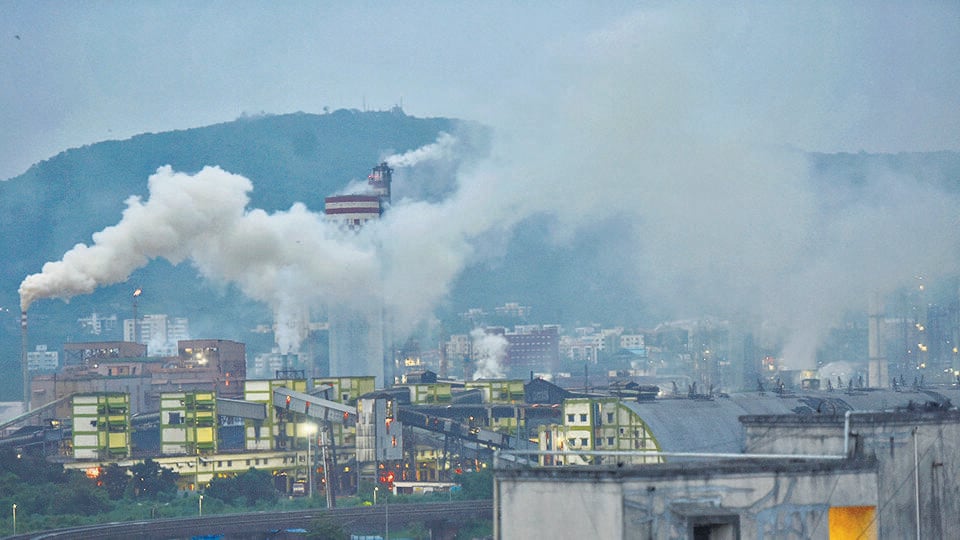
EMA is a collaboration between the Energy Policy Institute at the University of Chicago (EPIC) and the Abdul Latif Jameel Poverty Action Lab (J-PAL) to scale emissions markets across the Global South. The Maharashtra Pollution Control Board (MPCB), which is implementing the scheme, has partnered with the University of Chicago Trust to incorporate artificial intelligence into environmental inspections.
The announcement has come almost seven months after MPCB launched mock trading for the SO2 emissions trading market. According to its proponents, the new scheme will benefit approximately 130 million people by improving air quality in Maharashtra.
Pankaja Munde, minister for environment and climate change, said at the launch, “We need to look at how technology, including AI, can help us monitor industrial pollution more intelligently.” Munde added that the state government’s role did not end with just regulating industries or controlling pollution. “We must also work alongside industry and encourage participation to create solutions that benefit both the environment and economic growth,” she said.
Under the scheme, which covers 17 industrial sectors, MPCB will establish emission limits for participating industries and distribute emission permits, with each permit representing the right to emit a specified quantity of SO₂. Industries will have to monitor and report their emissions through Continuous Emissions Monitoring Systems, and at the end of each compliance period, surrender permits equivalent to their actual emissions.
Industries that reduce emissions below their allocated permits can sell the surplus permits in the market. Conversely, industries that exceed their allocation can purchase additional permits from those with surplus. A statement from EPIC said that the selling of permits would create an economic incentive for “cleaner production and technological innovation”.
For industries, the scheme provides a choice in how they meet environmental compliance requirements: either by investing in emission-control measures or purchasing permits.
Siddhesh Ramdas Kadam, chairman of MPCB, said that the SO₂ emissions trading scheme was a “feather in the cap” for the state. “Our approach is not to control, but to grow together with industry,” he said. Professor Michael Greenstone, the Milton Friedman Distinguished Service Professor in Economics and director of EPIC and Co-Chair of EMA, said that a market like India could cut emissions while lowering costs for industry and helping the economy grow.
Balaji Srinivasan, co-chair of EMA, who played a key role in coordinating the initiative, claimed that in the US, emissions trading had cut pollution by 96%. “So, other countries and Indian states are looking to the Maharashtra SO2 pollution market with enormous hope,” he said.
Tithee Mukhoppadhyay, deputy executive director of J-PAL South Asia and advisor to EMA, said, “The Surat pilot proved that emissions trading cuts industrial pollution without hurting economic growth.”

Stay updated with all the Breaking News and Latest News from Mumbai. Click here for comprehensive coverage of top Cities including Bengaluru, Delhi, Hyderabad, and more across India along with Stay informed on the latest happenings in World News.


