
 E-Paper



Study on AC locals recommends more seats for women
A redesign of seating arrangements on air-conditioned (AC) local trains to create more seats for women, making space for a luggage compartment, induction of more such trains on the fast line, and an increase in the halt time are some of the recommendations made in an interim report recently presented to Mumbai Rail Vikas Corporation (MRVC)


A redesign of seating arrangements on air-conditioned (AC) local trains to create more seats for women, making space for a luggage compartment, induction of more such trains on the fast line, and an increase in the halt time are some of the recommendations made in an interim report recently presented to Mumbai Rail Vikas Corporation (MRVC).
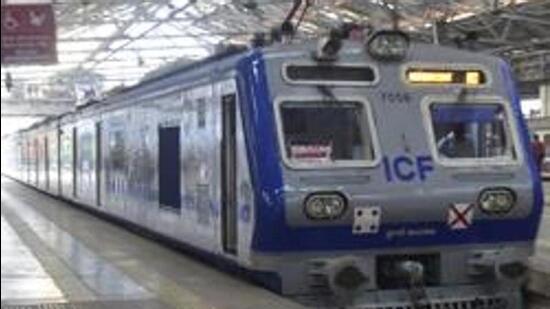
The report, AC EMU Migration Study, was prepared by Systra, an engineering and consulting company specialising in public transport and mobility solutions, after carrying out a survey over a period of nearly one year. It was appointed by MRVC last December to conduct a comprehensive study on various aspects of AC local trains operated by the Central Railway (CR) and the Western Railway (WR) every day.
The report, a copy of which is in possession of HT, has highlighted the difference in fares for AC and non-AC local trains, which is a reason for commuters to hesitate to opt for a cool ride.
Sources said the interim report has proposed increasing seats for women in AC locals from the current 13% to 19%. In non-AC locals, the current percentage stands at 23.
“Comparative information has been collated from Delhi Metro and Mumbai Metro for a broader consideration and comparison. Generally, 30-40% of total seats are reserved in metro trains for ladies and 10-20% for senior citizens and divyangjans. It would be prudent (as well as public expectation) to have similar level of reservation when non-AC EMUs (electric multiple units) are replaced with AC EMUs,” the report said.
A senior railway officer, however, said if the ministry of railways did decide on such a move it would take at least a decade to replace all AC locals with non-AC trains. “Given the present situation the relative location of reserved seats should be similar in both types of trains. If the reserved seats are well distributed then commuters need not rush around, in addition to them being operationally convenient to handle.”
There are other technical and operational issues like door opening/closing and evaluating existing travel pattern for amplifying migration to AC locals from the current system, the officer added.
At least 24% of trains run on fast lines, as per the report. “In case of non-AC rakes, the complete stoppage time can be utilised for alighting/boarding while in case of AC rakes, the time for alighting and boarding gets reduced. The door opening/closing time is around 6-10 seconds.”
The report stated that during a simulation exercise, an AC train took a halt or dwell time of 38-40 seconds on a slow line while a non-AC train took 30 seconds. “On a fast line, the dwell time for AC rakes was 40-45 seconds while it was 30 seconds for non-AC trains.” The report has suggested prioritisng induction of AC rakes on fast lines owing to fewer station-stops (and thus lesser load on air-conditioning system) and other factors.
According to sources, based on this interim report, a final ‘AC EMU Migration Study’ will be prepared which will also have recommendations from other stakeholders.
The report has also taken into account the augmentation of suburban rail network for which works are in various stages. Other suggestions include cab-based signalling system rather than the exiting signal poles to augment speed, smoother rail links for faster turnaround time, and effective communication with rail commuters.
Meanwhile, MRVC officials said it was too early to comment as it is an interim report and a final report will have more suggestions.
On December 5, CR and WR authorities announced they had seen an increase in daily commuters in AC locals by 50% and 82% respectively between April and November this year compared to the corresponding period last year.
Stay updated with all the Breaking News and Latest News from Mumbai. Click here for comprehensive coverage of top Cities including Bengaluru, Delhi, Hyderabad, and more across India along with Stay informed on the latest happenings in World News.


