
 E-Paper



Survival of two endangered vultures raised in captivity spur hopes on conservation
Of the 10 vultures trained at the Tiger Reserve and released, these are the only two that survived in the wild. The BNHS said that this is significant because it shows that captively bred vultures can adapt and survive in the wild

 Prefer HTon Google


Mumbai: Bringing hope to vulture conservationists, two Gyps long-billed vultures raised in captivity in Nagpur’s Pench Tiger Reserve, have settled in the forests of Madhya Pradesh after 15 months of survival in the wild, the Bombay Natural History Society (BNHS) announced on Tuesday. Of the 10 vultures trained at the Tiger Reserve and released, these are the only two that survived in the wild. The BNHS said that this is significant because it shows that captively bred vultures can adapt and survive in the wild.
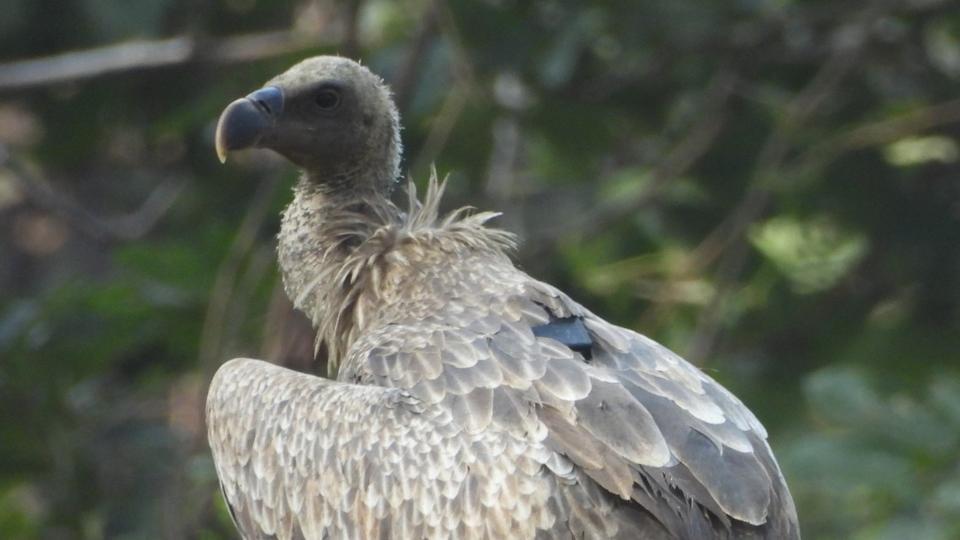
The two vultures named N01 and N24 of the Gyps indicus species were born in the Jatayu Conservation Breeding Centre in Haryana’s Pinjore on January 27, 2020 and reared by their parents. They were brought to Pench in Maharashtra in January 2020 along with 10 other long-billed vultures to be eventually trained and released into the wild. N01 and N24 were released on August 10, 2024, after six months’ training at the tiger reserve. BNHS Director Kishore Rithe said that this had brought “big hope” for vulture conservation in India.
“It was sad to see that the remaining birds could not survive but the survival of these two individuals (N01 and N24) in the last 15 months has shown that captively bred and parent-reared vultures can survive in the wild,” said Kishor Rithe, Director BNHS.
The Gyps vultures comprising three species - long-billed, slender-billed and oriental white-backed - are critically endangered, having dwindled to less than 1% of their earlier population in India over the last 20 years, said BNHS assistant director Sachin Ranade. He said that at present there are an estimated 15,000-19,000 Gyps vultures across the country.
Over the last 15 months, a team led by BNHS biologist Manan Singh monitored the released birds. “Following their release in Pench, N24 demonstrated exceptional adaptability by locating and feeding on a tiger kill within Pench just 12 days after release. Since then, it has been observed feeding on both provisioned food and wild kills made by the carnivores in Pench, Maharashtra, and Pench, Madhya Pradesh, on numerous occasions”, said Singh.
“N24 flew into Pench MP very early in its life in the wild and has since ventured into adjoining areas of Chhindwara and Balaghat districts, covering distances of up to 50 km,” Singh said. The two Gyps long-billed vultures have also been sighted roosting together at night. “We are waiting for the day when N24 may form a pair with N01,” he said.
According to the BNHS, it has so far released 31 Gyps vultures in West Bengal, 25 in Pinjore, Haryana and 20 in Maharashtra.


Stay updated with all the Breaking News and Latest News from Mumbai. Click here for comprehensive coverage of top Cities including Bengaluru, Delhi, Hyderabad, and more across India along with Stay informed on the latest happenings in World News.


