
 E-Paper



The perks and costs of ‘Ladki Bahin’
The scheme, which began as a political imperative in light of the ruling alliance’s poor performance in Lok Sabha polls, is turning into a financial albatross.

 Prefer HTon Google


For farm worker Vaishali Khakare at Sillod in Chhatrapati Sambhaji Nagar, formerly Aurangabad, the Ladki Bahin Scheme has changed her standing within her joint family. She uses the ₹1,500 per month that she gets from the state to send her son for Class 12 coaching. “He is a bright student who passed his Class 10 Board exam with 82% and aspires to study BSc-Agriculture. The Ladki Bahin instalments have not only helped me fund his coaching but also pay the ₹450 monthly state transport bus pass he needs to reach the coaching class, 14 km away from our village,” she says.
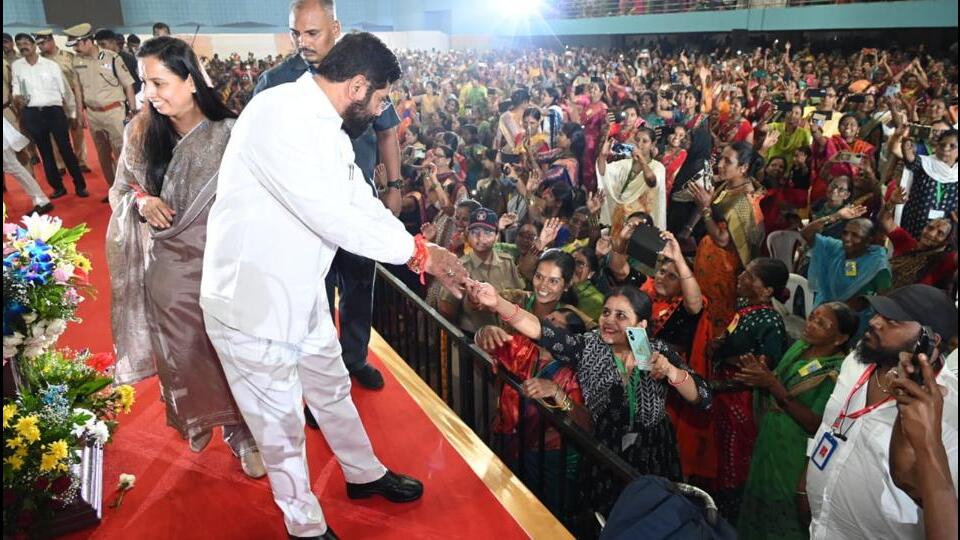
Elsewhere in Maharashtra, Priyanka Shinde, a resident of Wadibamni at Dharashiv--previously Osmanabad--leads a women’s self-help group that sells organic ground masalas. Until July last year, the group struggled to raise a bank loan for expansion. “As soon as the first instalment of Ladki Bahin came in August last year, 25 of us started a monthly chit fund of ₹1,000 each. With the ₹25,000 at our disposal each month, we use it to expand our individual businesses,” says Shinde. “Some women have started selling sarees in addition to masalas while a few others have purchased grinding mills for pulses. Not just banks, even local shop owners are happy to give us credit now.” The monthly ₹1,500 from the government has given women like her the “confidence of a crorepati,” she adds.
Maharashtra’s largest welfare scheme—a spin-off of Madhya Pradesh’s Laadli Behna Scheme—introduced on August 19 last year, has been widely credited with propelling the three-party Mahayuti alliance to an emphatic win in November’s Assembly elections. But the scheme that started as a political imperative in the light of the ruling alliance’s poor performance in Lok Sabha elections, is turning into a financial albatross.
“Ladki Bahin’s annual burden on the exchequer is around ₹46,000 crore which is more than 7.2 % of the total annual budget of Maharashtra. With a revenue deficit of ₹20,000 crore already in the budget, it is not clear how the burden of this scheme is to be borne,” says economist Ajit Ranade. “With a fiscal deficit at ₹1,10,355 crore, the state’s total debt is close to ₹800,000 crore so clearly this additional burden means some other developmental priorities have to be sacrificed. Maharashtra’s public universities, for instance, have a large number of vacancies, some as high as 50%. Lack of appointments hurts teaching quality and students suffer. The same is true of irrigation projects which languish,” he adds. Retired professor of economics, Mumbai University, Neeraj Hatekar, echoes Ranade’s disquiet. “Now that this government has come in with such a big mandate, it should seriously think and review Ladki Bahin. That money can be utilised better.”
Even as deputy chief minister Ajit Pawar who is also the state’s finance minister struggles to balance the books, chief minister Devendra Fadnavis’s concerns include the state’s other state-run welfare schemes. For Ladki Bahin has begun to leech the state’s other welfare schemes of lifeblood. ‘Anand cha Shidha’, a ₹400 crore scheme to give food kits to the poor during the festive season, has been discontinued, said food and civil supplies minister Chhagan Bhujbal. Shiv Bhojan Thali, another scheme providing subsidised meals to the poor, was allocated money for only two months which was extended to six months after Bhujbal’s vocal protests.
Bureaucrats admit that yet other welfare schemes such as the Vayoshri scheme under which senior citizens get a one-time payment of ₹3,000 to buy medical equipment have all but wound up. The CM Tirthdarshan Yojna, a scheme that offers pilgrimage at subsidised cost to 70 sites around the country, too has taken a backseat with negligible outlay for district collectors who run the scheme. “Most of these schemes have already wound up or are moving at snail’s pace with minimal government spending,”admits a bureaucrat in the finance department. “Even the Ujjwala scheme under which the state contributes to the central subsidy for gas cylinders has suffered. Our target is 11 million households but, at present, we can offer this benefit to only 6 million households,”says an official from the food and civil supplies department.
In addition, the state finance department earlier this year, issued orders to divert ₹3,900 crore from the ₹27,000 crore allocated for various welfare schemes for the scheduled castes and scheduled tribes. While the government has defended this by saying the money is towards paying Ladki Bahin instalments to SC and ST women beneficiaries, a bureaucrat from the social justice department has a different view.
The state which recorded its highest-ever fiscal deficit this year— ₹1,10,355 crore—owes over ₹13,500 crore to road contractors for construction, repairs and maintenance of district roads and state highways. “This amount is owed for already completed works of the total contracts of ₹89,000 crore given ahead of the elections last year,” says a bureaucrat from the Public Works Department. “It will take at least three years to pay all dues to all the contractors. Right now, the government’s priority is to release funds for Ladki Bahin.”
“The competitive race to the bottom due to populist spending including freebies, means other development expenditure suffers. More troubling, is the language of referring to voters or citizens as “beneficiaries” (‘laabharthi’). Voters should be aware that getting free cash from any government is attractive, but in the aggregate, it can be detrimental to the growth of the state’s physical infrastructure and social infrastructure like education and health. The sooner this realisation comes to the voters the better it will be for the state,” says Ajit Ranade.
In November 2024, when the state went to polls, women voters comprised 48% of Maharashtra’s total electorate, according to figures provided by the State Election Commission, and the Mahayuti pulled out all stops to woo them. Eknath Shinde, the then CM, was quick to recast and appropriate MP’s Laadli Behna Scheme as the Mukhyamantri Ladki Bahin Scheme; the BJP projected then deputy CM Devendra Fadnavis as Maharashtra’s Devabhau (brother); and even the usually-dour and no-nonsense Ajit Pawar tried to soften his image with pink waistcoats.
Ladki Bahin was launched amid a marketing blitzkrieg and lax scrutiny, drowning out any murmurs about the Lok Sabha drubbing of four months previously when the Mahayuti could muster only 17 of 48 seats. In their overzealousness to enrol beneficiaries, more than 14,000 men were listed and did get a few monthly instalments under Ladki Bahin. Last month, the government admitted in the Assembly that as much as ₹1,640 crore had been doled out to ineligible recipients in the last one year. This includes 1,62,000 women whose families own a four-wheeler, and 2,289 women who are government employees. The scheme is applicable only to those women whose family’s earnings do not exceed ₹2.5 lakh per annum. Over the last one year the government has pruned the list of beneficiaries by 2.4 million and a further reduction is on the cards with the state getting the nod to scrutinize income tax payers’ using central data.
“We expect a couple of hundred thousand more names to be weeded out after the I-T verification, and are considering recovery from fraudulent beneficiaries by taking action against them if they do not pay on their own. Over 5,000 ineligible beneficiaries have already paid back the amount they received from the scheme,” says a bureaucrat from the women and child welfare department that runs the Ladki Bahin Scheme.
On the other hand, women like Shubha Shamim of Anganwadi Karmachari Sanghatana say the scheme has adversely impacted women who are not beneficiaries and who yet need the state’s largesse. “The scheme has burdened the state exchequer such that the social security schemes including scholarships to SC/ST students, assistance to widows, deserted women have all taken a backseat. The government’s intention behind the scheme was clear — to woo women voters, but it has disturbed the social fabric. It is not true that women have started self- help groups only with the Ladki Bahin dole. Women in Maharashtra have always been entrepreneurial and SHGs have been a strong part of that enterprise.”
Over half of the Anganwadi Sevikas and helpers who played a key role in enrolment for the Ladki Bahin scheme when it was launched last year, have not yet been given their remuneration, which was ₹50 to help fill one form. Each one of the workers, on an average, has filled at least 200 forms and expects to get ₹10,000 for that. But it’s money that has yet to come in even after a year. Vrunda Naik, a former Asha worker from Palghar, spoke about her ambivalence about the scheme: “It pains me to see that a scheme which I helped promote among at least 3,000 women while I was an Asha worker, has not benefitted me in any way. At the same time, I do feel that it is a great scheme. No government in the past has ever offered women such a great benefit.”


Stay updated with all the Breaking News and Latest News from Mumbai. Click here for comprehensive coverage of top Cities including Bengaluru, Delhi, Hyderabad, and more across India along with Stay informed on the latest happenings in World News.


