
 E-Paper



Music is my destiny says, Taufiq Qureshi, musician
Qureshi gave up the tabla and learnt different rhythm instruments – the congo, drums and djembe


PUNE Can a small little plant compete with a huge oak tree? When your father has reached the zenith of skill, talent, fame, what chance do you have of competing in the same field? Son of tabla maestro Ustad Allah Rakha and the younger brother of Zakir Hussain, the doyen of the tabla world, Taufiq Qureshi understood early on that he had very little space to compete. But he carried those genes. He grew up to the sounds of the tabla and rhythm coursed through his veins. What could he do?
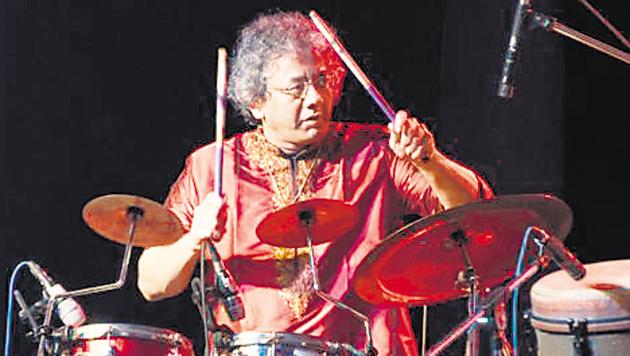
“People speak with their mouth, I learnt to communicate with my hands early on. I remember we used to live behind the Makhdoom Shah Dargah at Mahim (Mumbai) and, as a little child, I was fascinated by the beats of the drums that they would play every evening. I would stand hypnotised by those sounds and rhythms that played out. The A to Z of tabla was taken by my father and brother. I needed another language to speak,” he says with a smile.
Qureshi gave up the tabla and learnt different rhythm instruments – the congo, drums and djembe. “I finally landed on the djembe,” he said. In those days RD Burman had composed the famous song “Duniya mein, hah, hah, hah …” that had become a huge hit. Taufiq’s ear for sounds picked up the breath rhythm and he tried copying it. “I would keep practising different rhythms with my breath in my bathroom. My wife often had to pull me out of there,” he said
“I met RD and within five minutes after listening to him sing I was mesmerised. He did his breathing rhythm and that led me to think how can I channel the tabla rhythm by my breath? From the very beginning, I was attracted to different sounds. I always searched for ways to make different music,” said Qureshi.
He had a studio built in 1988 that he operated from till 1998. “I told my students that go to the garbage dumping grounds in your area and pick up anything that can make a sound. They came back with buckets, tins, cans, plates and other items. We had them cleaned and did a piece for my album – Rhydhun using everyday items collected from dustbins,” said Qureshi.
When you carry music in your genes you see everything from that perspective it seems. “Once we had gone for a show in some small town and the organisers had provided rooms for me and my colleague. These rooms were big, but with very few amenities. And being a small town the electricity was not dependable. On that night my friend and I were in two huge rooms with no power. My friend came into my room and the heat and mosquitoes were not allowing us to sleep. I couldn’t help but hear the musical notes in the buzzing of the mosquitoes. One would come near me with its buzz that sounded like ‘ga’, the other would make a buzz sounding like ‘na’ and so on.”
As Qureshi puts it, “When you are a musician you cannot stop creating. Everything speaks the language of music.” Ustad Allah Rakha’s younger son has sure found his own language.


