
 E-Paper



Ghaziabad: Basic education dept orders hybrid mode classes over rising pollution
In an order issued on November 13, basic education officer OP Yadav said the decision was taken keeping in mind the adverse effects of air pollution on the health of young children

 Prefer HTon Google


Ghaziabad: The district’s basic education department has directed schools and coaching centres to conduct classes in hybrid style — both in physical and online mode — for students of up to grade 5 till further orders in wake of the rising air pollution, officials said on Friday.
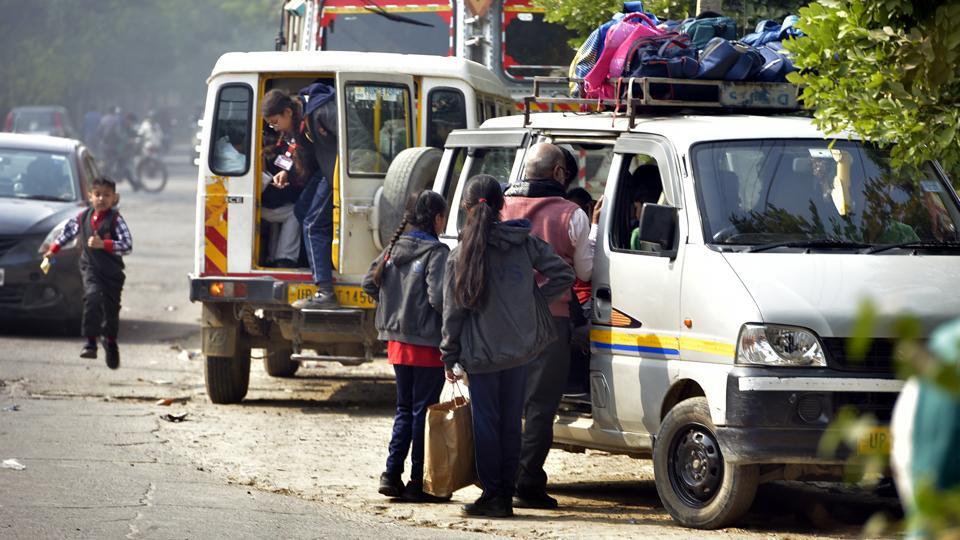
In an order issued on November 13, basic education officer OP Yadav said the decision was taken keeping in mind the adverse effects of air pollution on the health of young children.
Pratibha Rai, a resident of Gaur Homes, Govindpuram, said: “My daughter is taking online classes in wake of the orders issued by the education department. However, we have to stay with her throughout the day to ensure that she is able to attend classes. Her examinations start on November 25, and it is not possible to conduct them online.”
Officials said the district has 389 basic government education schools, comprising about 80,000 students.
“Most of the students in our schools do not have access to laptops or computers, so they use their parents’ mobile phones to study. Further, the school also doesn’t have Wi-Fi connectivity. It is in our own efforts that we help the students with assignments and educational videos to ensure they do not miss their studies when physical classes cannot be held,” said a teacher of a basic education school in Muradnagar.
In the wake of rising air pollution levels, the Commission for Air Quality Management imposed stage 3 of the Graded Response Action Plan (GRAP) on November 11. In Ghaziabad, the air quality index (AQI) levels have remained in the “very poor” category with an AQI of 370 on Friday, 370 on Thursday, 362 on Wednesday, 390 on Tuesday, and 312 on Monday, as per the data shared by the Central Pollution Control Board.
The Union ministry of environment, forest, and climate change, in a statement on November 11, said the state governments in the NCR and NCT of Delhi should mandatorily switch to a “hybrid” style of learning — classes to be held both in physical and online mode (wherever online mode is feasible).
“The option to exercise the online mode of education, wherever available, shall vest with the students and their guardians,” the statement said.

Stay updated with all the Breaking News and Latest News from Mumbai. Click here for comprehensive coverage of top Cities including Bengaluru, Delhi, Hyderabad, and more across India along with Stay informed on the latest happenings in World News.


