
 E-Paper



Others suffer as Delhi hospitals free up resources to combat coronavirus
Covid-19 update: Not just DSCI, hospitals across the city – both government and private – have curtailed or shut its routine services in order to decongest and keep beds reserved for Covid-19 patients.


A month after the surgery to remove an oral cancer malignant growth, Mohd Kareem, 40, started his radiation therapy at Delhi State Cancer Institute (DSCI) mid-February. He still had five cycles of radiation therapy remaining when the hospital shut down after doctors and nurses there started testing positive for Covid-19.
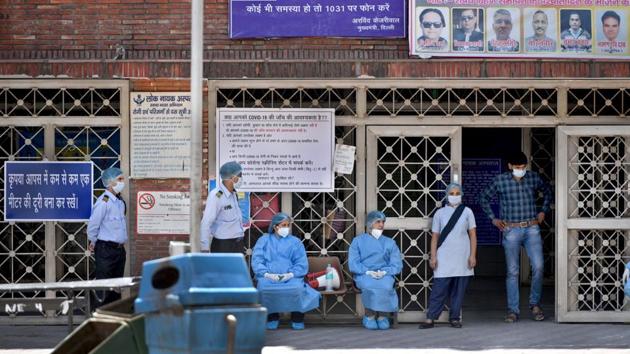
“What should we do now? I do not want his cancer to come back. We have three young daughters and he has already struggled a lot. We even went to a private hospital, but they said that the treatment should continue at the same hospital. Should we keep waiting for the hospital to re-open?” asked Saheem Bano, Kareem’s wife.
DSCI was completely shut down after 22 of its staff and three patients tested positive for the infection.
Not just DSCI, hospitals across the city – both government and private – have curtailed or shut its routine services in order to decongest and keep beds reserved for Covid-19 patients. This, coupled with the 21-day lockdown, has severely limited people’s ability to access health services in Delhi.
Reaching hospitals
“It is important to focus on the pandemic, but not at the cost of other healthcare services. Mortality from non-communicable diseases will shoot up in parts of the country that do not have strong public healthcare systems,” said Dr Abhishek Shankar, assistant professor of radiation oncology at Lady Hardinge Medical College. He used to work in the department of preventive oncology at All India Institute of Medical Sciences (AIIMS) before joining Lady Hardinge..
“When it comes to cancer, every step is emergent. There shouldn’t be interruption in treatment. Now, private sector hospitals – which treat a majority of indoor patients across the country -- are not bound to stay open and risk their staff getting the infection. People will depend on government facilities. In the absence of experienced doctors at district hospitals, who will treat cancer patients who are now unable to reach AIIMS?” he said.
The non-Covid-19 hospitals should continue running all routine services, he suggested, after taking proper precautions.
“Chronic conditions — like anaemia and hypertension — get diagnosed when patients come to our clinics. These might get missed and the patients might land up in the hospitals only when they get severe symptoms,” said Dr Roopali Diwan, head of the department of gynaecology at Safdarjung hospital.
Services like delivery of babies have also gone down at the busiest labour room in the city. From about a 100 deliveries a day, the hospital has been getting only about 60 expecting mothers.
“The numbers have gone down mainly because people from far off places, who would earlier come to the hospital for their deliveries, can’t do so now because of the lockdown,” she said.
Longer waiting periods
Transplantation surgeries — not just in Delhi, but across the country — have been hit, with the government suggesting that non-emergency surgeries be put on hold for now.
“No transplant surgeries have taken place in the entire country in the last eight to ten days. What we need to understand is that some transplant surgeries are absolutely life-saving — like heart or liver transplants. Patients in need of kidney transplant may wait a little longer. But, Covid-19 is here to stay and we cannot deny people these procedures forever,” said Dr Sandeep Guleria, renal transplant surgeon from Indraprastha Apollo hospital.
He is the former head of the kidney transplant unit at AIIMS, who led the team that performed the first cadaver kidney transplant in the country. Around 150 kidney transplants usually happen across the country in a week.
“We need to frame guidelines that will reduce the risk of performing transplantations, like thoroughly screening the donor and recipient for Covid-19 or even testing them before performing the procedure. The thing is we are still not sure whether it can be passed from donor to recipient through the organ. That said, South Korea never stopped transplantations. Also, not utilizing cadaver organ is a shame, especially when there are so few organs,” said Dr Guleria.
With surgeries getting postponed, the long waiting lists for surgeries at government hospitals in the city are likely to get longer.
“We are not conducting any routine surgeries, like cataract or gall stone removals. Even when planned surgeries start, the most emergent ones are likely to be taken up first. There would inevitably be a long waiting period for routine surgeries,” said Dr Rajeev Kapoor, medical superintendent of Sardar Vallabhbhai Patel hospital in East Patel Nagar.
At hospitals like AIIMS, the wait period for surgeries in some departments can be up to a year.
Routine consultations
Routine out-patient services in big hospitals — like All India Institute of Medical Sciences and Lok Nayak — in the city have been completely shut after they started accepting Covid-19 patients. Some others run a curtailed out-patient department.
“We receive less than half the number of patients in our clinics even though all services – except for planned surgeries – are open. We have started giving patients with chronic conditions, like diabetes, medicine for longer periods to reduce their number of visits,” said Dr Rajeev Kapoor, medical superintendent of Sardar Vallabhbhai Patel hospital in East Patel Nagar, one of at least 25 Delhi government run hospitals that are still providing routine healthcare services.
After the two mohalla clinic doctors from northeast Delhi contracted the virus from a patient, at least 100 of these government-run clinics have also been shut. Besides that, half of the private practitioners across the city have also closed their practice.
“The doctors are scared after instances of people getting the infection from their patients was reported. Even as bigger hospitals are focusing on Covid-19 patients, at least half the small clinics in the city have shut shop. And, with personal protective equipment hard to get by, even small nursing homes are closing up,” said Dr Grish Tyagi, president elect of the Delhi Medical Association. There are around 700 nursing homes in the city, most are small with just one to 20 beds.
Although some hospitals have started telemedicine consultations after the government of India released guidelines, the uptake is not great.
“There is a 12-hour teleconsultation number we have launched. But the uptake is not great and we are getting just about three or four calls a day. On another number, on which we can give prescriptions, only about 40 patients are calling in a day,” said Dr Nimesh Desai, director of the Institute of Human Behaviour and Allied Sciences. The hospital OPD, which was shut, used to receive about 1,200 patients a day earlier.
Immunisation
Although, the government has ensured that vaccines are available at all its dispensaries and non-Covid-19 hospitals, universal immunization programme has also taken a hit in the city.
“With all the ASHA and ANMs involved in the government’s surveillance efforts, the outreach activity for immunization has been stopped. All vaccines are available at the fixed delivery points like dispensaries and hospitals. And hospitals, that have shut routine services, have been requested to send patients to the nearest dispensaries,” said an official from the Delhi government’s health department.
“With 90% of the immunization services being provided by government facilities, it should not be impacted too much. But there will definitely be some impact. How much, we will come to know only after a couple of months when the data comes in. We might have to carry out intensive drives to catch up,” the official said.


Stay updated with all top Cities including, Bengaluru, Delhi, Mumbai and more across India. Stay informed on the latest happenings in World News along with Delhi Election 2025 and Delhi Election Result 2025 Live, New Delhi Election Result Live, Kalkaji Election Result Live at Hindustan Times.


