E-Paper



12,000 Naga sadhus to be ordained at Mahakumbh
Rituals involve three days of spiritual austerities for aspirant sadhus ahead of the ordination ceremony; Juna, Niranjani and Mahanirvani Akhadas begin preparations

 Prefer HTon Google


Around 12,000 Naga sadhus will be ordained by select ancient Hindu akhadas during the Mahakumbh-2025.
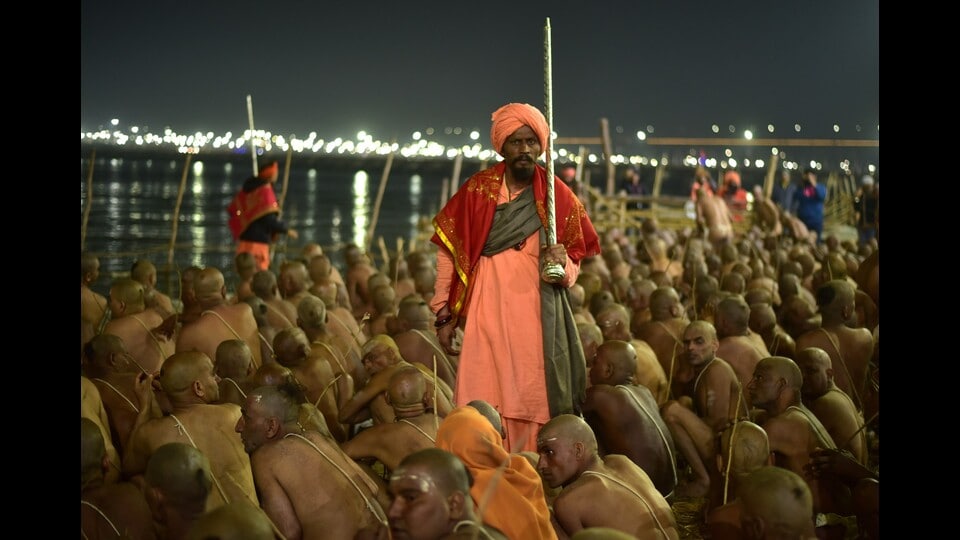
Just seven akhadas out of the total 13 recognised Hindu monastic orders have Naga sadhus in them. They include Juna Akhada, Niranjani Akhada, Mahanirvani Akhada, Atal Akhada, Agni Akhada, Anand Akhada and Aawahan Akhada.
These aspiring naga sadhus are already members of the akhadas having renounced worldly attachments after performing ‘pindaan’ of their parents and even themselves.
The activities of a sadhu wanting to become a Naga are monitored closely for several years. Only sadhus who are assessed to be completely devoted to worship and religious works are made Naga sanyasis, claim senior sadhus of different akhadas.
The ritual of making the already initiated sadhus Nagas starts before the second Amrit Snan (royal) or bathing festival of the Mahakumbh, but its preparation starts much earlier. The Akhadas are already busy preparing for this revered ceremony, said Swami Hari Giri, secretary of Akhil Bhartiya Akhada Parishad (Hari Giri faction) and a patron of Juna Akhada.
The bathing festival of Mauni Amavasya this year is on January 29 and so the rituals will start at the Akhadas from January 27. According to tradition, a special puja will be performed at midnight on the first day. Those who have taken initiation as sadhus and are going to become Nagas will be presented in front of their respective Gurus, he said.
The sadhus will take 108 dips in the Ganga at midnight. After this bathing ritual, half of their Shikha (tuft of hair) will be cut. They will then be sent to ‘forests’ to do penance. While the traditional belief is that they are being sent to the ‘forest’, in present times, the sadhus leave their camps for a fixed period and are then coaxed back.
On the third day, they will don the Naga guise and will be brought in front of the Acharya Maha Mandaleshwar (head priest) of their Akhadas.
A slip of paper from the respective gurus will prove that the sadhu is eligible for becoming a Naga. After this, he will be made a Naga sadhu. Before the Mauni Amavasya bathing, at 4am, the guru will cut off their entire shikha. When the Akhada goes for the Mauni Amavasya bathing in a procession, the new Nagas will also accompany fellow naga sadhus for the bathing ritual, Swami Hari Giri added.
Juna Akhada spokesperson Mahant Narayan Giri said that around 5000 new Naga sanyasis will be ordained in the Juna Akhada this time.
Information has also been sought from the respective gurus to ordain around 4500-4800 new Naga sadhus in the Niranjani Akhada and 1000 in the Aawahan Akhada besides 300 new Naga sadhus in Mahanirvani, 400 in Anand and 200 in Atal Akhadas.