
 E-Paper



14-day quarantine mandatory for people coming to Odisha from West Bengal
The quarantine order for people from West Bengal came as beds across various Covid hospitals in the state neared exhaustion.


With reports of a triple mutant variant of Covid-19 being detected in many people in West Bengal and other states, the government of Odisha on Thursday declared a 14-day quarantine for people coming from West Bengal.
Odisha chief secretary Suresh Chandra Mahapatra said anyone coming to Odisha from West Bengal by personal or hired vehicles, or entering the state by any other mode, shall undergo mandatory institutional or paid quarantine for 14 days at cluster temporary medical centres to be managed by block development officer or executive officer of urban areas.
However, anyone coming from the neighbouring state with a certificate of successful vaccination (two doses) or a negative RTPCR report not more than 48 hours old will be allowed a 14-day home quarantine.
“People travelling from West Bengal to other states through Odisha shall be allowed without disembarking from the vehicle,” the chief secretary said. He added that all passengers coming from West Bengal to Bhubaneswar or Jharsuguda airports would be mandatorily subjected to institutional quarantine or paid quarantine for 14 days at facilities identified/ordered by district magistrates/ municipal commissioners.
From Friday morning, district collectors of Balasore and Mayurbhanj set up border check posts on all inter-state roads including national highways along the West Bengal border.
The triple mutant variant (B.1.618) is a new lineage of SARS-COV-2 that has been formed by a combination of three variants of the virus. It, apparently, can evade the human immune system, experts say. West Bengal, which reported a total of 11,948 Covid-19 cases on Thursday with 23 per cent positivity rate, is believed to have its cases driven by the triple mutant. On Friday, Odisha reported 6,215 cases, its highest single-day surge, while 8 people lost their lives to the deadly virus.
The quarantine order for people from West Bengal came as beds across various Covid hospitals in the state neared exhaustion. At VSS Institute of Medical Sciences and Hospital in Sambalpur, where cases are surging, the 225-bed Covid hospital has run out of beds. “All 225 beds, including the 50 bed ICU wing, are fully occupied. We are trying to add 300 more beds including 50 ICU beds in the next few days,” said VIMSAR principal Lalit Meher.
Similarly, the situation in Sundargarh district, which has the highest number of 5,055 active cases among the 30 districts, is no better. All 520 beds in three Covid hospitals in the district are full.
In Bhubaneswar, all 771 beds in SUM hospital were reported full while all 150 beds in Aditya-Ashwini Covid hospital were occupied. Similarly, no ICU beds are available at Hi-Tech hospital while all 50 beds in Nilachal hospital have been occupied.
With Covid beds almost exhausted, the state health department ordered that all private hospitals with 30 beds or more must ensure the provision of a minimum 50 per cent of general beds and 50 per cent ICU/HDU beds for the treatment of Covid patients.
“It is observed that the private hospitals are treating the non-Covid cases but when they find such patients to be Covid-19 positive during the treatment they immediately request the government machinery to shift such patients to a government Covid facility. It is observed that the private hospitals are also not admitting Covid-19 positive patients with a plea that they do not have Covid beds. This has resulted in an increased load on government Covid facilities,” a health department order said.
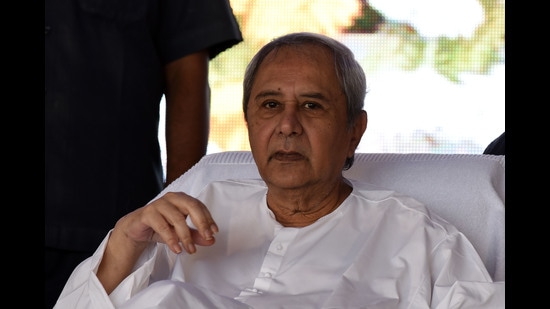
Meanwhile, chief minister Naveen Patnaik on Thursday assured the Centre of providing all cooperation as lack of medical oxygen crippled the fight against Covid-19 in Delhi and elsewhere in the country,
“It is a war-like situation and Odisha will extend all cooperation in the fight against Covid at the national level including ramping up oxygen production to assist other states in this emergency situation,” said Patnaik during his discussion with PM Modi.
Patnaik’s assurance came in the backdrop of the acute shortage of oxygen faced by Delhi and many other states in the country at present. As per the allocation made on April 21, Delhi will get 70-tonne of liquid medical oxygen from Odisha. Rourkela Steel Plant will provide 40 tonnes a day while Tata Steel plant at Kalinga Nagar will provide 30 tonnes daily.
Additional chief secretary, Odisha health department, PK Mohapatra said the current oxygen manufacturing capacity of the state is three times that of oxygen consumed during the peak first wave of Covid-19.



