
 E-Paper



Delhi airport runway closure to affect 200 flights daily
Delhi IGI airport will cancel 114 flights daily and reschedule 86 during a runway closure from June 15 to September 15 for maintenance.

 Prefer HTon Google


Delhi’s Indira Gandhi International (IGI) airport will cancel 114 flights daily and reschedule another 86 during a three-month runway closure from June 15 to September 15, airport operator Delhi International Airport Limited (DIAL) announced on Friday.
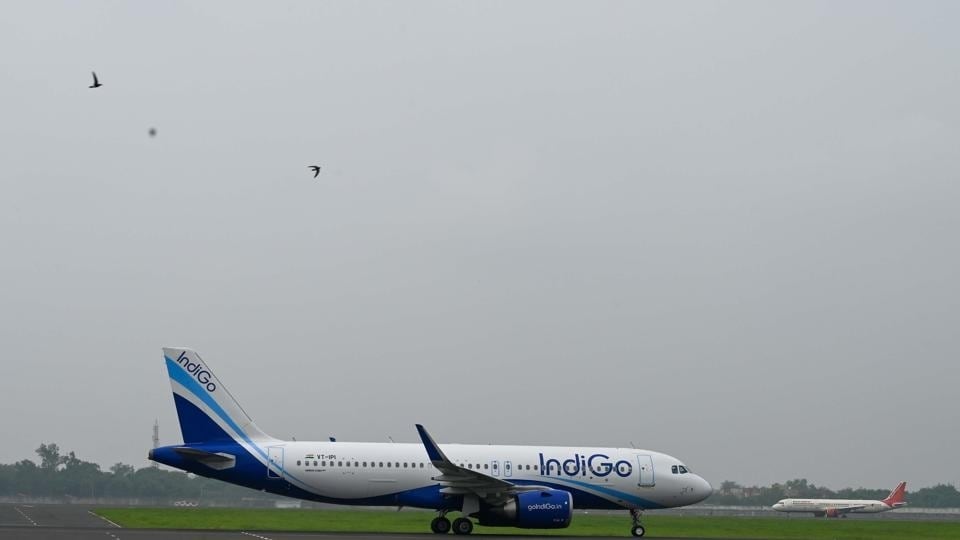
The plan, developed after detailed deliberations with airlines and other stakeholders, aims to prevent a repeat of the widespread chaos that erupted in April when the same runway maintenance work was attempted without adequate coordination.
Also Read: Major flight disruptions on cards for Delhi airport | Here's why
DIAL said that while it has rescheduled 86 flights to non-peak hours, 114 flights (57 arrivals and 57 departures) will be cancelled daily when runway 28/10 undergoes upgradation work to make it CAT-IIIB compliant for the upcoming fog season.
“We are better prepared now for this exercise and detailed deliberations and stakeholder consultations were held in the last few weeks,” DIAL chief executive officer Videh Kumar Jaipuriar said on Friday, acknowledging that these adjustments were not made previously, which led to the April chaos.
Also Read: Operations hit at Delhi's IGI airport amid massive dust storms, 14 flights diverted
The first attempt to upgrade runway 28/10 in April had to be aborted within four weeks after flight schedules descended into chaos. The airport became unable to handle its daily load of flights, a situation made worse due to unseasonably high spells of easterly winds, which reduced the hourly arrival rate from 42 flights per hour to 32 flights per hour.
The month of May is regarded as the peak of the summer season, including vacation travel, followed by travel surges in the pre-winter and winter months that feature a number of festivals and the wedding season.
Operations on runway 28/10 resumed on May 6, almost a month after it shut down, following directions from the ministry of civil aviation (MoCA) citing passenger inconvenience. The ministry had directed that upgradation work resume in June with proper planning.
“For every one hour where flights are delayed, it takes three hours for the flight schedule to become normal, as there is a cascading effect on the remaining schedule,” Jaipuriar explained, highlighting why proactive cancellations are necessary this time.
The airport typically handles close to 1,450 flights daily, meaning around 7.8% of all flights will be cancelled on a daily basis—marginally above the typical 3-4% daily flight cancellations. “So this is just marginally above average,” Jaipuriar said.
The plan involves shifting more flights from peak hours to non-peak hours to reduce possible impact during the closure period. “Earlier, we were seeing only 25-26 flights landing in some off-peak hours,” Jaipuriar said, explaining how better distribution of flight movements will help manage the constraints.
Key domestic airlines – IndiGo, Air India, SpiceJet and Akasa Air – did not respond to requests for a comment. Officials close to the matter, who asked not to be named, revealed that IndiGo will be cancelling 33 daily flights, while Air India will have to cancel 25 flights daily.
Delhi airport operates four runways: 27/9, 28/10, 29R/11L and 29L/11R. Following closure of 28/10, runway 29R/11L will handle departures, 29L/11R will handle all arrivals, and runway 27/9 will be hybrid, handling both arrivals and departures.
If westerly winds prevail, the three operational runways will handle 42 arrivals and 42 departures each per hour. However, in case of easterly winds—which caused major problems in April—they will be able to handle 42 departures but only 32 arrivals.
The period of works will coincide with the monsoon season, when wind patterns can vary and force the airport into orienting operations for the easterly winds scenario.
DIAL said flights from major airports have not been impacted significantly, with only a 4-8% reduction in daily flights. For Mumbai, arrivals will decrease from 56 to 54; for Kolkata, from 22 to 21; for Ahmedabad, from 21 to 19; for Bengaluru, from 38 to 36; for Chennai, from 20 to 19; and for Patna, from 13 to 12. “The same flights that arrive at an airport depart back, so the same number of departures are also impacted,” Jaipuriar explained.
Runway 28/10 requires closure for two key works: making it CAT-IIIB compliant so flights can land in very dense fog spells, and upgrading the existing Instrument Landing System (ILS).
“Even if it finishes by September 15, work will be done before the festive season starts. Ultimately, it will benefit fliers in the fog season, when visibility becomes extremely low,” Jaipuriar said.
Currently, during peak fog conditions, only 15 flights can land every hour on the airport’s only CAT-III B compliant runway. This upgrade work will allow 30 flights to land every hour, significantly improving winter operations when Delhi’s dense fog typically causes widespread flight delays.
DIAL said it shared a slot adjustment plan with airlines on April 25, with airlines providing feedback in the first and second weeks of May. The finalised slots and plan were submitted to the ministry on May 22 and subsequently to the Directorate General of Civil Aviation, which evaluated and approved the plan.



