E-Paper



Assam: Evictions, large scale displacement may play decisive role in 15-20 seats
Since coming to power in 2021, the BJP-led government under chief minister Himanta Biswa Sarma has carried out over 30 major eviction drives.

 Prefer HTon Google


Hours after filing his nomination for Assam’s Goalpara East seat on Monday, Raijor Dal candidate Abdur Rashid Mandal put eviction at the centre of his campaign, promising compensation and rehabilitation for those displaced by recent drives.
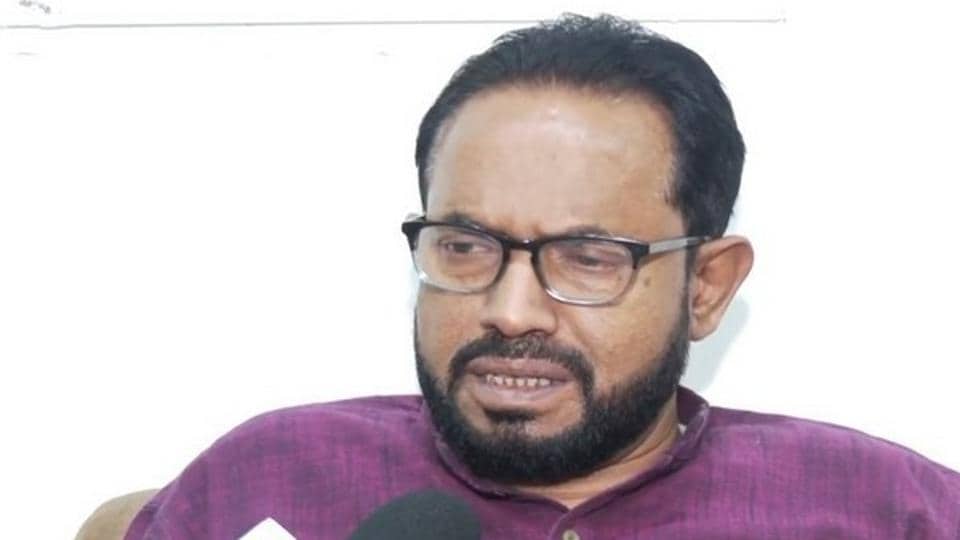
Mandal, the sitting Congress MLA from Goalpara West who recently switched to the regional party as part of the Congress-led six-party alliance, shifted constituencies after his earlier seat was reserved for Scheduled Tribes (ST) following the 2023 delimitation.
“Eviction is the most vital issue of my seat now. I am contesting to win and ensure that the evicted persons get proper compensation and rehabilitation,” Mandal said, claiming eviction drives have affected over 1,000 families and uprooted around 5,000-8,000 people in his constituency.
“These people have not been given any compensation by the government and have not got any alternate piece of land or means to earn their living,” he added.
Mandal alleged that those affected were forced out as part of a “conspiracy” by the ruling BJP-led coalition on the charge of encroaching on forest land.
“I suspect that records were manipulated as part of a joint survey by revenue and forest departments. There is a need to look at it taking legal recourse and I am ready for it,” he said.
Since coming to power in 2021, the BJP-led government under chief minister Himanta Biswa Sarma has carried out over 30 major eviction drives, demolishing thousands of houses and uprooting about 100,000 people from 49,500 acres of allegedly encroached government and forest land.
“Since we were evicted, we have moved to another location where the state government has provided us with 1 bigha (0.33 acre). But we lost all our cultivable land during the eviction and now the family sustains on what we earn from irregular jobs,” said Ainuddin Haque, whose family was evicted from Dhalpur-Gorukhuti in Darrang district in September 2021.
The Dhalpur-Gorukhuti eviction was the first major drive by the present government, uprooting around 800 families to make way for a composite community farming scheme under the Gorukhuti Project. Two civilians, including a 12-year-old, were killed and 18 others, including eight policemen, were injured in clashes at the site.
Haque said his elder brother, Maynal, was among those killed. “Shocked by my brother’s death, my father stopped eating properly and passed away in 2024,” he said.
The evictions have also triggered allegations of selective targeting. Critics claim Bengali-speaking Muslims — often referred to as ‘Miyas’, a pejorative term for those with roots in Bangladesh — have been disproportionately affected.
“Only Miyas are evicted in Assam. We will not evict Assamese people,” Sarma had said in January.
Experts say the policy reflects a mix of political and social factors.
“The evictions seem to be a broad and complex combination of several factors including hardline Hindutva, social reforming and also a stand on Assamese sub-nationalism. This has sharpened the entrenched polarisation which existed from before,” said Kaustubh Deka, professor of political science at Dibrugarh University.
Ainuddin Ahmed, chief adviser of the All Assam Minority Students Union (AAMSU), said eviction is likely to influence voting patterns.
“Eviction is an important issue and will play on the mind of minority voters who could be supporting the Congress this time. Nearly 100,000 people from around 15-20 assembly seats (of the total 126) have been affected due to evictions,” he said.
He also alleged discrepancies in electoral rolls, claiming that names of around 4,000 eligible voters were removed during the special revision conducted between November and February.
Haque said relocation has also affected voter registration. “We were earlier part of Sipajhar assembly seat, but after eviction and relocation Mangaldai has become our constituency. Following the shift, we applied for transfer of our votes. While nine of the 11 eligible voters have found mention in the updated voters list, the names of two of my sisters-in-law are missing,” he said.
“The election officials have removed their names without intimating them or giving them adequate time to submit applications for transfer of their votes to another constituency,” Ahmed added.
The issue has also reached the judiciary. Last month, the Gauhati high court directed the Assam government to provide basic facilities such as potable water, sanitation and medical care to families affected by an eviction drive and living in makeshift camps for months.
The court was hearing a petition filed by 60 people affected by a June eviction at Hashila Beel in Goalpara district, where 566 families were displaced.
However, the government has indicated that the drives will continue. According to Sarma, the evictions carried out so far have cleared only part of the encroached land, with large areas still occupied by “illegal settlers.”
“No matter the pressure or the noise, evictions will continue unabated. When we return with our next government, the pace will only double,” he said earlier this month.