
 E-Paper



Bloody but unbowed: A story of rebellion for Independence Day
While India will be celebrating its 78th Independence Daym, the tiny village of Issuru will be agog with celebrations of its 83rd

 Prefer HTon Google


About 50 kms away from Shivamogga, nestled in the green, hilly and picturesque Malenadu region of Karnataka, is the tiny village (pop: 4,674, 2011 census) of Issuru (say Eesooru). An unremarkable little village, except for one remarkable fact – on August 15th, when India celebrates her 78th Independence Day, Issuru will be agog with celebrations of its 83rd. As well it might – as far back as August 1942, the doughty little hamlet had declared its independence from the British government.
A spirit of valour and rebellion has long been part of the Shivamogga region. Following the fall of the mighty Vijayanagara Empire in 1565 CE, its former vassals, the Nayakas of Keladi (aka the Ikkeri Nayakas) established themselves as rulers of a large swathe of the Malenadu and the western coast, controlling trade with the Portuguese, the English, and the Dutch for 200 years. Shivappa Nayaka (1645-1660), the greatest of the Ikkeri chiefs, decimated the Portuguese on the Kanara coast, and built the Bekal fort in Kasargod, Kerala (the setting of the smash-hit song “Uyire Uyire” in director Mani Ratnam’s 1995 film, Bombay). Heroic tales are also told of Queen Chennamma of Keladi (1677-1696), who repelled both the Mughals under Aurangazeb and Mysore under Chikkadevaraja Wadiyar. In 1763, Hyder Ali, who had usurped Mysore from.the Wadiyars, defeated Nayaka queen Virammaji, and merged Shivamogga with the Kingdom of Mysore.
After the death of Hyder’s son, Tipu Sultan, in 1799, Mysore returned to the Wadiyars, with 6-year-old Mummadi Krishnaraja ascending the throne. By the 1820s, however, Shivamogga was on the boil again. In 1830, the ryots of Nagara rose up in revolt; the very next year, Mummadi was dismissed by the East India Company. Mysore would only return to the Wadiyars in 1881.
In 1885, with the founding of the Indian National Congress, nationalist ideas began to sprout across the land, and Mysore could not but be infected. Alongside, in 1907, a movement for a separate state of Karnataka began in Dharwad, 200 km away from Shivamogga, spearheaded by journalist and activist Aloor Venkata Rao.
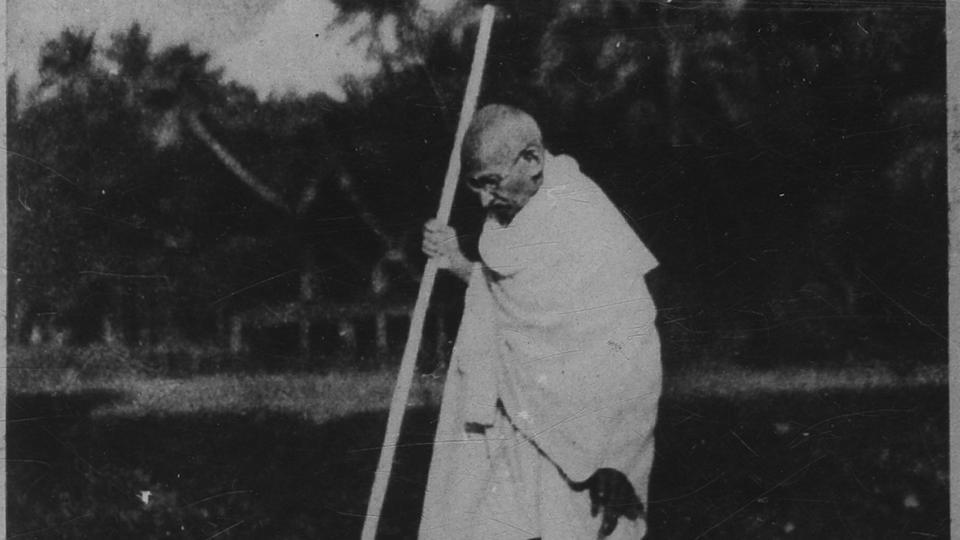
In 1915, Mahatma Gandhi visited Bangalore for the first time. The effect of his visit was electric, galvanising all of present-day Karnataka into a fever of nationalism. Two events that followed – the founding of the Karnataka Pradesh Congress Committee in 1920, and the Belagavi Congress Session, the only session presided over by Gandhiji, in 1924, kicked the fervour up several notches. On April 25, 1938, things came to a head at the small town of Vidurashwatha, a short distance away from Bangalore, where the police fired on an unarmed crowd for hoisting the tricolour (only the Mysore flag was then allowed to be hoisted in the kingdom), killing 32, and leading to enraged upheavals across the state.
On August 8, 1942, Gandhiji exhorted the British to “Quit India”. His call reverberated across the country, reaching even remote Issuru. Days after, under the leadership of Sahukar Basavanyappa, Issuru declared its independence from British rule, running up the tricolour in the forecourt of the Veerabhadraswamy Temple. Fierce lettering painted on a sari hung at the entrance of the village warned ‘English dogs’ – tax collectors – to stay away, and an independent government, with two 16-year-olds at the helm (a clever ploy – minors could not be arrested) was established.
Things took a deadly turn on September 28. Tehsildar Channakrishnappa and Sub-Inspector Kanchegowda stormed into the village demanding the long-overdue taxes, and were lynched by an angry mob. Incensed, the British sent the army into Issuru four days later. Several leaders of the movement were arrested. On March 8, 9 and 10, 1943, five of those leaders, all young men – Kammara Gurappa, Ka Mallappa, Suryanarayanachar, Badakalli Halappa, and Gowdra Shankrappa – were hanged at the Bangalore Jail.
(Roopa Pai is a writer who has carried on a longtime love affair with her hometown Bengaluru)


