E-Paper



Odisha approves SOP for translocation of trees to curb large scale felling
Tree transplantation is a process of unearthing the trees and replanting them from their parent locations to new ones with an objective of re-growing the trees at new locations

 Prefer HTon Google


Concerned over largescale felling of trees due to widening of roads and other developmental projects, Odisha has approved the standard operating procedure (SOP) for translocation of large trees.
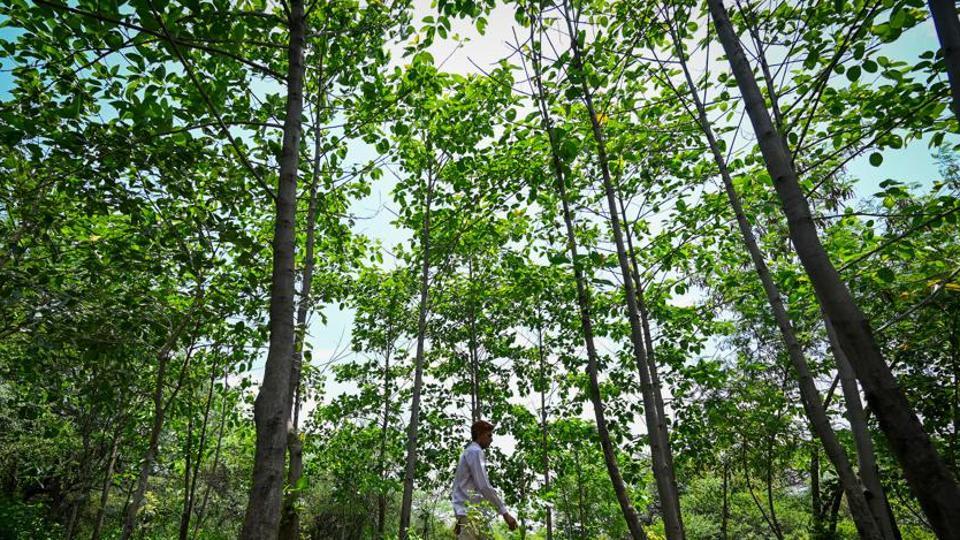
Tree transplantation is a process of unearthing the trees and replanting them from their parent locations to new ones with an objective of re-growing the trees at new locations.
With cities rapidly losing green cover, officials in the state forest department are taking all efforts avoid this loss.
Between 2010 and 2020, more than 1.85 crore trees were cut in Odisha for widening of national highways such as the Sambalpur-Chhatisgarh section of NH-6, four-laning of Bhubaneswar-Puri road, Panikoili-Remuli section and Remuli Rajamunda section.
Also Read: High court sets aside tree pruning guidelines issued by Delhi govt
However, 2.98 million trees were planted in place of these felled trees, just about 16% of the trees that were cut down.
Last year, environmentalists in the state had expressed concern over the felling of 1,720 full-grown and old trees of different species for the widening of a 40km stretch of the National Highway 59 in Ganjam district.
“Based on the suitability of different trees for transplantation, we have graded the activity into different standards. Transplanting a young tree of smaller girth class and less crown density would be cost effective and is taken as standard 1 while transplanting an established or middle age tree having higher girth class (less than 90cm), heavy crown density and elaborate root during and after transplantation has been categorised as feasible with significant cost implications. We would not attempt translocation of trees that have multiple trunks or having a deep and elaborate tap root system or attains girth class over 90cm as such experiment will most probably promote slow death,” said a senior official of the state forest department.
“Although no species wise focused research is available on standardizing the techniques of tree translocation, based on the survival of the translocated trees and success stories of translocation attempts, forest department officials said November and December would be the most favourable months for transplanting large trees. The key concern remains in protecting the root ball while pruning the wider roots. The process involves engineering and arborist skills combined to make it work effectively,” the forest department official said, quoting the SOP.
“The rainy season is not recommended for this work, because it is not practical to keep lately transplanted large trees steady during that season. Transplanting may also be appropriate after the leaves of the selected tree fall but before the onset of winter conditions since the tree is naturally going to be in dormant stage”, the official added.
However, Odisha-based environmentalist Jaykrushna Panigrahi said translocation is not a feasible idea.
“In Indian climactic conditions, tree translocation is not a viable option as it is very expensive. In May last year, the Delhi’s forest department during an in-house audit found that the survival rate of transplanted trees in Delhi drastically came down from 90% in the first year to 38% in the third year. Instead of translocation of trees, we should aim at not cutting of big trees and ensure that the saplings which have been planted survive,” said Panigrahi.