
 E-Paper



Conservation plan for Bulandshahr Ramsar site finally sees light of day
Development, research and conservation activities planned for highly-endangered Gangetic dolphins and other aquatic animals found in the region.


Seventeen years after its declaration as a Ramsar site (wetlands of international importance), Bulandshahr divisional forest office has finalised a detailed integrated management plan for the 82-km-long Gangetic stretch between Garhmukteshwar of Hapur district and Narora in Bulandshahr.
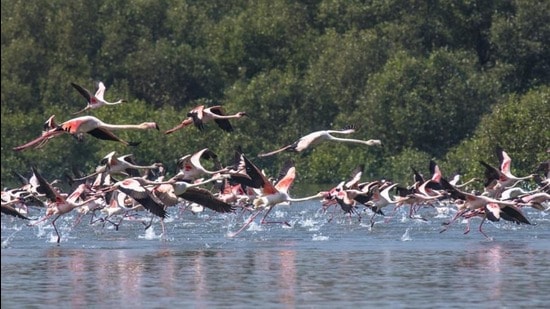
As per the plan, a slew of development, research and conservation activities will be taken up for dolphins, gharial and other aquatic animals found in the region.
The upper Gangetic basin in western UP was announced a Ramsar site on November 8, 2005, due to the presence of highly-endangered Gangetic dolphins there. Before the announcement, WWF India and the forest department had taken up a conservation project for the dolphins.
While a major part (about 63 km) of the stretch is in Bulandshahr district, the remaining portions are in Hapur, Amroha and Sambhal districts. Uttar Pradesh has a total of 10 Ramsar sites out of the total 54 in India.
Prof Affifullah Khan of the Aligarh Muslim University’s wildlife department said the site was significant for the conservation of the Gangetic dolphins, a species with a dwindling population. “Taking 17 years to prepare a plan for the management of the site was too long”, he said but appreciated the efforts of the Bulandshahr divisional forest officer (DFO) Vinita Singh for coming up with the proposal now.
The DFO said development, conservation and research works would be taken up with ₹12 crore, the proposal for which had been approved by the state wetland committee. “The proposal will now be submitted to funding agencies such as Namami Gange and others,” she said and added that WWF India and Wildlife Institute of India (WII) had helped the forest department in the survey and other technical works to prepare the plan.
“The river stretch is home to 22 Gangetic dolphins. We need to provide them with an atmosphere where they can multiply their population.”
She added that a committee of irrigation and revenue officials, pradhans of villages on the banks of the Ganga and other stakeholders would be formed to look after the activities included in the management plan.
The discharge of untreated water by sugar mills, paper mills and other industries located in towns situated close to the river, is a major threat to aquatic animals. This, along with the seepage of chemicals through riverbed farming and illegal fishing, also need to be addressed for the effective protection of the international wetland site.
The Ramsar Convention on Wetlands of International Importance, of which India is a signatory, is an international treaty for the conservation and sustainable use of Ramsar sites. It is also known as the Convention on Wetlands. It is named after the city of Ramsar in Iran, where the convention was signed in 1971. The Ramsar Committee declares potential wetlands across the globe as Ramsar sites after examining their importance and significance for ecology.


