E-Paper



Despite shortfall, Ayushman Mandirs transform rural healthcare in Prayagraj division
The initiative, part of the state government’s mission to extend primary healthcare to the last person in the queue, is helping bridge the urban–rural healthcare divide.

 Prefer HTon Google


Despite a target of establishing 1,885 Ayushman Arogya Mandirs (AAMs) across the Prayagraj division, only 1,459 centres are currently operational, according to health department officials. This shortfall of 426 centres, however, has not diminished the growing impact of AAMs—particularly in rural Uttar Pradesh, where they are emerging as a vital healthcare lifeline.
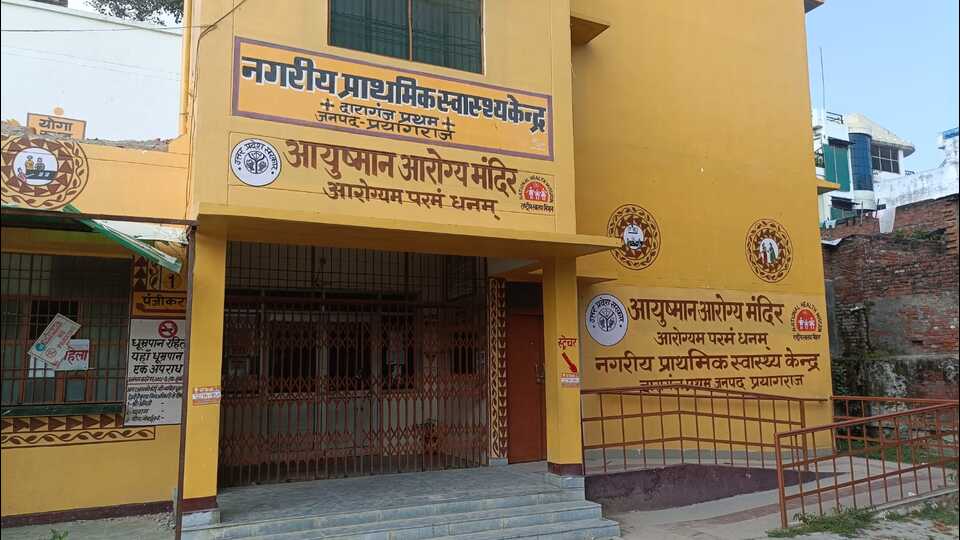
The initiative, part of the state government’s mission to extend primary healthcare to the last person in the queue, is helping bridge the urban–rural healthcare divide. Through Ayushman Arogya Mandirs, a broad spectrum of primary healthcare services is now accessible even in remote villages. The integration of telemedicine facilities has further empowered rural populations, providing access to specialist doctors without the need for long-distance travel.
Within the Prayagraj division, Prayagraj district leads with 675 operational AAMs against a target of 773, followed by Pratapgarh (302 against a target of 501), Fatehpur (281 against a target of 349), and Kaushambi (201 against a target of 262), according to additional director (Health) Dr Rakesh Sharma. While acknowledging the progress, he also conceded the gap between targets and actual implementation.
Most of the operational centres are located in rural areas, functioning either as Sub-Centre AAMs (SC-AAMs) or Primary Health Centre AAMs (PHC-AAMs). Of the 1,583 SC-AAMs approved for the current financial year, 1,189 are currently operational. Similarly, 164 out of 179 targeted PHC-AAMs have begun offering services.
In total, 1,353 Ayushman Arogya Mandirs are functional in rural parts of the division—underscoring the program’s growing footprint and its critical role in strengthening grassroots healthcare, officials said.
Ayushman Arogya Mandirs represent a shift from a selective to a comprehensive model of healthcare delivery. These centres aim to provide a full range of services, including preventive, promotive, curative, rehabilitative, and palliative care. Their scope extends beyond maternal and child health to include management of non-communicable diseases, mental health, oral, eye, and ENT care, emergency and trauma services, along with the provision of free essential drugs and diagnostics.