
 E-Paper



Ecostani: Arvind Kejriwal’s Punjab political gambit
Kejriwal, who wants to retain Punjab on the plank of good governance, will have a lot to answer in the wake of the detention of senior farmer leaders

 Prefer HTon Google


It’s a common sight these days: Escort vehicles belonging to Aam Aadmi Party (AAP) party leaders from Punjab parked outside Arvind Kejriwal’s Ferozeshah Road home in New Delhi, slowing down traffic on the busy road and fueling speculation about the beleaguered former Delhi chief minister’s next political move.
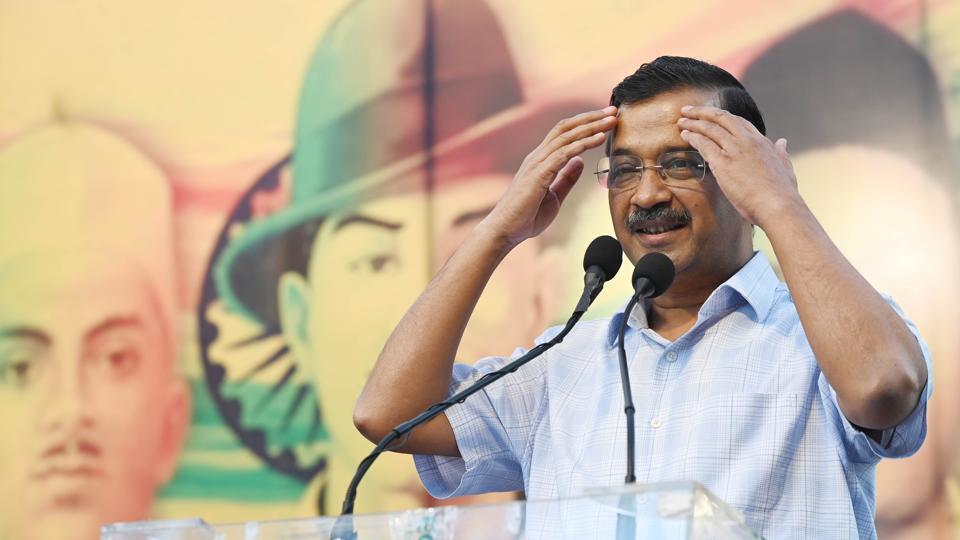
The 5 Ferozeshah Road bungalow is like an AAP camp office for Punjab affairs with leaders from the state frequently called in to brief Kejriwal and to take instructions from him directly. Kejriwal, AAP chief, evidently does not want to face any setbacks in Punjab, the only state the young party rules after its debacle in Delhi.
Kejriwal knows well that he cannot afford any political setback in Punjab, the state where the Congress is a strong opposition and Shiromani Akali Dal (SAD) is trying hard to revive its dwindling political fortune. The BJP too has influence among the urban Hindus in the state, which drifted towards AAP during the 2022 assembly polls. For almost a month now, since losing Delhi election on February 8, Kejriwal has shifted his focus to Punjab, leaving Delhi in the hands of former chief minister, Atishi Marlena, and the party’s new city chief, Saurabh Bhardwaj. Despite being Delhi CM for 10 years, Kejriwal has hardly talked about Delhi since the loss, a rarity for the former IITian.
Soon after the Delhi results, Kejriwal went for a 10-day Vipasana camp in Punjab’s Hoshairpur and not to Bengaluru, where he had attended a similar programme earlier. Amid this, the party decided to ask its Rajya Sabha MP, Sanjeev Arora, to resign and contest a byelection from Ludhiana West. The speculation is that Kejriwal will enter the upper house from Punjab and Arora, if he wins, would get a cabinet berth in Bhagwant Mann’s government. Kejriwal launched Arora’s election campaign earlier this month even though the Election Commission is yet to announce the poll schedule for the assembly seat.
Last Friday, AAP named former Delhi deputy chief minister, Manish Sisodia, and former minister Satyender Jain as in-charge and co-in-charge of the party unit in Punjab. Sisodia and Jain are the two senior-most party leaders and are considered close to Kejriwal. Sisodia replaced Jarnail Singh, a four-time AAP MLA from Tilak Nagar in Delhi, as the Punjab affairs in-charge, while Jain comes in place of Rajya Sabha member Raghav Chadha, whose involvement in party affairs has seemingly reduced since the 2024 Lok Sabha polls. Both Sisodia and Jain lost their assembly seats in Delhi election. Singh, on the other hand, could play an active role in Delhi assembly, where the party has 22 MLAs as compared to 48 for the ruling BJP. Kejriwal has also replaced Gopal Rai, another senior leader, with the younger Bhardwaj as Delhi convenor.
Party leaders said these appointments are part of an organisational rejig carried out six weeks after the loss in Delhi. These decisions were taken at a meeting of the AAP’s political affairs committee at Kejriwal’s residence in the national capital. The organisational restructuring marks Sisodia’s return as the in-charge of party affairs in Punjab after a gap of five years. The AAP first made Sisodia in-charge of the party’s Punjab affairs in December, 2017, after a string of losses and an underwhelming assembly polls performance in Punjab. Lately, Sisodia has been inspecting government schools in Punjab along with the state’s education minister Harjot Singh Bains.
A party leader, who asked not to be named, said party leaders given new responsibilities have been directed to remain full-time in their respective states until the elections conclude. “These changes have been carried out to prepare the party for future challenges, including the upcoming Ludhiana West bypoll and the 2027 assembly elections. Both (Sisodia and Jain) are seasoned leaders. If our central leaders guide us, who are they (opposition leaders) to question us,” said a senior party MLA, who did not want to be named.
Last Saturday, Kejriwal met two Punjab ministers, Harbhajan Singh and Lal Chand Kataruchak to review their performances, leading to speculation that they could be dropped from the state cabinet. They were asked to explain about poor utilisation of funds in their respective departments, according to media reports. Kejriwal also met a few other state leaders to review performances of ministers and MLAs, which party leaders termed, was as an exercise to strengthen the party structure in the state.
Kejriwal, who wants to retain Punjab on the plank of good governance, may have a lot to answer in the wake of the detention of senior farmer leaders after their meeting with central ministers on Wednesday. The detention indicated that the state government and the Centre were working in tandem over removing blockade of the national highway in Khanauri and Shambu, set up by protesting farmers.
Both Congress and Akali Dal claimed that it was the first time that farmer leaders were detained soon after their talks with the Centre. Akali Dal leader and former chief minister, Sukhbir Singh Badal, went to the extent of saying that Kejriwal has become the “real CM” of Punjab and farmers were detained as part of a deal between him and the BJP. The state government claimed that the road blockade at the two borders with Haryana was causing a big loss of income of the state, which is battling poor finances.
The Punjab government has launched a largescale crackdown on drugs in a bid to showcase Kejriwal’s promise to end the menace of narcotics in the state. According to the state government, about 2,612 people involved in the drug trade have been arrested in first 22 days of March and government has ordered demolition of encroached properties of those arrested. Close to 100 police personnel have either been suspended or transferred for their alleged role in allowing the smuggling and sale of drugs. The state government has also revived old cases against local political leaders and police personnel. The drive came after Kejriwal announced a crackdown on drugs while launching Arora’s election campaign.
The Congress, which earlier in March held a meeting to review preparedness for the 2027 assembly polls, launched a broadside against Kejriwal alleging he has rescinded his poll promises on eradicating the state’s drug problem and giving a monthly allowance to women. The party has alleged that under the current dispensation, the number of gangsters and radical elements in the border state was on the rise and cited the arrest of Babar Khalsa International members from within the state and from Uttarakhand.
Kejriwal is aware that he will be under attack from all the political parties in Punjab and it, in all likelihood, turn out to be a lone battle for him. Unlike Delhi, where other INDIA block parties such as Samajwadi Party and Shiv Sena (UBT) stood by him, Kejriwal may not find them with him in Punjab. Kejriwal and party leaders such as Sisodia and Jain may find also themselves embroiled in criminal cases for alleged corruption in Delhi, especially close to Punjab elections. Federal agencies have started initiating legal action against senior AAP leaders in some new cases and would be perusing ongoing cases with vigour. The months ahead will be tough for Kejriwal and he would have to ride and cross a hostile political tide in Punjab to survive in the ruthlessly competitive Indian political landscape.


