E-Paper



Formal vehicle scrapping industry faces an uncertain path amid low demand in U.P.
In the pursuit of attracting private investment and boosting employment, Uttar Pradesh is facing an uncertain future for its emerging formal vehicle scrapping industry

 Prefer HTon Google


LUCKNOW Encouraged by the vehicle scrapping policies of both the Central and state governments, Virendra Deep Singh invested over ₹15 crore to establish a Registered Vehicle Scrapping Facility (RVSF) in Rampur, Uttar Pradesh. Despite having the capacity to scrap 110 vehicles daily, the facility has seen fewer than two dozen vehicles brought in for scrapping since its launch in February this year.
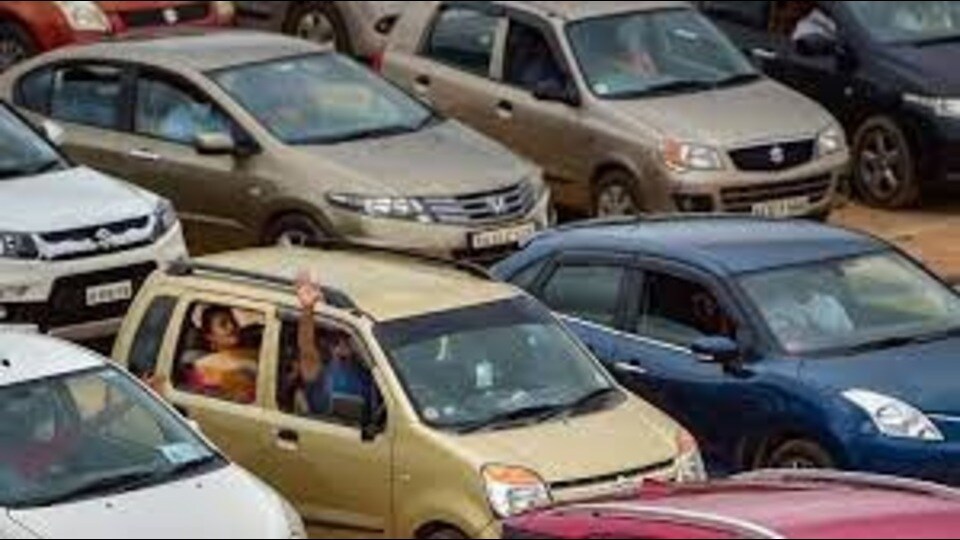
Singh, who primarily borrowed funds from banks for this venture, initially had high hopes and excitement. However, today, he is deeply concerned. He expressed, “On one hand, the scrapping business is slow to take off, and on the other hand, the operational costs, including bank interest, amount to ₹10 lakh per month. My worries and doubts about returns are growing.”
In the pursuit of attracting private investment and boosting employment, Uttar Pradesh is facing an uncertain future for its emerging formal vehicle scrapping industry. Entrepreneurs who heavily invested in establishing RVSFs in the state, anticipating substantial returns, are struggling to sustain their operations due to the low volume of vehicles for scrapping.
Currently, 34 RVSFs operate across various cities in U.P., with more applications awaiting approval from the transport department. Sanjeev Jain, the owner of an RVSF in Agra’s Sahadra area, lamented, “We had expected a thriving business after the government introduced an enticing vehicle scrapping policy. However, to our disappointment, we’ve received only 100 vehicles, including autos and tempos, since we began operations in June this year. Like us, most other RVSF owners in U.P. are anxious and disheartened.”
Sachin Patel, an entrepreneur constructing a formal vehicle scrapping centre in Auraiya, remains cautiously optimistic. He shared, “While I’m concerned as my centre is under construction, I believe the industry may be experiencing initial challenges that will naturally subside with time.”
To address their concerns, registered vehicle scrapping centre owners recently formed the U.P. Vehicle Scrapping Facilities Association. They point to several factors contributing to their difficulties. Jain explained, “U.P. has liberally issued RVSF licenses without adequate research and without imposing limits on the number of centers a city can have. For instance, in Agra alone, three more centres are in development.”
Jain also noted that many government departments continue to auction their unfit vehicles to roadside scrappers rather than using registered vehicle scrapping facilities. “Only two weeks ago as many as 1,340 vehicles lying unclaimed at various police stations in Agra were auctioned to local ‘kabadis’ after an auction notice by the Police Commissionerate office, Agra gave a notice in newspapers on September 9,” Jain stated.
Adding to this, Virendra Deep Singh, who is also the general secretary of the newly formed association, added, “Automobile dealers are not passing on the benefits to customers who buy new vehicles over scrapped ones. Unlike in other states, the Certificate of Deposit (CoD) received after scrapping a vehicle is not tradable in U.P.”
Lack of awareness among vehicle owners is cited as a major reason for the registered scrapping centres’ limited business. An entrepreneur with an RVSF in Kanpur also highlighted that the unchecked informal vehicle scrapping industry in the state is encroaching on their business, including scrapping stolen vehicles.
The Voluntary Vehicle-Fleet Modernisation Program (V-VMP), also known as the “Vehicle Scrapping Policy,” aims to create an eco-friendly system for phasing out unfit and polluting vehicles. The policy targets the voluntary scrapping of unfit commercial and passenger vehicles based on their fitness, regardless of age. Vehicles are tested by Automatic Testing Stations (ATS), and those found unfit during the fitness test are recommended for scrapping.
Unlike the National Capital Region (NCR), where older diesel and petrol vehicles were mandated for deregistration, the country lacks a policy for the retirement of private vehicles. “Currently, there is no fixed retirement age for private vehicles in the country, except in the NCR,” explained Additional Transport Commissioner Rajiv Srivastav. He added, “This only means that a person can get his vehicle registered as many times as he wants to unless the vehicle is declared unfit.”
A significant part of the issue arises from the misconception that the Central government has set a nationwide retirement age for all government and private vehicles, similar to the NCR, when it announced the vehicle scrapping policy in February 2021. “This is because of this (wrong) impression that many entrepreneurs believed the formal vehicle scrapping centres to be a lucrative business and heavily invested in setting up the same,” he said. Interestingly, most RVSF owners in the state, including Jain and Singh, are still not ready to believe that the retirement age of private vehicles is not fixed in the country.
Moreover, the formal vehicle scrapping industry expected a substantial number of government vehicles for scrapping when the UP government, in line with Central government guidelines, decided to retire all government vehicles older than 15 years.
Currently, there are approximately 1.13 lakh government vehicles in U.P., with over 5,000 being police vehicles, more than 5,000 belonging to local authorities, and over 7,000 owned by Central government departments.
However, only 5,000 government vehicles older than 15 years were identified for scrapping by February 2024, as several emergency departments, including police, fire, and health, were exempted from mandatory scrapping.
“The number of government vehicles identified to be scrapable is low also because most departments already had a policy of retiring and auctioning their fleer after 10 years of age,” Srivastava said. People in the knowledge of things said that of the 5,000 identified government vehicles too less than 300 have been sent to RVSFs for scrapping so far though the target was to get all the 5000 vehicles scrapped by February 2024.
Minister of State for Transport (Independent Charge), Daya Shankar Singh, acknowledged the issues faced by RVSFs and stated, “We are going to install automated testing stations (ATS) in every district to check vehicle fitness. Once these stations are operational, more vehicles that have exceeded their useful life will fail the test and be recommended for scrapping.” He also expressed hope that the Central government would establish a retirement age for private vehicles in the future. He appealed to RVSF owners to remain patient, emphasising that the registered scrapping industry is a new and evolving sector.