
 E-Paper



Freshers resume classes at Al-Falah Medical College amid probe, parental anxiety
The campus reopened to academics amid heavy police presence, anxious parents, and a campus adjusting to public and media scrutiny.

 Prefer HTon Google


Regular classes resumed for first-year MBBS students at Al-Falah Medical College on Thursday, but the return to routine unfolded under a cloud of uncertainty. Investigative agencies continue to raid university-linked premises and question individuals associated with the so-called “white-collar” terror module that was behind the deadly Red Fort blast.
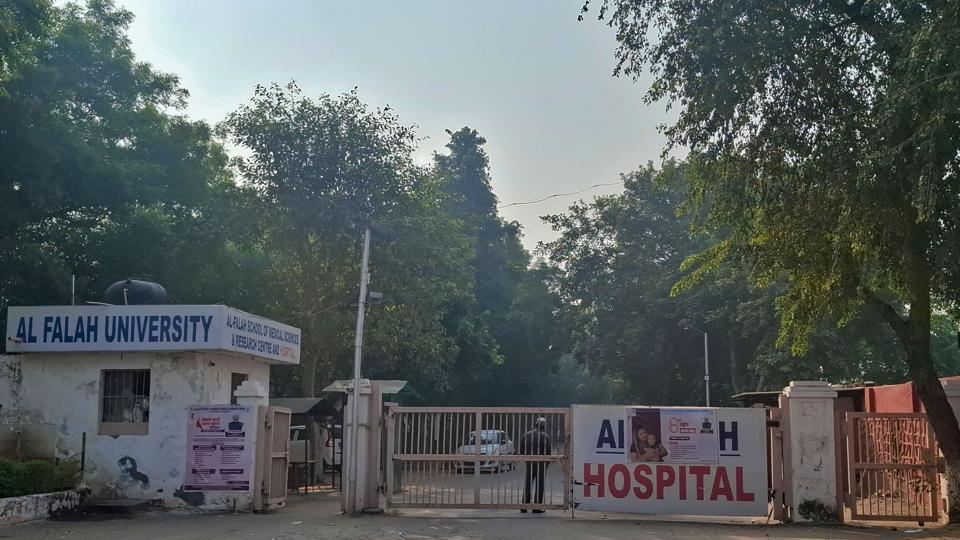
The campus reopened to academics amid heavy police presence, anxious parents, and a campus adjusting to public and media scrutiny.
Classes ran on schedule from 8am to 4pm. First-year students, dressed in the black-and-white uniform introduced as an anti-ragging measure, walked into campus accompanied by parents who had travelled from Chandigarh, Agra, Lucknow, Delhi, Haldwani and other cities. Many said they were still struggling to assess whether the campus was safe, especially after investigators widened their probe to faculty members allegedly connected with Umar, who taught fourth-year students.
Manoj Kumar, who had come from Agra with his daughter, said last week’s developments shook the family. “We panicked and asked her to return home immediately. Even today, we don’t know if keeping her here is the right decision. But what is the alternative? We can’t jeopardise her education,” he said.
Sushil Mehta from Lucknow voiced the same dilemma. “My son worked so hard to reach here. But after the news broke, our fear was real. The college needs to rebuild trust, communicate openly and ensure our children are safe. All we want is transparency.”
Student said the vice-chancellor and faculty members held counselling sessions earlier this week to reassure them. “They told us things would settle down and not to pay attention to rumours,” said a first-year student. The administration also advised students to avoid interactions with outsiders and refrain from sharing unverified information online.
For many, Thursday marked the first proper day of medical school beyond orientation. Foundation Week – held shortly before the November 10 blast – had introduced students to academic departments, labs, and core first-year subjects such as anatomy, physiology and biochemistry. “We were so excited last week… We expected the next few months to be about making friends and exploring campus. Instead, everything feels tense and monitored,” said a student from Delhi.
A fresher from Haldwani said the atmosphere had become “emotionally exhausting.” “My parents kept calling non-stop after watching the news. I had to reassure them even when I wasn’t sure myself. If I withdraw now, I lose a year. But if things get worse, what happens next?”
About 900 students are enrolled in the MBBS programme. Classes for second-, third- and fourth-year students continued through October. Police and central agencies have visited multiple times this week, questioning staff and students who may have interacted with Umar or with another accused, Dr Muzammil Shakeel Ganaie. “Those who attended Dr Umar’s classes were questioned in detail,” said a senior student. “Even those who had minimal academic interaction had to give statements.”
A third-year student said the usual campus culture has vanished. “Around this time we usually joke around with freshers. But now, with guards, officers and constant monitoring, there’s no normal college life left.”
Students said access to the teachers’ residential block – already restricted – has now been enforced even more strictly. Several freshers had initially left for home last week, fearing escalation. “Some returned today, the rest may come back by Monday,” said a second-year student.
Outside the gates, the normally busy approach road looked deserted. Some students still stepped out to buy snacks from nearby shops, saying the brief excursions helped them “feel normal.”
At the college canteen, worker Javed Mohammed, who has been employed there for two years, described frequent interactions with the accused. “Dr Umar used to have meals in the canteen almost every day. He was aggressive and rude most of the time,” he said. “None of us ever imagined he could be involved in something like this.” Javed added that Dr Muzammil stayed with some students in a rented house near the college, a detail investigators are now looking into.
Despite the functioning classes, students widely expressed fears about the university’s future. “The biggest question for all of us is—will the college continue normally?” said a second-year student. “If anything happens, what happens to our degrees?”


