E-Paper



Future does not lie in war, but in Buddha: Modi at Pravasi Bharatiya Divas event
PM Narendra Modi said India is not only the mother of democracy, but democracy is a part of people’s lives here

 Prefer HTon Google


Prime Minister Narendra Modi on Thursday said the world now listens to the country due to its rich heritage and cultural ethos asserting that the future does not lie in ‘yudh’ (war) but in ‘Budh’ (Buddha).
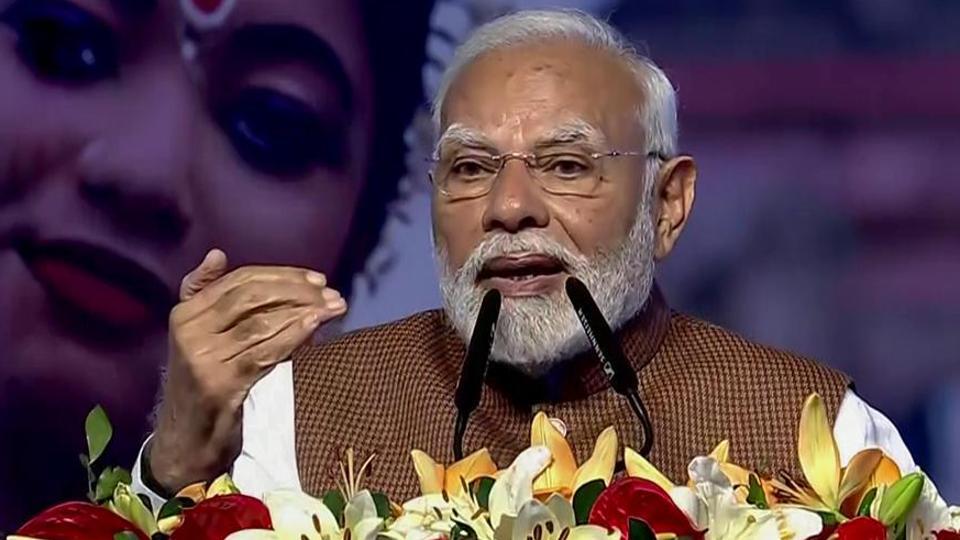
Addressing the diaspora at the 18th Pravasi Bharatiya Divas convention in Bhubaneswar, PM Modi said India is not only the mother of democracy, but democracy is a part of people’s lives here. He said the world today listens to India, which not only presents its own views strongly but also those of the Global South.
“Due to strength of its heritage, India is able to tell the world that future does not lie in war, but in Buddha (peace),” he said.
“Samrat Ashoka had chosen the path of peace here while the world was expanding empires through the power of the sword. This legacy inspires India to tell the world that the future lies in Buddha and not in war,” he said.
Also Read:In Odisha, PM Narendra Modi flags off Pravasi Bharatiya Express, lauds India’s young talents
PM Modi said he has always considered the diaspora as India’s ambassador to the countries they live in.
“Your value systems make world leaders admire the Indian diaspora. You connect with society, respect local traditions, and keep India alive in your hearts. We consider it our responsibility to help our diaspora during crisis situations no matter where they are,” he said, adding that his government is trying to ensure that whenever Indian youths go abroad, they go with skills.
Addressing the diaspora’s historical significance, PM Modi noted their role in India’s independence in 1947 and called on them to contribute toward transforming India into a developed nation by 2047.
External affairs minister S Jaishankar was also present on the occasion. Addressing the gathering, EAM Jaishankar expressed pride in the achievements of the Indian diaspora.
“You all not only feel proud of your achievements but also enhance India’s global respect”, he said.
“Whether it is technology, best practices or resources, be it tourism, trade or investment, the two-way flows you enable are invaluable. Most importantly, in times of difficulty, you can be confident that the Modi Sarkar has your back,” he said.